 World of Warcraft

Across the dunes of Tanaris, where the sun reigns without mercy and memory itself seems to erode beneath the sands, there endures a tribe of people shaped as much by loss as by survival. The sand trolls, born of rupture and remade by exile, stand as living echoes of an age when jungle canopies once stretched where only barren horizons now remain. Their story is made of endurance, fractured tribes clinging to identity beneath an unforgiving sky. To understand their tale is to follow a lineage scarred by catastrophe, hardened by necessity, and steeped in rituals that blur the line between life and death.
Children of a Broken World
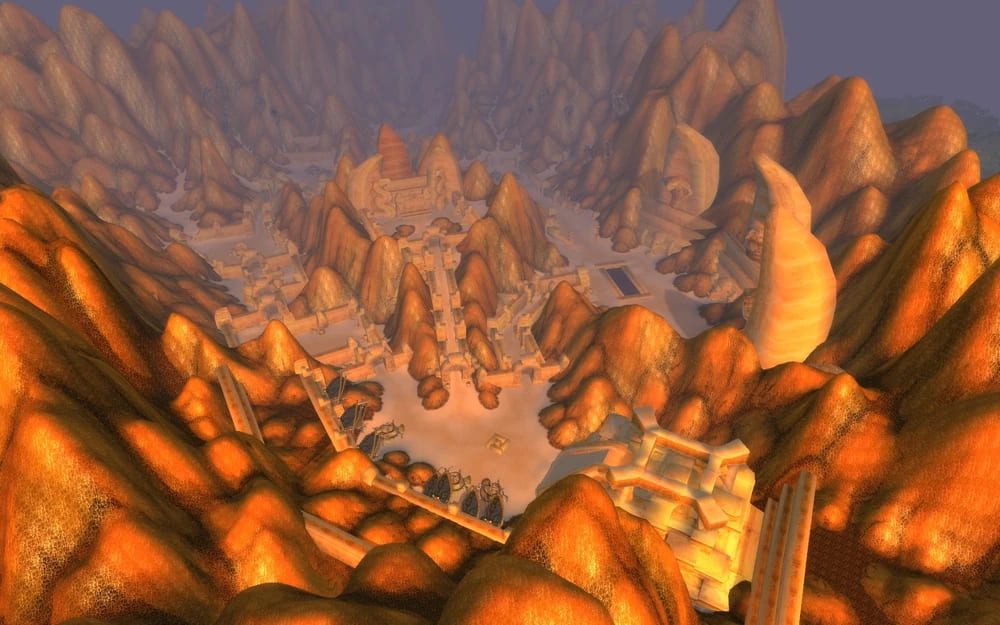
The origins of the sand trolls are inseparable from the cataclysm known as the Great Sundering, a world-shattering upheaval that tore apart ancient lands and sundered civilizations without warning. Before this calamity, their ancestors were jungle trolls of the vast Gurubashi Empire, thriving within dense, fertile territories that nurtured both strength and spiritual tradition. When the land itself fractured, however, a portion of these trolls found themselves cast into what would become Tanaris, a region swiftly transformed from a vibrant jungle into a relentless desert.
Isolation did not merely separate them geographically; it forced a transformation of identity. Cut off from their kin in the Eastern Kingdoms, these trolls endured generations beneath a punishing sun, their bodies and customs reshaped by necessity. Over time, they became something distinct, a people no longer wholly of the jungle, yet not entirely separated from its memory. Their existence came to reflect the harsh duality of their world: resilience bound to loss, adaptation shadowed by what had been left behind.
The Mark of the Desert
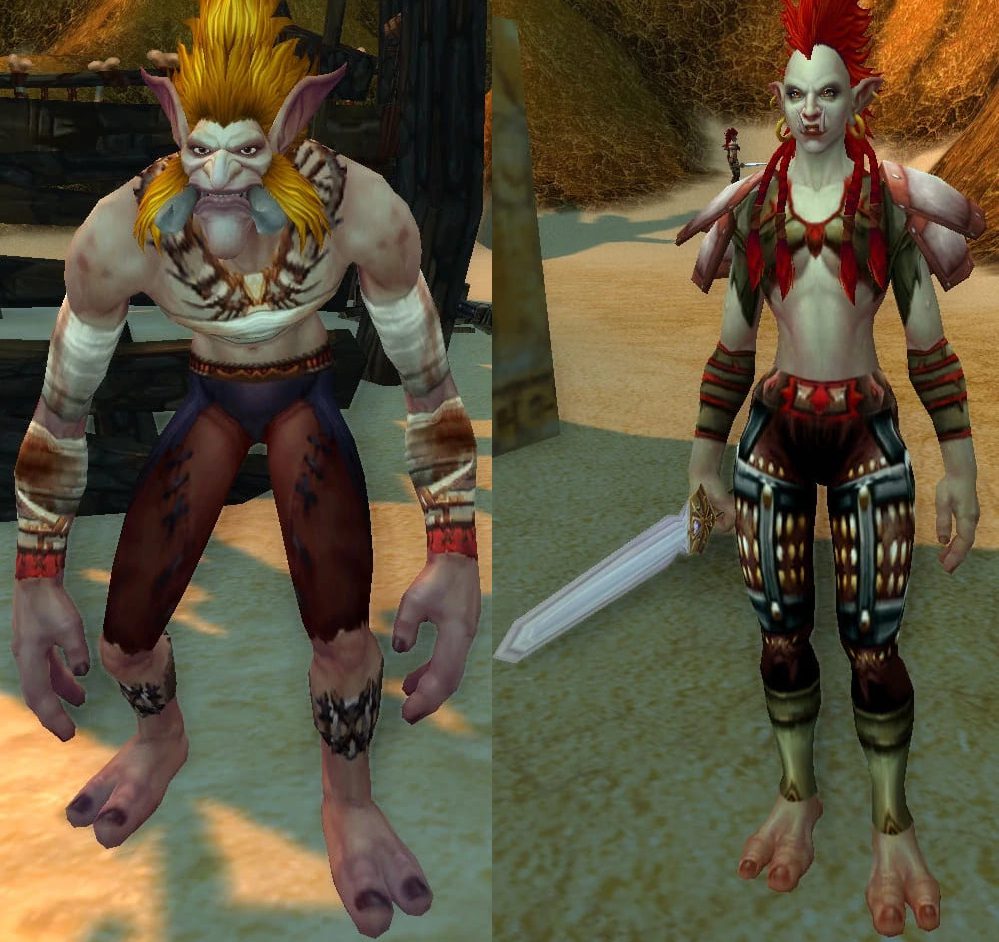
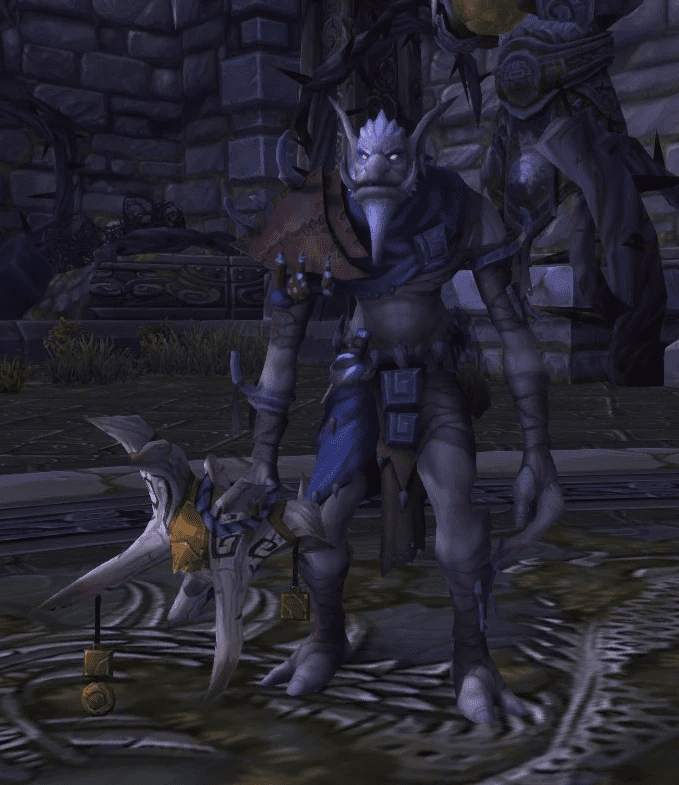
The physical form of the sand trolls bear a silent testimony to their long adaptation. Their skin, weathered under the burning sun, reflects the hues of their environment, muted browns, burnished golds, and at times a striking orange-gold that mirrors the desert’s shifting light. Where their jungle kin possess lush manes, the sand trolls carry thinner, more brittle hair, as though even vitality itself has been tempered by the arid winds. Their tusks, darker than those of most trollkind, range from deep gray to near black, lending them a formidable visage. Their eyes, often brown or an intense blue, seem to hold vigilance, though rare individuals (such as Sul the Sandcrawler) bear an unsettling pallor, their gaze reflecting something more distant and arcane. Among the undead, golden eyes flicker with unnatural vitality, hinting at the unsettling practices that define their survival. Even their stature invites uncertainty. Female sand trolls are known to reach six feet in height, yet in a world where scale varies widely among trollkind, such measures offer little clarity.
Rituals of Survival and Power
To endure in Tanaris is to accept that survival demands sacrifice, and among the sand trolls (particularly the Farraki tribe) this truth has given rise to practices both feared and revered. Blood magic, drawn from ancient voodoo traditions, became a means not merely of power but of necessity. Through it, they found ways to endure scarcity, drawing strength from the very essence of life itself.
Yet it is their relationship with death that most profoundly defines them. In a land where every life is precious, the loss of even one member threatens the fragile balance of survival. Thus, the Farraki turned to necromancy, not as an aberration, but as a continuation of duty. The dead are called back, bound not by peace but by obligation, their forms animated to serve the tribe once more. This practice stands in heavy contrast to the spiritual guardianship offered by the loa Bwonsamdi to other troll tribes. Many Farraki spirits are denied such passage, instead falling under the dominion of Zum’rah, whose will binds them into ceaseless servitude. In this, the line between reverence and exploitation becomes incredibly thin, revealing a culture where necessity often shadows over mercy.
Faith Beneath the Scorching Sky
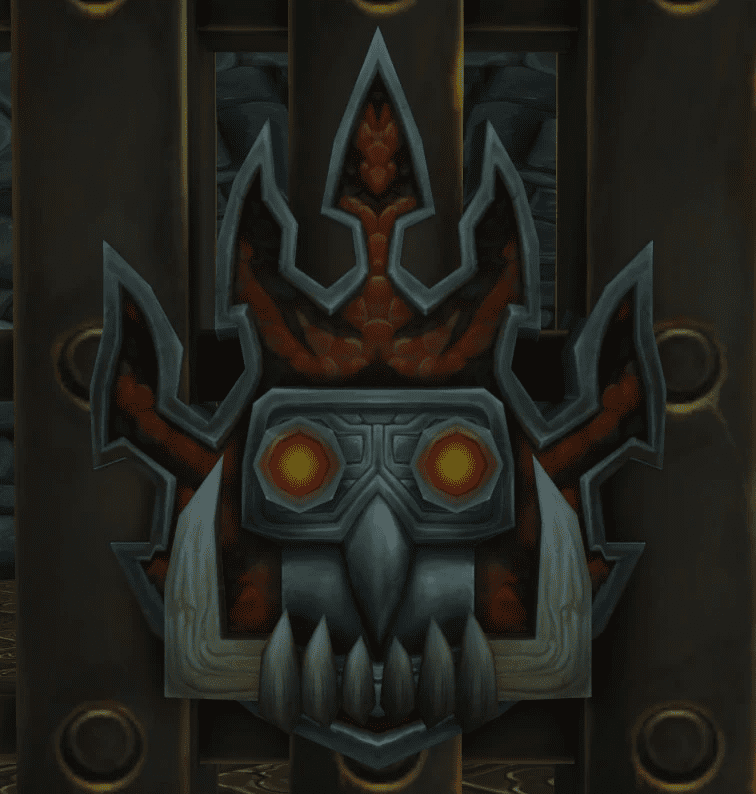
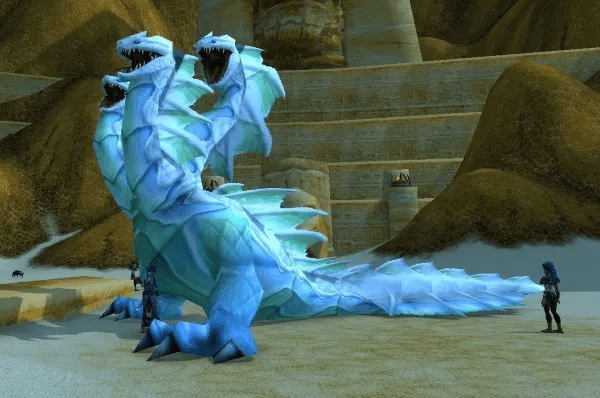
Despite their divergence, the sand trolls retain a deep connection to the loa, the primal spirits that have long guided trollkind. Among these, devotion takes many forms, though none stand larger than the ancient hydra Gahz’rilla. For countless generations, this formidable being has been both feared and venerated, its icy wrath held in careful respect. The trolls do not awaken it lightly; only when sacrifices are abundant do they dare to call upon its presence. Within their sacred city of Zul’Farrak, the influence of Gahz’rilla is etched into stone and symbols alike. Architectural motifs speak of its form, embedding devotion into their environment. These expressions are not mere ornamentation but acts of remembrance, binding the people to a force that embodies both destruction and protection.
Alongside this central figure, other loa persist within their belief system, including Kimbul, Mueh’zala, and Shadra. Together, they form a fragmented yet still standing pantheon, reflecting a culture that has preserved its spiritual roots even as its world has been heavily altered.
The City of Shifting Sands, Zul’Farrak
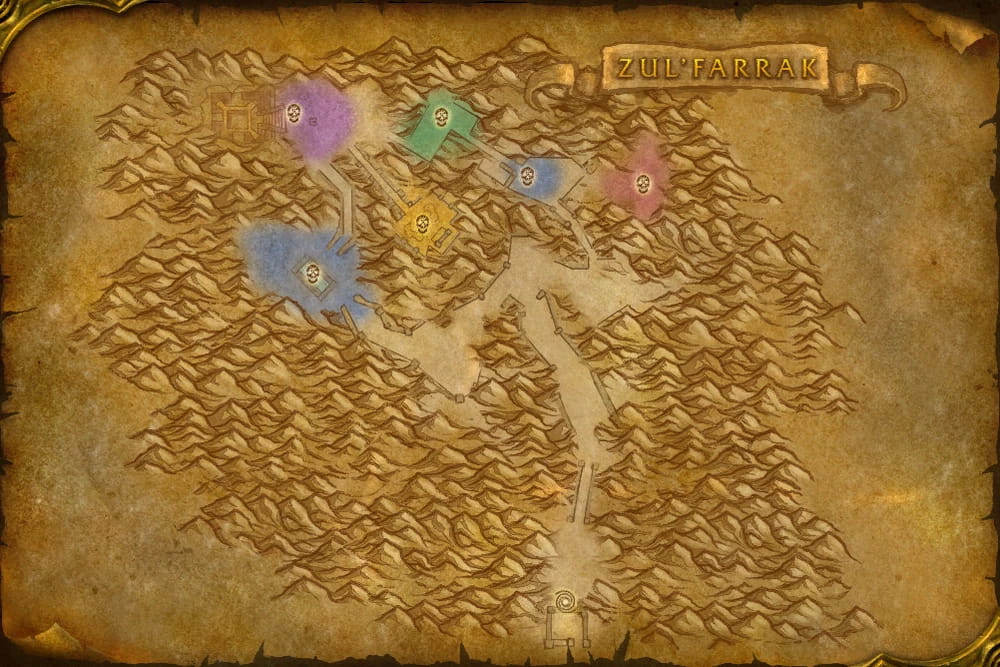
Zul’Farrak stands as both refuge and relic, a city forged in a time before the desert claimed its dominion over this land. Once part of a verdant expanse, it now rises from the sands as a testament to endurance and decline. The sandfury trolls have made their home inside these very walls, practicing their mastery of dark mysticism. At the heart of Zul’Farrak lies a sacred pool, within which Gahz’rilla is said to slumber, an ever-present reminder that beneath the stillness of the desert, immense power endures. During times of upheaval, such as the Elemental Unrest, both Horde and Alliance forces ventured into this domain, seeking to confront the looming threat it represented. Legends also linger here, carried like whispers through sun-bleached corridors. Among them is the tale of a unique sword, Sul’thraze the Lasher. A weapon created from combining two halves, it’s said to instill dread in even the strongest of foes.
In later years, as the world again shifted during the Cataclysm, the city fell further into desolation. Many Sandfury aligned themselves with the Zandalari trolls, their legacy carried beyond the sands even as their homeland continued its slow descent into ruin.
Personal Thoughts on the Sand Trolls
The sand trolls were a cool sub-race of trolls that in my opinion, wasn’t developed to its full potential. They’re mostly caged up inside Tanaris and Zul’Farrak, making a cameo only when players eventually stumble upon those places via either leveling or doing dungeons. And yet with what little they have, they still remain the coolest those lands have ever seen. I still remember to this day, doing Zul’Farrak whenever I got it in the dungeon queue, trying not to accidentally pull one of those beetles by my attacks with sweat dripping from my brows, going up the steps to rescue Sergeant Bly and his party only for him to betray and attack you, and ringing the gong to challenge Gahz’rilla for that hard-earned kaiju fight. You can just feel the dedication and love that was poured into making it, and sand trolls are a part of that legacy that will forever just be stuck as a skin color option for troll players, meanwhile we’re getting our umpteenth playable elf.