 World of Warcraft

Beneath the gloomy, plagued surface of Tirisfal Glades lies a city that has seen some of the most dramatic transformations in World of Warcraft history. The Undercity, with its winding gothic corridors and rivers of green toxic sludge, was not always the dark bastion of the undead. Its history is a tale of a fallen kingdom, betrayal, and the desperate survival (like almost all factions) of a cursed people.
Golden Age of Lordaeron
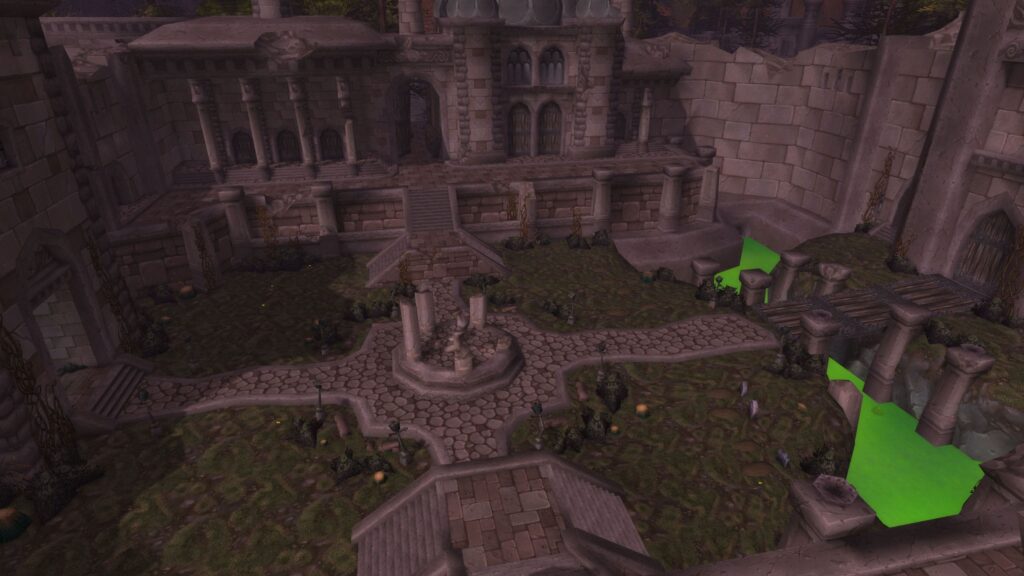
Long before the city earned the name Undercity, the vast subterranean complex beneath Lordaeron’s Capital City consisted of ancient royal crypts, the city’s dungeons, and a sprawling sewer system. While the poorest citizens and prisoners dwelled in these damp depths, the surface above stood for centuries as a monument to humanity’s might and the absolute center of the Holy Light.
The era of Lordaeron’s golden age was defined by heroes like Uther Lightbringer who embodied unwavering justice and honor. But an example of complex morality is found in Chris Metzen’s short but brilliant novel, Of Blood and Honor (a must-read in my opinion). The story follows the legendary Paladin Tirion Fordring, a celebrated paladin of the Alliance of Lordaeron, and a hermit Orc named Eitrigg. Tirion faced a trial for treason in Stratholme for saving the orc from humans, ultimately sacrificing his rank, titles, and his beloved lands. Tirion’s steadfast commitment to his morals, even when judged and exiled by his own peers, perfectly encapsulates the righteous yet sometimes rigidly flawed spirit of the human kingdoms before their fall.
Fall of Lordaeron and Birth of Undercity
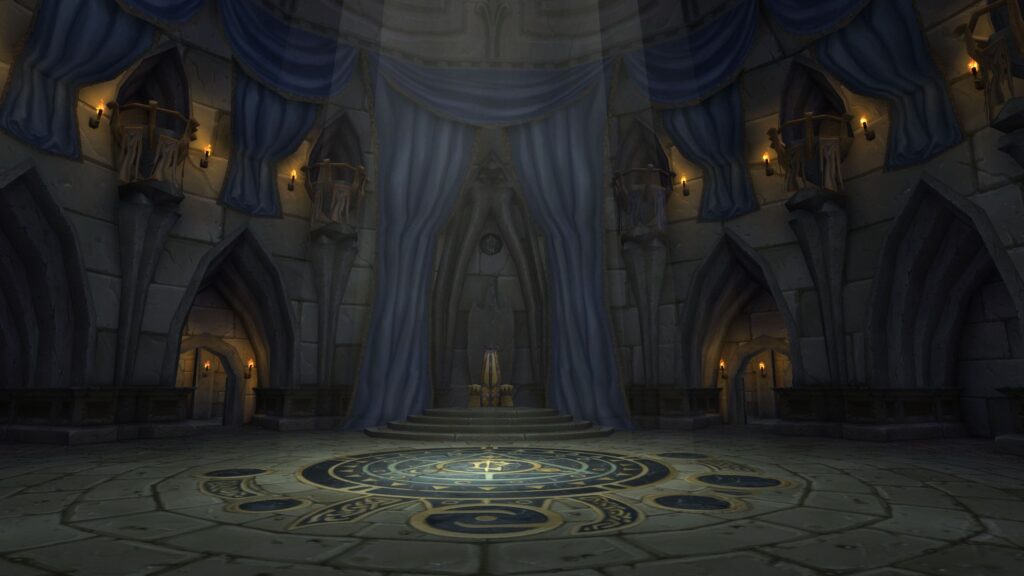
The nightmare began when Prince Arthas Menethil returned from Northrend. Corrupted by the Lich King, Arthas murdered his father, King Terenas, in his own throne room and completely ransacked the glorious city. Planning to use Lordaeron as his new seat of power, Arthas ordered his undead minions to dredge out the catacombs and expand the subterranean maze.
However, Arthas was urgently recalled to distant Northrend to aid the Lich King, abandoning the budding Undercity. In his absence, Sylvanas Windrunner broke free from the Lich King’s control and rallied the rebel undead, forging the Forsaken. She fiercely warred against the Dreadlords of the Burning Legion, completely devastating the forces of Varimathras, who was forced to beg for his life and serve her. With the Dreadlord’s reluctant help, Sylvanas completed the construction of the Undercity, turning Arthas’s twisted dungeons into the ultimate stronghold for her people.
Undercity faced a massive internal crisis during the Wrath of the Lich King expansion. Grand Apothecary Putress and Varimathras betrayed Sylvanas following the events at the Wrathgate, temporarily seizing control of the Undercity. This massive betrayal forced both Thrall and Varian Wrynn to launch a two-pronged siege on the capital to reclaim it from the traitors.
Another fun fact (maybe not so fun for people who used to live there), if you mute all in-game sounds except ambience volume inside King Terenas’ throne room, you can hear the eerie voices of the cinematic in Warcraft III when Arthas is killing his father.
Architecture and Quarters of Undercity
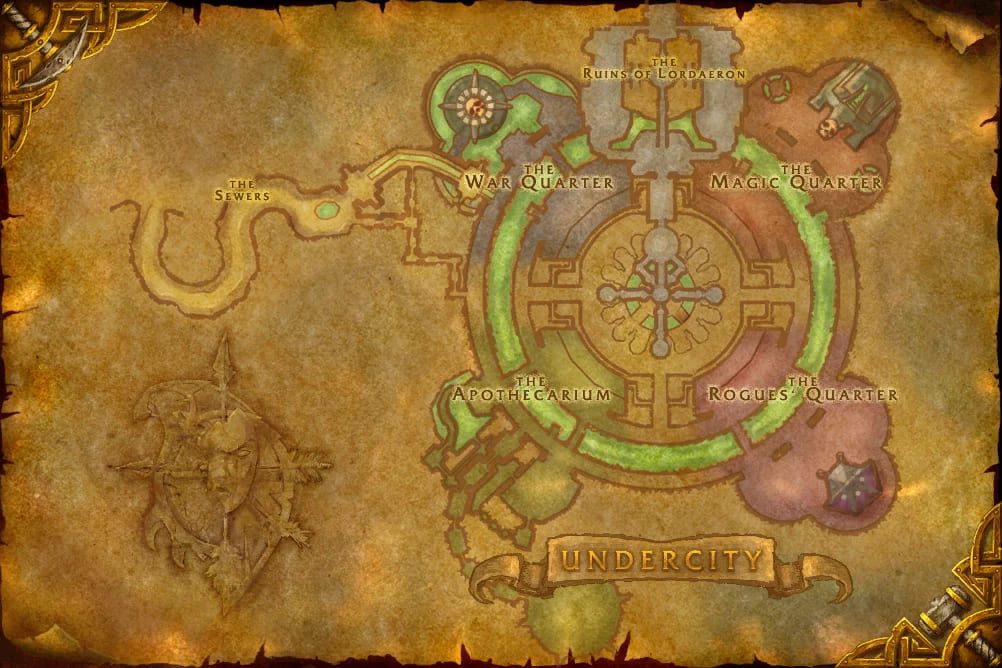
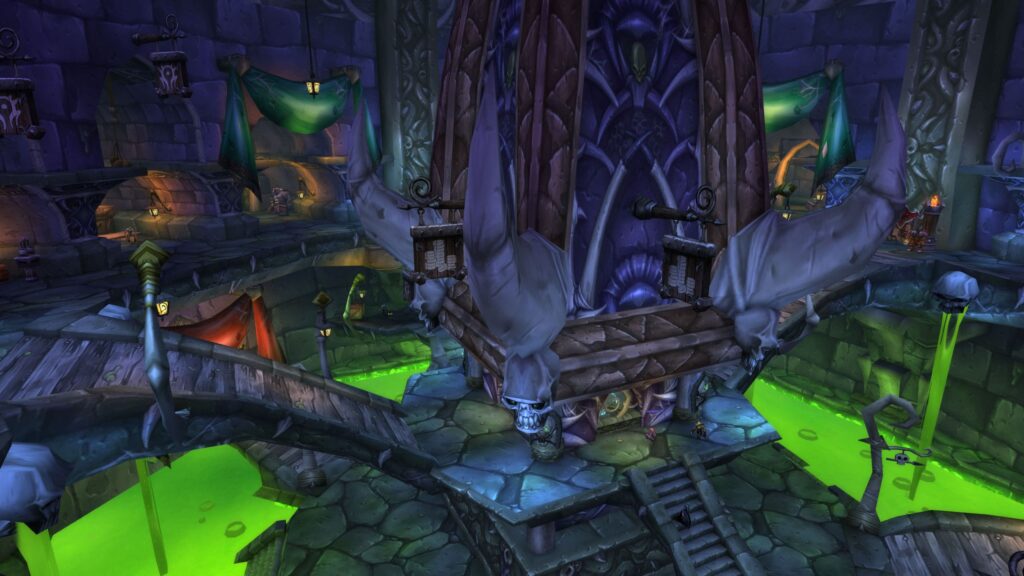
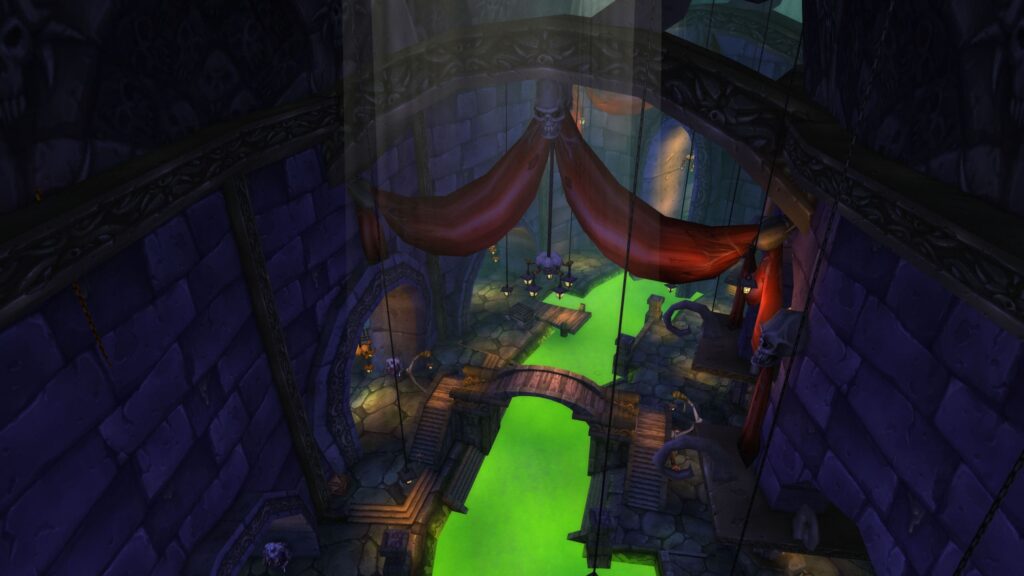
The Undercity is laid out in a symmetrical, circular design, which subtly mirrors the architecture of floating Scourge necropolises like Naxxramas. At the very center lies the Trade Quarter, a bustling hub for undead merchants and bankers. From this central ring, the city branches into distinct, specialized districts. To the northeast is the Magic Quarter, home to the dark arts of warlocks and mages. The northwest houses the War Quarter, where the undead military hones its martial prowess. To the southeast lies the Rogues’ Quarter, the shadowy domain of Sylvanas’s elite assassins, the Deathstalkers. Finally, the southwest path leads to the infamous Apothecarium, a gruesome laboratory where the Royal Apothecary Society constantly conducts horrifying experiments, leading directly into the heavily guarded Royal Quarter where Sylvanas once stood upon her throne.
Reaching Undercity meant surviving the boss of the city: main elevator. Countless adventurers in Classic WoW have clipped right through the elevator’s floor due to server lag, plummeting to a hilarious yet deeply frustrating death that quickly became popular.
A Blight in Tirisfal
For quite some time, the Undercity served as a gothic fortress where the Forsaken carved out their identity, brewing new plagues in the Apothecarium and fiercely defending their right to exist. History renewed its cycle of destruction during the Battle for Azeroth expansion yet again.
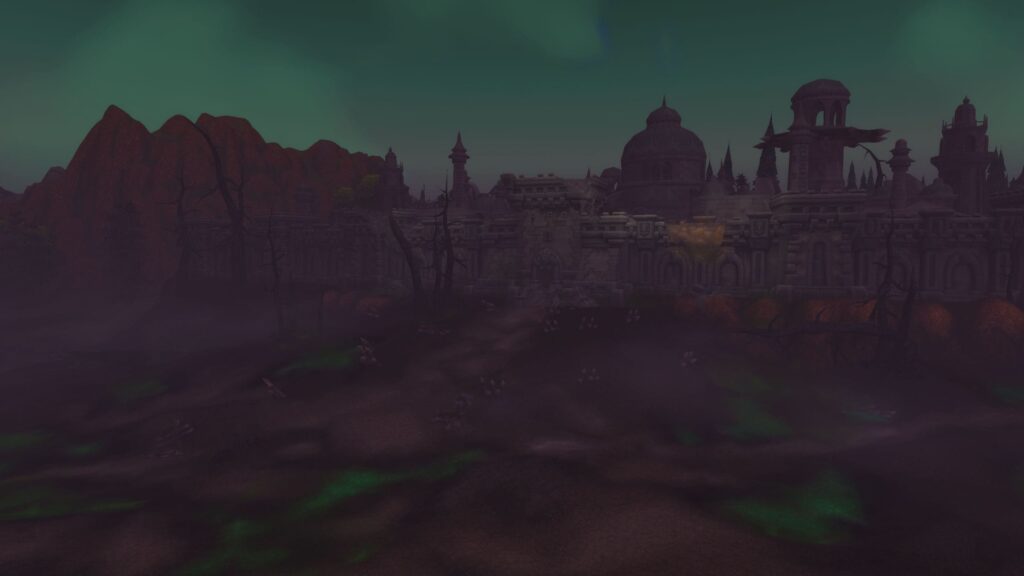
When the Alliance laid siege to the ruins of Lordaeron, Sylvanas made a drastic, scorched-earth choice. Rather than surrendering her city, she unleashed massive explosions of the deadly Forsaken Blight. The entire Undercity was engulfed in toxic sludge, rendering it completely uninhabitable even for the undead, effectively turning the region into Azeroth’s own radioactive zone.
Dawn of a New Era for the Sewers
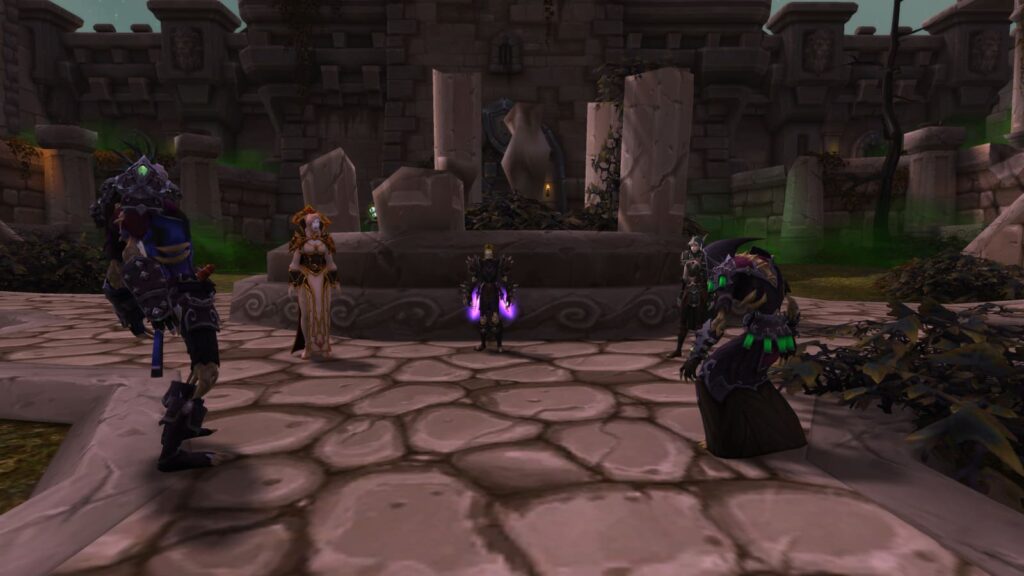
Following Sylvanas’s betrayal and abandonment of the Horde, with the cosmic events of the Shadowlands, the Forsaken were left without their Banshee Queen. The Forsaken recently reclaimed the Ruins of Lordaeron and established a new leadership structure known as the Desolate Council.
The Undercity is no longer ruled by a single monarch. Similar to how the Horde is managed in Orgrimmar, The Desolate Council consists of five key figures: our old friend Lilian Voss, Deathstalker Commander Belmont, Dark Ranger Velonara, Master Apothecary Faranell, and Calia Menethil. As the sister of Arthas and by right the last royal of Lordaeron, Calia’s return as a Lightforged Undead creates a fascinating, if highly controversial, bridge between Lordaeron’s holy past and its undead present.
Personal Thoughts on Undercity
While most players prefer the bright, welcoming streets of Stormwind, towering spires of Silvermoon or the brutality of Orgrimmar, there is an allure to hauntingly beautiful, nocturnal, gothic and eerie atmospheres. Exploring the dark, easy to get lost labyrinthine corridors of the Undercity is a unique experience that exists nowhere. Arriving at the Undercity for the first time is definitely an unforgettable experience for most adventurers.
Watching characters like Lilian Voss grow from a terrified, newly raised undead in Deathknell into a composed leader sitting on the Desolate Council has been a good side story to witness. The addition of Calia Menethil as a Lightforged undead still feels a bit polarizing to me. It fundamentally challenges the traditional, gritty aesthetic of the Forsaken that made the faction so unique in the first place. Nevertheless, seeing the Forsaken slowly cleanse the blight and actively rebuild their home proves that even in the deepest, darkest and dankest sewers/crypts beneath Lordaeron, grimness and griminess of the Forsaken can survive.