 World of Warcraft

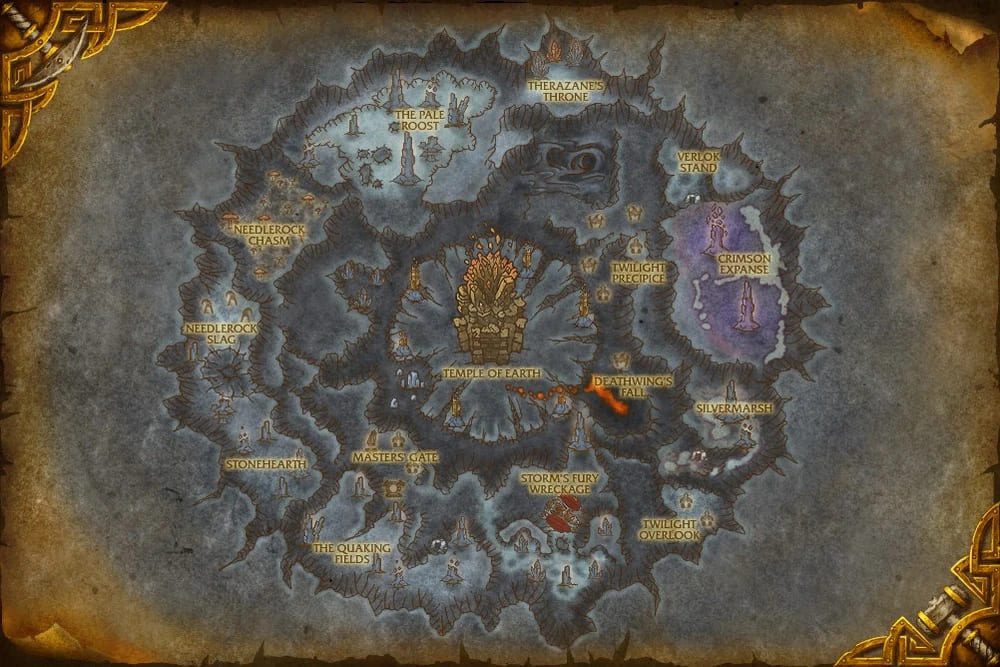
Far beneath the surface of Azeroth lies Deepholm, a vast and ancient domain where stone and crystal define both landscape and existence. As one of the four realms within the Elemental Plane, it stands as the embodiment of earth in its most primal and unyielding form. Deepholm is not merely a place of confinement but a carefully shaped world, designed to contain immense elemental forces while sustaining its own internal order. Its caverns stretch endlessly, illuminated by radiant minerals and anchored by structures older than mortal memory. Though rarely seen by those on the surface, its influence has echoed across ages, particularly when its fragile boundaries are disturbed. Deepholm’s significance lies not only in its purpose as a prison but in its role as a foundation (both literal and symbolic) within the greater cosmology of Azeroth.
Origins of Deepholm
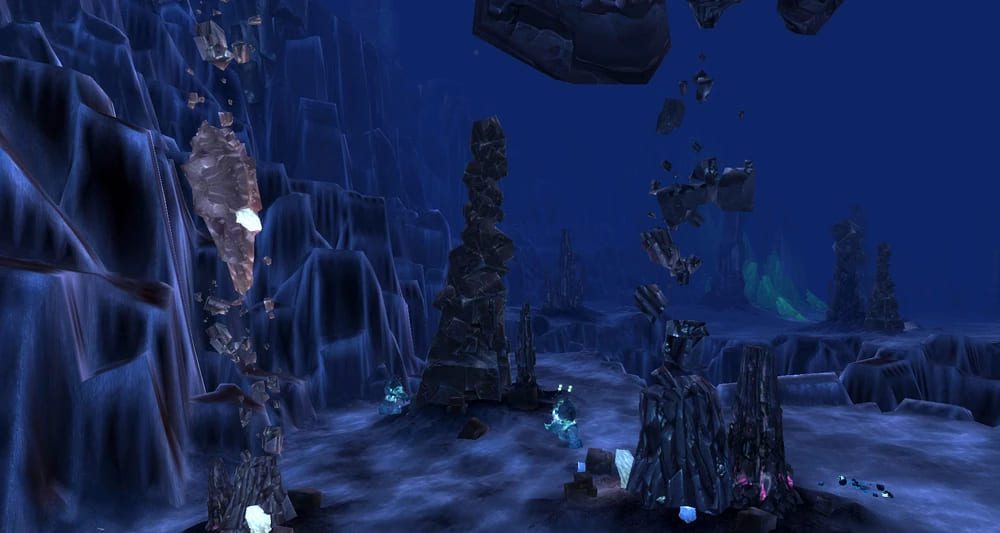
Deepholm was formed in ages past by the titan-forged, who sought to bring stability to a world that was once dominated by the chaotic elemental forces. As such, the Elemental Plane was constructed as a separate dimension, divided into four domains aligned with the fundamental elements. Deepholm was to be the designated realm for earth elementals, shaped to reflect their nature, and deeply rooted in the fabric of the world. This separation marked a turning point in Azeroth’s early history. With the elemental forces removed, the surface world was allowed to stabilize, giving rise to ordered ecosystems and the eventual flourishing of life. Deepholm thus became both a containment zone and a necessary counterpart to Azeroth itself. Within its boundaries, countless elemental beings (from stone giants to smaller crystalline organisms) found a place suited to their existence. Among these inhabitants, Therazane the Stonemother holds dominion. As the elemental lord of earth, her presence defines much of Deepholm’s internal structure and hierarchy. Her influence extends through the countless caverns around, shaping both the physical and political landscape of the realm.
Geography and Living Stone
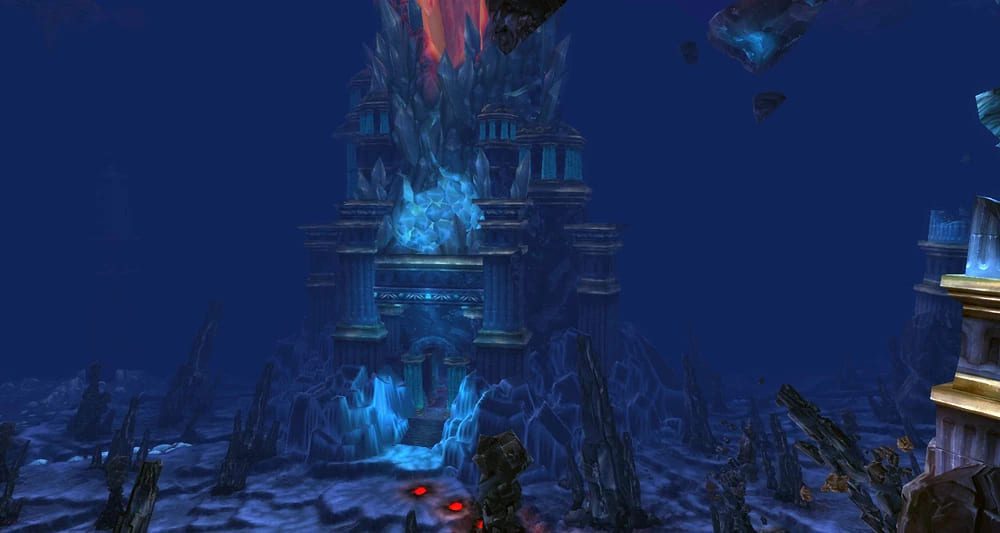
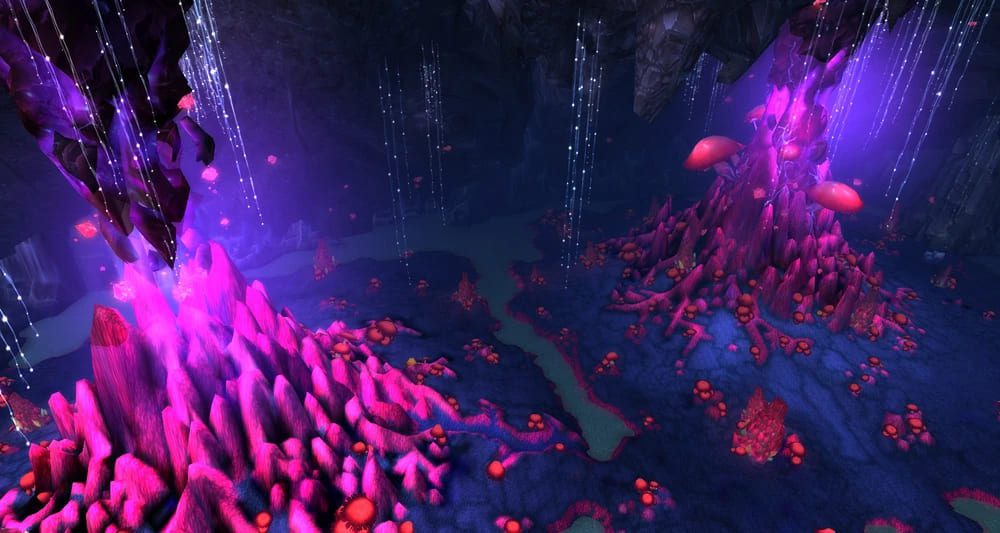
Deepholm’s terrain is a study in extremes, composed of vast caverns, jagged cliffs, and “lush” crystalline forests. The realm lacks a conventional sky, but it is far from what can be truly considered dark. Luminescent crystals embedded within the cavern walls cast light across the landscape, creating a changing interplay of light and shadow. At the center of Deepholm stands the Temple of Earth, a monumental structure that anchors the realm both physically and symbolically. Within it resides the World Pillar, a colossal formation responsible for maintaining the balance of both gravitational and elemental forces throughout the domain. This pillar serves as the literal backbone of Deepholm, making sure that its immense weight and energy remains stable.
The various surrounding regions are populated by a diverse array of elemental life. Stone drakes soar through large open cavernous areas, shale spiders weave intricate mineral webs, and gyreworms burrow through the depths of this already deep zone. These creatures are not just inhabitants, but extensions of the realm itself, representing the elemental plane of earth to the fullest.
The Shattering and Its Consequences on Deepholm
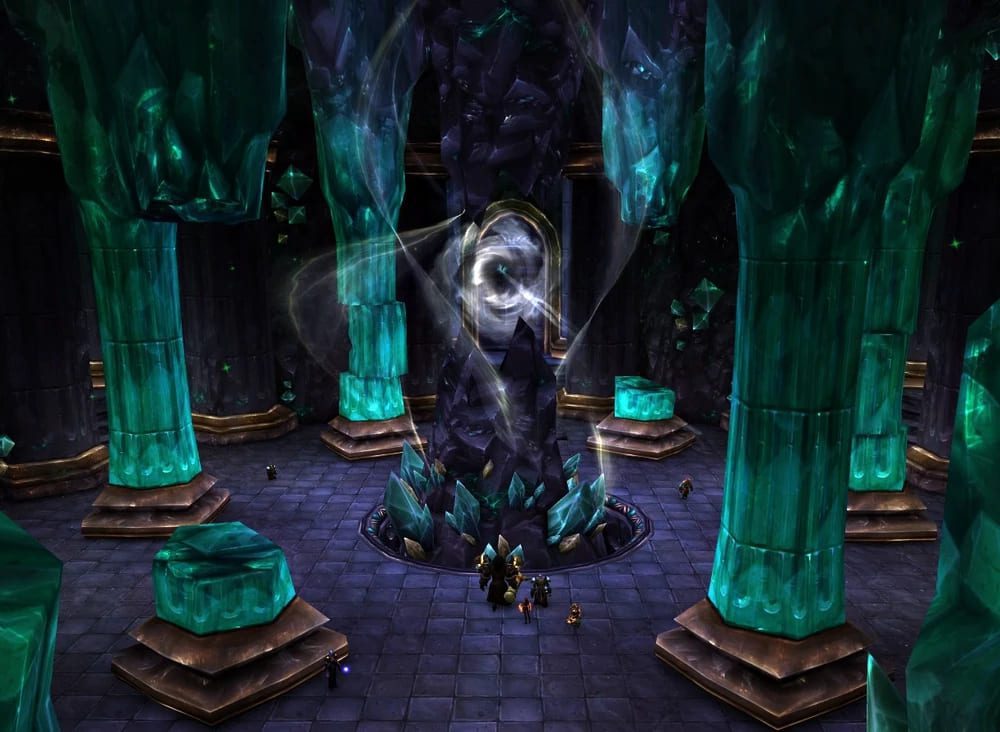
Deepholm’s internal balance was violently disrupted during the Cataclysm, when Deathwing tore through the realm in his return to Azeroth. His passage shattered the World Pillar, destabilizing the balance that sustained Deepholm and linked the Elemental Plane directly to the physical world. This rupture had far-reaching consequences. The collision between realms triggered a global disturbance, allowing uncontrolled elemental forces to spill into Azeroth. Within Deepholm, the destruction altered both the geography and the governance. The Temple of Earth, once a stable center, became a focal point of conflict as various factions sought control over its fractured remains.
The Twilight’s Hammer cult was one of the main forces that established a presence within the temple, exploiting this chaos for their own ends. In response, the Earthen Ring (a coalition of shamans dedicated to maintaining the elemental balance) moved to reclaim the site and repair the World Pillar. Their efforts have brought further the realm’s importance; without restoration, the structural integrity of both Deepholm and Azeroth itself was at risk. Ultimately, the reconstruction of the World Pillar marked a return to relative stability, though the scars of the event remained etched into the land.
In the years following the Cataclysm, Deepholm did not return to complete isolation. Outside forces continued to influence the realm, revealing its ongoing vulnerability. During the Legion expansion, some unusual seismic activities were recorded, ones that were not of the ordinary type. The Twilight’s Hammer continue to maintain a diminished but persistent presence, their activities contributing to instability within the region. At the same time, tensions between the inhabitants of Deepholm and external entities remained high. The destruction brought forth by Deathwing fostered deep resentment among the earth elementals, particularly toward the black dragonflight.
Personal Thoughts on Deepholm
As I mentioned in the Elemental Plane article, Deepholm was one of the most memorable zones for me between the four elemental planes. The most prominent reason was that, even though the ground you walk on is generally plain old rocks, it’s dotted and illuminated with all the colorful crystal formations around the whole zone. This helps with making the sub-zones of the main area a whole lot more diverse than it might’ve been. It was a unique experience to find every corner and crevice in Deepholm, feeling almost like a cave diver that found the perfect hole that they could not go back out of. It also was a great introduction to Cataclysm for me since it did not introduce a whole continent like other expansions, but the mere existence of Deepholm was enough to show me that Deathwing done goofed up the world enough that an entire plane was now linked with the waking world.