
 World of Warcraft

To the southern parts of Uldum, where sun-baked dunes hide the remnants of various titan designs, the tol’vir remains as one of Azeroth’s most enduring legacies of ordered creation. Born not out of mortal evolution but through divine craftsmanship, they exist as living constructs shaped to preserve, guard, and maintain the mechanisms left behind by the titans during the ordering of the world. Their presence is inseparable from the land they inhabit, for Uldum itself was not just their home, but their mission. Over time, what began as a directive became identity, and what was once duty transformed into culture, memory, and division. To study the tol’vir is to observe a people stuck between purpose and transformation, bound always to the echoes of their creators.
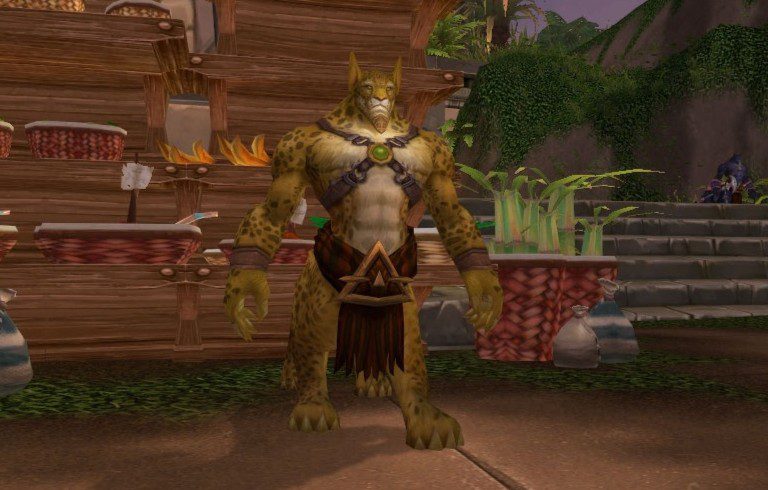
Creation of the Tol’vir Through Titanic Means
The tol’vir were among the many titan-forged shaped through the Forge of Wills during the ordering of Azeroth, designed to serve as guardians of knowledge, structure, and stability. Alongside other kin such as the mogu and the anubisath, they were entrusted with the protection of titan facilities across the whole world, most notably those connected to Uldum and its surrounding systems. Their original purpose was not expansion or dominion, but preservation, ensuring that the machinery of creation remained undisturbed. As agents of the titan keeper Highkeeper Ra guided them southward to the hidden lands of Uldum, the tol’vir became custodians of a region containing some of the most critical systems of world maintenance. Among these were connections to the broader network of titan sites such as Ulduar and Uldaman, binding Uldum into a continent-wide cage of ordered design. Even in isolation, they remained part of a greater structure, their existence tied to distant systems they could only partially perceive.
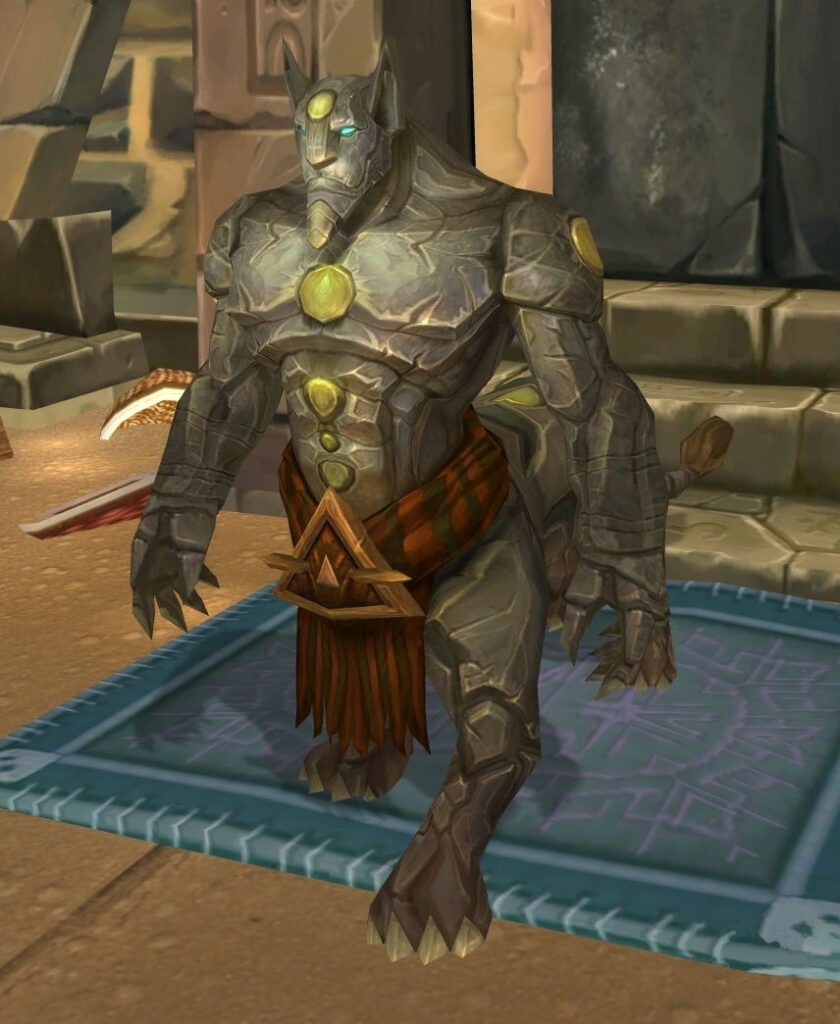
The Shape of the Stone-Born
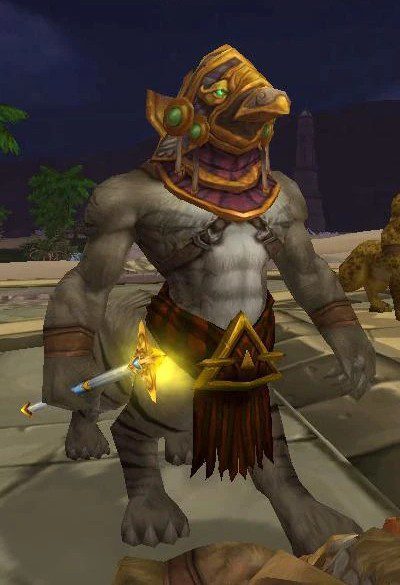
In their original form, the tol’vir were beings of living stone, their bodies embedded with crystal structures that reflected both function and beauty. Their forms bore feline elegance, sleek torsos, powerful limbs, and lion-like features that evoked both grace and predatory strength. These characteristics were intentional, designed to reflect balance between guardianship and resilience.
The arrival of the Curse of Flesh, however, reshaped them fundamentally, softening stone into organic form and fracturing the permanence of their design. Though their bodies changed, echoes of their original structure remained, visible in their posture, instincts, and enduring affinity for order. Some among them, particularly within the Neferset (one of three tribes), would later reclaim aspects of their original stone nature through pacts tied to elemental forces, while others retained their flesh-bound existence as an accepted evolution rather than a loss.
Their society preserves terminology from earlier eras, with their young referred to as cubs, a linguistic remnant of their feline inspired design. Even in language and biology, the imprint of their creators remains visible, woven into the fabric of their identity.
Guardians of Ancient Purpose
The tol’vir were never meant to be merely the inhabitants of Uldum, they were its stewards. Tasked with maintaining titan machinery and safeguarding relics of immense power, they constructed societies around this inherited responsibility. Their cities, built from stone and mud, reflect both simplicity and endurance, designed to withstand the harsh desert while preserving the sacred structures within.
Their governance developed into a monarch system, where leadership passed through inheritable succession, reinforcing continuity. High-ranking individuals (kings, generals, and high priests) often had ceremonial adornments shaped in reverence to titan guardians, symbolizing their role as intermediaries between mortal governance and divine order. The Sun Priests, in particular, stand as an ancient order wielding solar-based magic, their presence seen across all major tol’vir tribes.
Though isolated, the tol’vir were not entirely disconnected from the wider world either. Titan communication networks linked Uldum to other facilities, allowing limited awareness of external events. Yet this knowledge remained distant, filtered through systems rather than lived experience, reinforcing their role as observers rather than participants in Azeroth’s larger unfolding history.
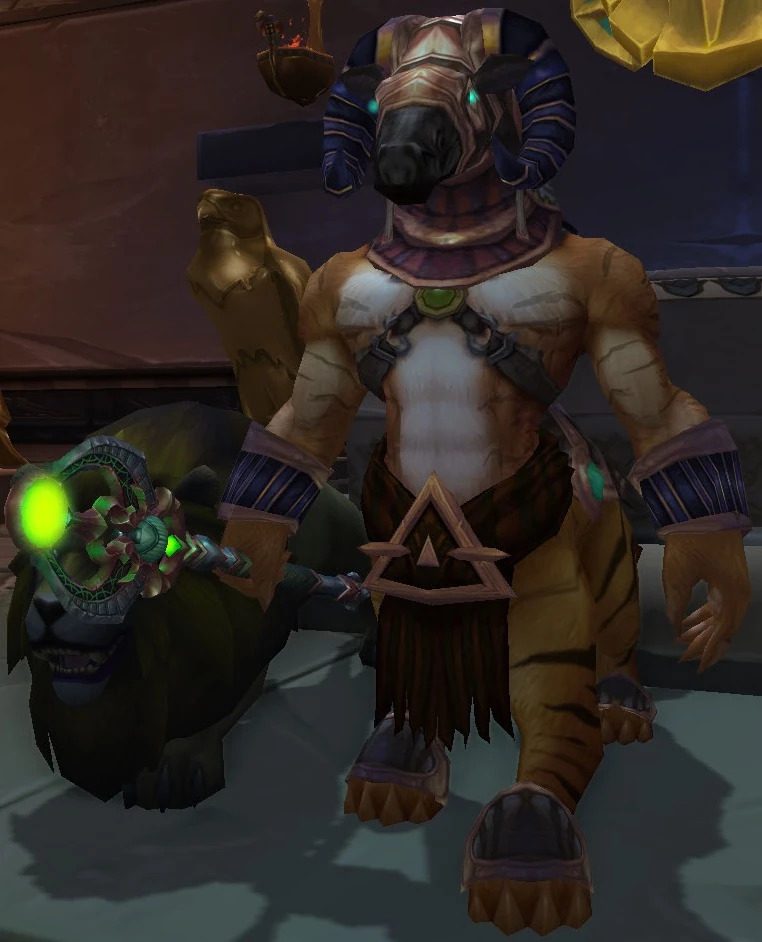
Tribes of Division and Memory
Over time, the tol’vir fragmented into distinct tribes shaped by geography, ideology, and circumstance. The Ramkahen emerged as one of the most stable groups, preserving a cautious independence. The Orsis, once resilient, were nearly erased during the elemental devastation linked to the forces of Al’Akir. These divisions deepened even more during the era of the Cataclysm, when the return of Deathwing offered the Neferset a path to reclaim what they believed was their rightful state. Their willingness to accept transformation through external power set them apart from other tribes, leading to internal conflict that fractured tol’vir unity. Meanwhile, the Ramkahen chose preservation over restoration, prioritizing survival of identity over reversal of change.
Later, when Sargeras struck his sword through the planet, a fourth tribe emerged called the Amathet. Unlike their kin, they remained entirely stone-bound, having escaped the Curse of Flesh through prolonged stasis. Their rigid interpretation of titan stewardship placed them at odds with other tol’vir factions, particularly during conflicts over control of ancient titan forges and their potential to reshape the world itself.
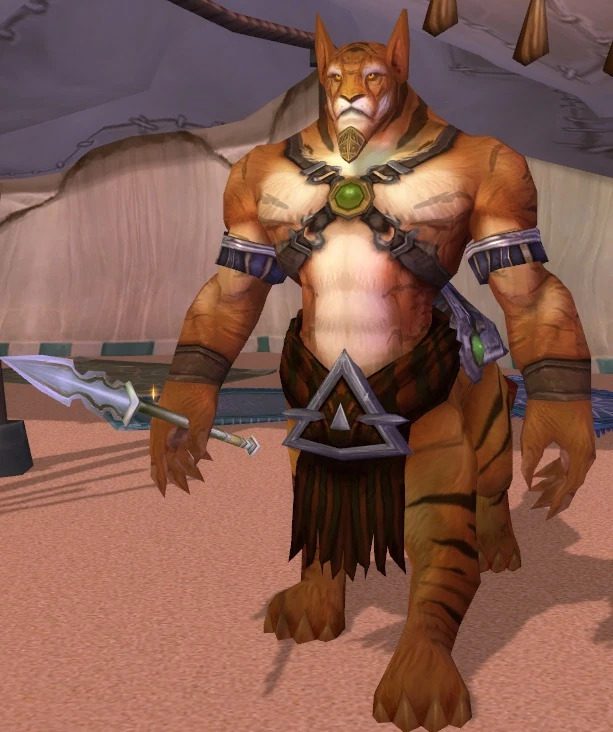
A Legacy Under Shifting Skies
The history of the tol’vir is inseparable from the lands of Uldum and the titan machinery it hides beneath. Their existence was altered by the misuse of systems they were created to maintain, particularly during the catastrophic activation of the Forge of Origination in ancient times. This event reshaped both their world and their identity, leaving behind a fractured people tasked with guarding the consequences of this divine design.
In later eras, their struggles continued through cycles of war, alliance, and external intrusion. Forces tied to the Old Gods, the Burning Legion, and other existential threats repeatedly tested the boundaries of their endurance. Even as factions such as the Ramkahen formed alliances to defend Uldum, others pursued different paths that reignited their ancient tensions.
Despite these upheavals, the tol’vir remain bound to their original purpose. Whether as stone or flesh, divided or unified, they continue to embody the will of the titans’ design as caretakers of a land that is itself a mechanism.
Personal Thoughts on the Tol’vir
The tol’vir stand as one of Azeroth’s most intricate legacies of creation, a people whose existence blurs the boundary between constructed purpose and lived identity. They are more sophisticated than the anubisath, and have their own culture to live through, but ultimately they came from the same origin point. But that doesn’t stop them from ever forging their own fates. Even though they don’t see eye to eye with each other all the time, they all still remember what they used to be (some more than others), and it isn’t a shared memory to be forgotten anytime soon, even from a player’s view. I was struck with awe the first time I visited Uldum, first by the landscape itself, and second by the original designs of their models which are honestly without equal. And it is still true to this day. Between all the new races that only have slight variations between them (I’m looking at you the gazillionth elven race that was added to the game so people wouldn’t complain they couldn’t play an elf they desire without changing factions, therefore making the game a soup of everything), the tol’vir stands proud as an eye-candy to people that wants to see an original piece that predates most of the current player base.