
 World of Warcraft

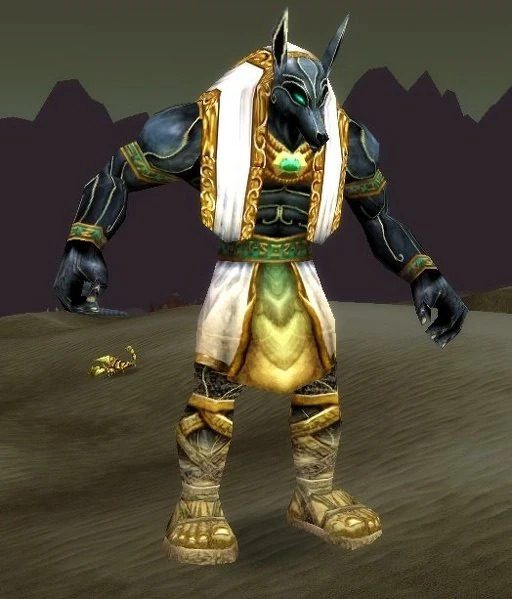
Within the sun-scorched expanse of Uldum and the buried titan vaults of Ahn’Qiraj, there endures a particular creation, forged by the titan-watcher Ra. Forged from obsidian and bound to purpose even before the shaping of most known civilizations, they were never meant to be remembered as individuals or cultures, but as functions made real. Their existence was to be the silent guardians of vaults, fortresses, and mechanisms that preserved the stability of Azeroth itself. Yet time has its way of pressing upon even the toughest of designs. Across ages of silence, conquest, and corruption, the anubisath have remained in place, some fulfilling their intended roles, others repurposed by foreign will, and many lost to the slow erosion of control. What survives today isn’t a singular legacy, but a fractured record of obedience tested against forces far beyond what their original design required.
Forged Sentinels of Titan Design
The anubisath were shaped through the workings of the Forge of Wills, alongside other titan-forged constructs such as the tol’vir and mogu. Their creation served a single but important intent: to serve as unwavering guardians to titan infrastructure across Azeroth’s southern parts. Under the directive of the Highkeeper Ra, they were stationed across key sites, most notably the fortress of Ahn’Qiraj and the Uldum region.
Unlike living civilizations, the anubisath were not given culture in an expected sense. Instead, they were embedded with protocols of defense and preservation, designed to persist indefinitely without deviation from their purpose. In this form, they became extensions of the titans’ will, immovable sentinels guarding against decay, intrusion, and imbalance. When Ra eventually fell silent, the anubisath did not stop. They continued their vigil, bound by directives that did not require constant renewal. Yet the silence they got left in isn’t a protection from change, and over time, the world beyond their stations began to encroach upon even their ordered existence.
Subjugation of Anubisath and the War of Shifting Sands
The first great rupture in the grand anubisath purpose came with the rise of the aqir and their evolution into the qiraji beneath Ahn’Qiraj. These insectoids, driven by expansion and adaptation, overwhelmed the inactive defenses of the region and redefined its internal order. The anubisath, though filled with strength and resilience, were not designed for autonomy, and many were taken under control in the end. Under the qiraji dominion, they were repurposed as instruments of war during the War of the Shifting Sands. Their forms, once guardians of sealed knowledge, became frontline weapons against the night elf Sentinels and their allies. In this role, they’ve shown utmost efficiency, single constructs capable of breaking entire formations through sheer physical force.
The arrival of the bronze dragonflight changed this balance decisively. With aerial dominance and temporal coordination, they disrupted the cohesion of the titan-forged ranks. Many anubisath were destroyed in the opening stages of the conflict, leaving only scattered remnants behind.
Ossirian and the Fracture of Purpose
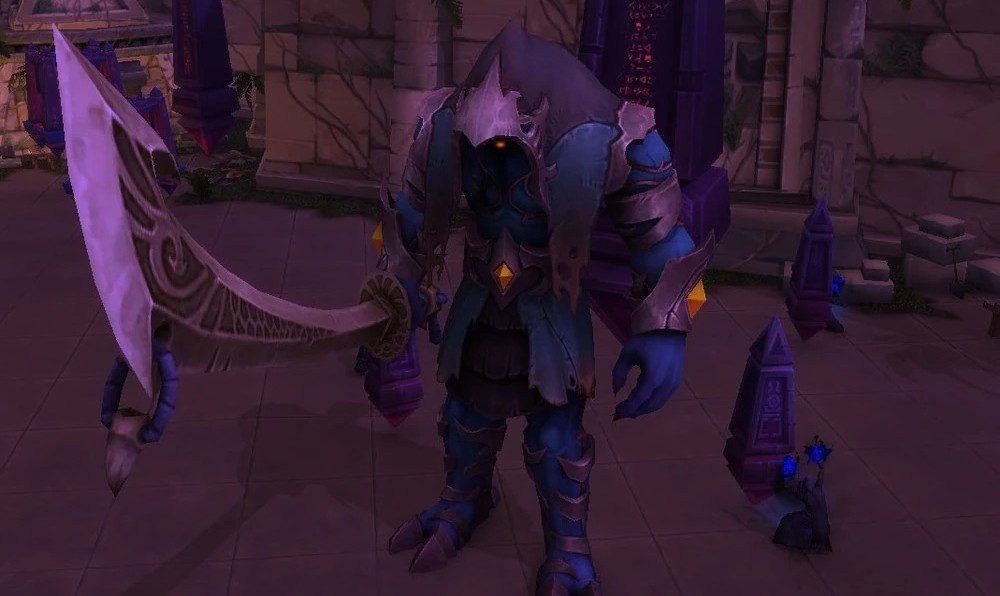
Among the surviving anubisath, one figure emerged as an anomaly, named Ossirian the Unscarred. Unlike his kin, Ossirian’s survival was marked not by preservation alone, but by transformation through heavy conflict. His decisive strike against the dragon Grakkarond altered the course of battle, even as it left him grievously wounded in return. (the bones of Grakkarond were still around to be seen in Silithus, until Sargeras did his thing at the end of the Legion expansion and destroyed most of the area, along with the bones)
Reclaimed within Ahn’Qiraj, Ossirian underwent a form of binding that secured his essence to crystalline anchors within the fortress itself. This restructuring granted him a sustained form of near-indestructibility, provided he remained within proximity of these anchors. In doing so, he became something neither fully autonomous nor entirely bound, existing in a state between function and anomaly. Among the remaining anubisath, Ossirian came to be regarded with respect, not as a leader, but as a symbol of persistence beyond design.
Personal Thoughts on the Anubisath
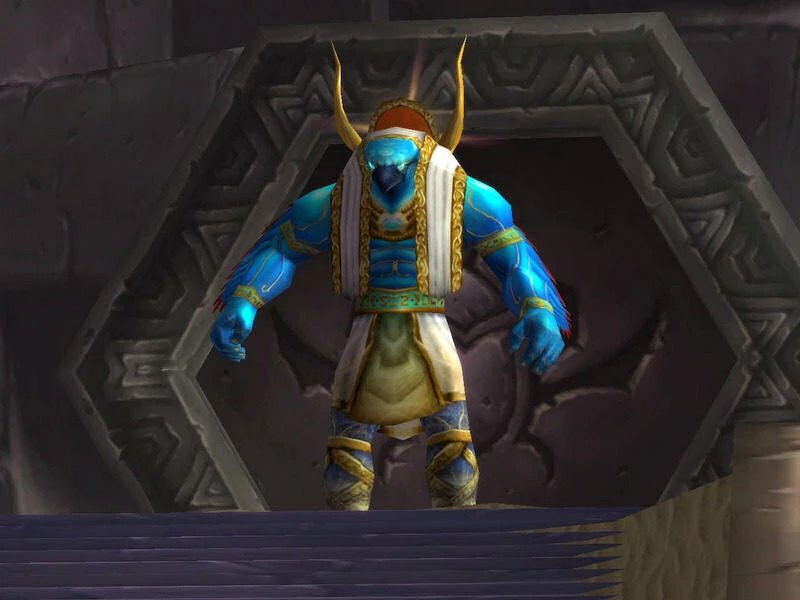
The Anubisath are not some grand force if you consider their corruptive masters, the aqir and the qiraji, are far larger in numbers than them, and that also means larger in strength too. They were created for one thing and one thing only, safeguarding the titan facilities. Even though they fulfilled that mission to their best, the accompanying silence of Ra ultimately sealed their fate. But that didn’t mean that they were forgotten. Their bitter fate of being used as forces of the minions of Old Gods showed the heroes what they truly were. True titan-forged beings that were toughs as all to fight against. Now, they remain as corrupted tools of the Old Gods, unable to continue their initial mission, and controlled by the very enemies their creators were wary of.