
 World of Warcraft

Across the sun-scorched parts of southern Kalimdor, where the wind drags sand across ancient stone, exists an alien presence. They are not just creatures of fang and chitin, but the remains of a far older design, shaped in an age when Azeroth trembled under the will of ancient and malicious powers long since buried underneath the layers of this world. Their hives stretch far beneath the surface, their purpose never fading, their instincts sharpened by ages of adaptation. They lack thought, but they have unity, and they express their intent not by speech, but through their relentless and collective will. These creatures are named the Silithid, a race of insects serving the qiraji as their dedicated fighting force.
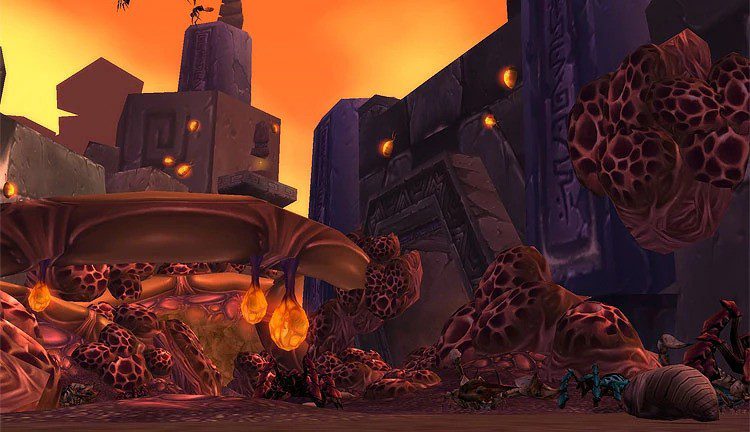
Origins of the Silithid, Beneath the Black Empire
The lineage of this insectoid race goes back all the way into the oppressive era of the Black Empire, when the Old Gods ruled Azeroth from the shadows. From that age emerged the aqir, a race shaped to serve, which would later break into many forms and evolve into different beings. Among these, the qiraji have shown themselves as a more refined and formidable lineage, hiding within the fortress-city of Ahn’Qiraj, after their long and brutal conflict with the trolls. But this evolution wasn’t the final form we would see them take. From the qiraji, under the influence of the Old God C’Thun, came forth the silithid, less aware, but not less purposeful. They were stripped of their higher sentience, their individuality shaped into instinct and obedience, becoming mere extensions of a greater will. In this way, they hold a quieter legacy. A species perfected through submission to a single, guiding being.
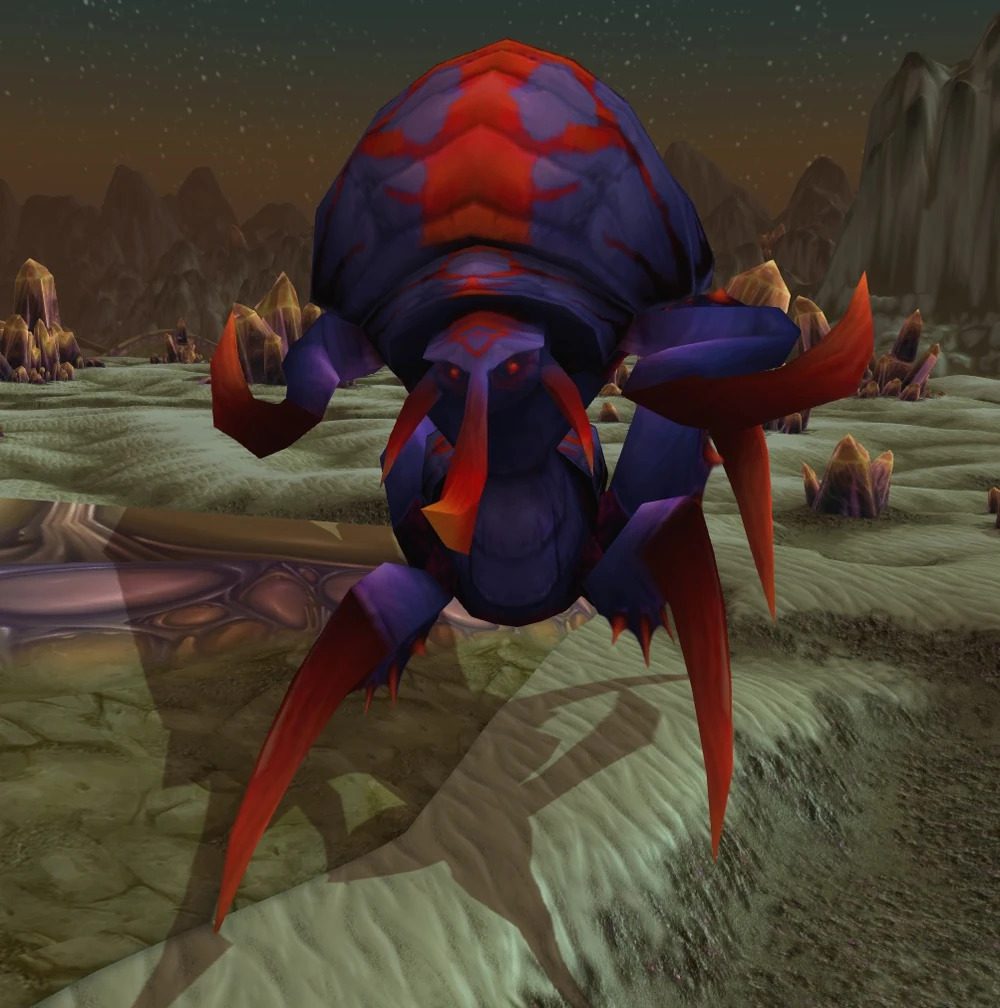
The Shape of Adaptation
Few creatures across Azeroth demonstrate such sudden adaptability as the silithid. From the moment of their earliest creation, their forms are shaped not only by time, but by necessity. The time they spend within the egg seems to influence their size, with longer times yielding more towering, formidable specimens that serve as living tanks of their hives. However, size alone is not their one and only trait, it is their capacity to become what is required that shines. Silithid that are in the larval state, often called broodlings, exist as a potential at first. Within them lay the capacity to transform into a variety of forms, from workers to warriors, tunnelers, or aerial predators, depending on the needs of the colony. This adaptive nature ensures that no hive remains a static type, and no threat goes unanswered for long. Even in the aftermath of cataclysmic events, like the wounding of Azeroth, the silithid have shown a capacity to grow stronger.
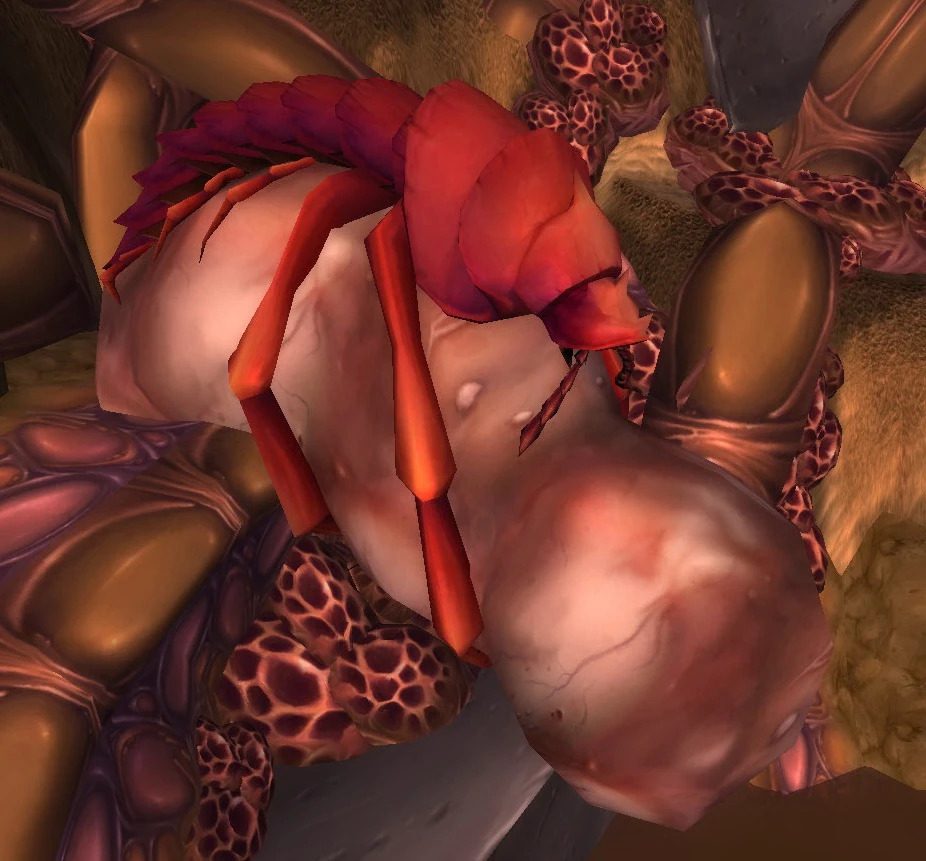
Various Castes of the Silithid
Beneath the shifting sands lies their vast, labyrinthine hives, each a living organism in its own right. Within these depths, the silithid exists in a firm yet fluid caste system, where every one of their forms serve a purpose in sustaining the whole. At the heart of each hive rests the queen, a figure of biological importance, whose restless production of eggs ensures the continuation of the colony. The whole of the hierarchy unfolds around this queen. The colossus type of silithids stand as massive guardians, embodiments of brute strength, often taking the role of leadership too. Reavers act as the primary defenders, whereas wasps are the flying forces of the hive with their aggressive patterns of attack. All the while, the workers and scarabs maintain the structural integrity of the hive behind the scenes, only attacking back if they’re engaged, showing their priority of the hive before all else. There are also tunnelers, who carve the ever-expanding corridors of the hives, and some other more specialized forms bring light to the subterranean dark or tend to the fragile young.
Despite their varied forms, a single truth binds them together, it is that the defense of the hive comes above all else.
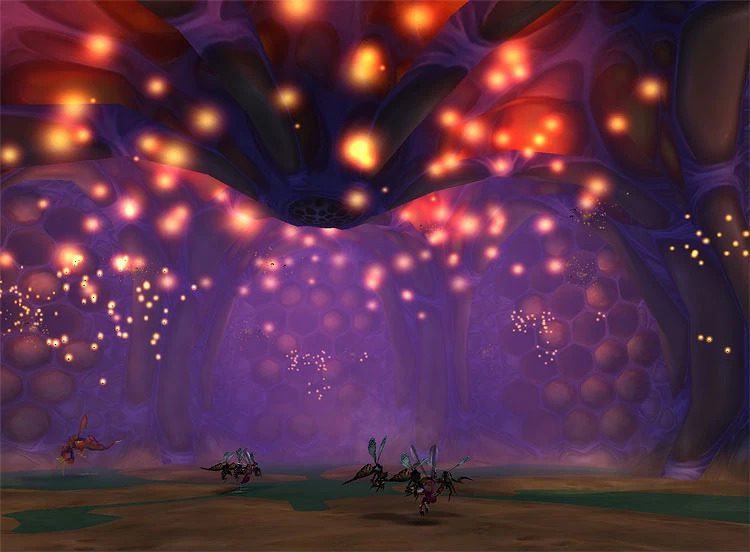
Domains of Sand and Silence
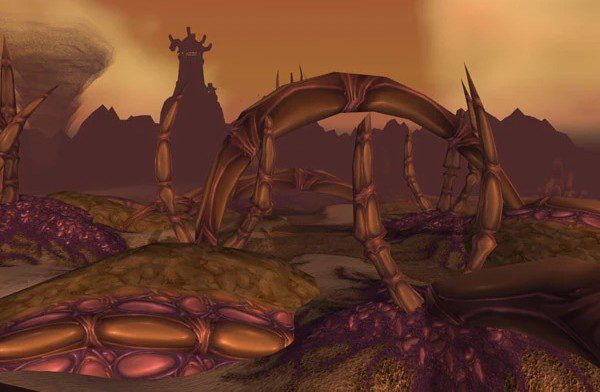
The dominion of the silithid stretches across much of the southern parts of Kalimdor, though it is in Silithus that their presence is the heaviest. There, the land itself feels hollowed out by their passage, the surface being merely a thin veil over the vast networks they carved out below. Three great hives, namely Hive’Zora, Hive’Ashi, and Hive’Regal, keep their power in this region, each housing mysterious crystal structures that are believed to serve as conduits for commands coming from the distant and unseen forces. Yet their reach does not simply end there. From the jungles of Un’Goro Crater to the expanses of Tanaris and the scattered reaches of Feralas and the Barrens, smaller colonies still persist, adapting to environments that would seem unlikely to be housing lesser species. Their presence near the limited water sources hints at deeper biological needs, suggesting that even these resilient beings remain bound to the fundamental needs that require survival. In some rare instances, silithid have even been observed in underwater environments, living deep beneath the water’s surface in the Thousand Needles area.
Relics of War and How to Tame Them
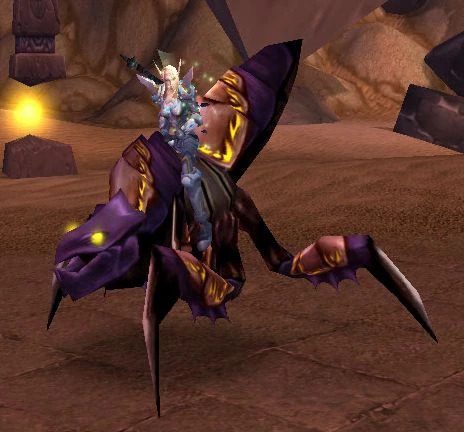
Though the silithid themselves remain bound to instinct, echoes of their greater lineage still persist in the remnants of the qiraji and the constructs once wielded in war. Among these, the ones called battle tanks stand as both relics and symbols, massive, living beasts of war that once showed themselves across the sands. With the opening of the gates of Ahn’Qiraj, players were able to obtain such battle tanks from inside the instance itself, different colored ones being green, yellow, blue, and red. These were only able to be used inside of the raid itself, apart from one of them. The Black Qiraji Battle Tank, an exception to the others and the first ever legendary mount of WoW, was able to be obtained during the 10 hour event via a quest, and could be used even outside of the grounds of the raid. Access to it being limited to the event itself, nowadays even seeing one is a rare and unique sight on its own because of it.
Personal Thoughts on the Silithid
The silithid at first might seem as your average mindless enemy type serving under the big bad, and if a surface level look is all you want, then it is indeed true. They are however a bit beyond that, being the legacy of far greater beings, firstly their ancestors and secondly their old god creators. Them having their own system of command inside the hive, once controlling much of the layers underneath the surface of Kalimdor, and putting up a good fight by the looks of it, already places them above some other “well-established” enemy races of WoW that they place in every other expansion where people question how in Azeroth they even got there. The silithids are enough for me in regards to where they stand, as a proper threat to the wider world once in the times of Classic. Even though I wasn’t there to experience the opening of the gates first-hand, I could still see the traces of this formidable force once in a while, be it leveling in Silithus or seeing the Black Qiraji Battle Tank strutting around a major city with its proud owner sitting atop (saw it only once myself, sadly).