
 World of Warcraft

Located to the south of the Barrens, Thousand Needles is a landscape defined by contrast throughout its history. Once a dry expanse of towering stone spires and sweeping canyon floors, the zone is now a vast inland sea broken by jagged mesas. Its transformation has reshaped its identity, turning a region known for isolation and endurance into one marked by survival and adaptation. The zone’s importance lies not only in its striking geography, but in the way its terrain has defined settlement locations, conflicts, and the movement across it for centuries. Since even before the Cataclysm, the zone remains a place where elevation determines the fate of its inhabitants, where remnants of the past cling to stone pinnacles, and where the echoes of earlier ages linger beneath the now area-encompassing water’s surface.
Origins and Shifting Landscapes
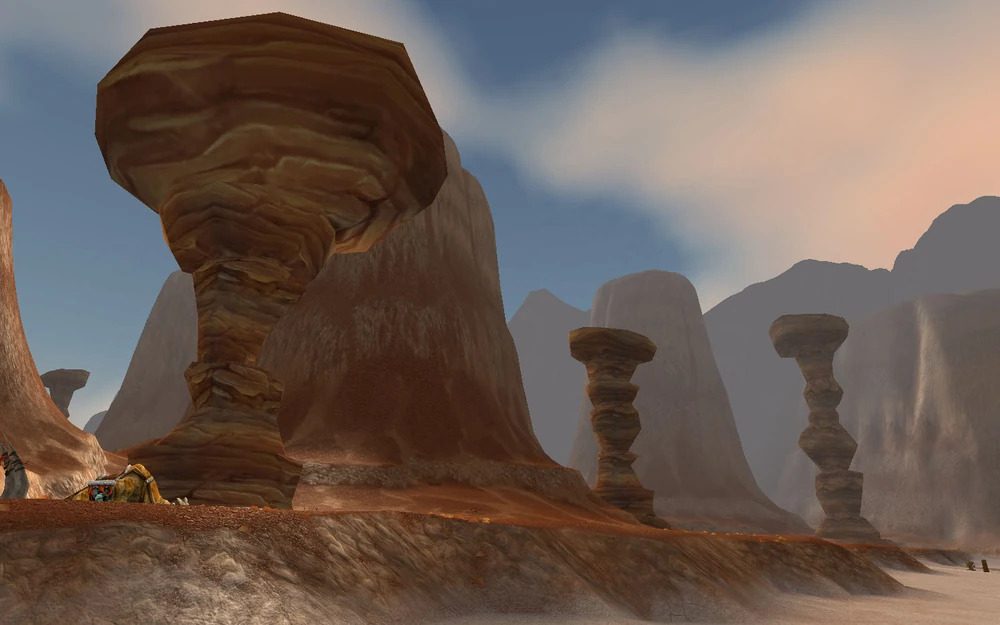
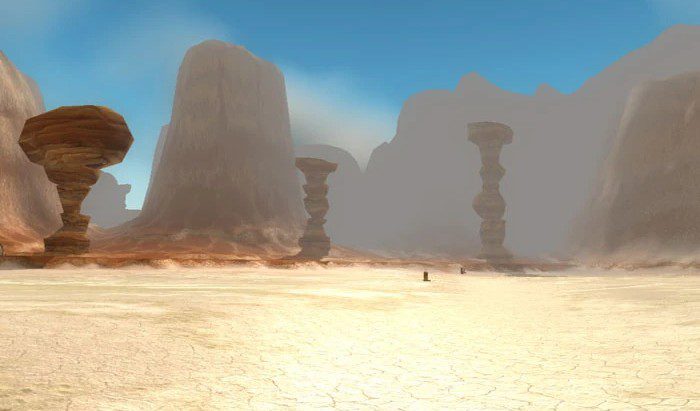
Thousand Needles takes its name from the immense stone spires that dominate the region. Narrow mesas rise sharply from the canyon floor, carved over the ages by persistent water erosion. Long before its flooding, the area was defined by its dry winds and exposed rock, its climate standing in heavy contrast to the lush jungles of the neighboring zone Feralas. This unusual environmental divide has been linked to lingering magical energies, suggesting that the land’s formation may not be entirely natural.
In the earlier eras, the canyon floor stretched wide and dry, most notably in the Shimmering Flats part of the area. A vast salt plain that reflected the sky like a mirror, it was the perfect place to afk about if you were more into large open areas and that desert/Texan aesthetic. This open terrain paved the path for travel, trade, and experimentation, making it one of the few accessible flat areas in an otherwise vertical landscape. Even still, it wasn’t an easily traversed zone. Its defining feature remained its elevation, with settlements and pathways clinging to immeasurable heights.
Then the Cataclysm came, and it marked a decisive turning point. The Shattering flooded the canyon, submerging the flats underwater and transforming the region into a huge body of water known as the Shimmering Deep. What was once a dry basin became a seascape, with only the highest mesas remaining above water. This shift did not bury the land’s past but layered it under the surface, securing fragments of earlier structures and routes in a buried state.
Cultural and Political Importance
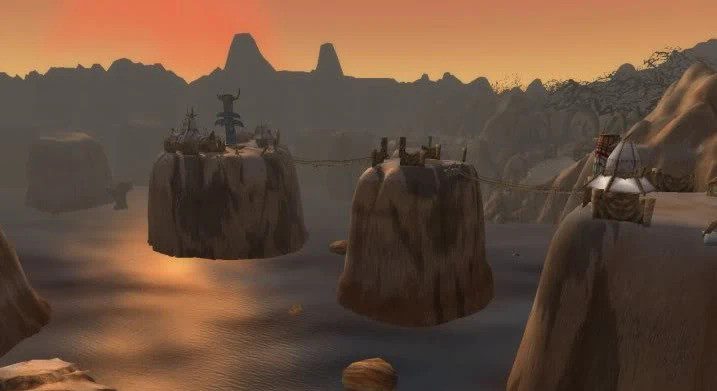
Despite its harsh environment, Thousand Needles has long supported a variety of inhabitants who adapted to its vertical terrain. Tauren settlements, most notably those atop the high mesas, reflect a deep integration with the land’s natural defenses. These elevated communities provided protection, shaping a culture rooted in endurance and vigilance, much like the ones staying there. Conflict, however, was not a feature missing from the region. The presence of centaur clans once defined a heavy part of the territorial struggle, though many were slain in the revolts following the Cataclysm. In their absence, new forces came about to claim strategic locations. Pirates and cultist groups have taken advantage of the flooded terrain, establishing footholds in areas that were previously inaccessible.
The destruction of key infrastructure, like the Great Lift that once connected the canyon to the Barrens area, further altered the region’s political dynamics. Movement became more restricted, and control of elevated routes grew increasingly important. Outposts that survived the flooding were forced to adapt or find another place for themselves, reinforcing the idea that survival in Thousand Needles depends less on strength and more on where you positioned yourself.
Geography and Notable Features
To this day, the defining characteristic of Thousand Needles remains its verticality. Even after the flooding, the massive and towering spires continue to influence settlement patterns, with camps and small towns established atop them. These natural pillars act as both refuge and vantage point, offering safety from the waters below.
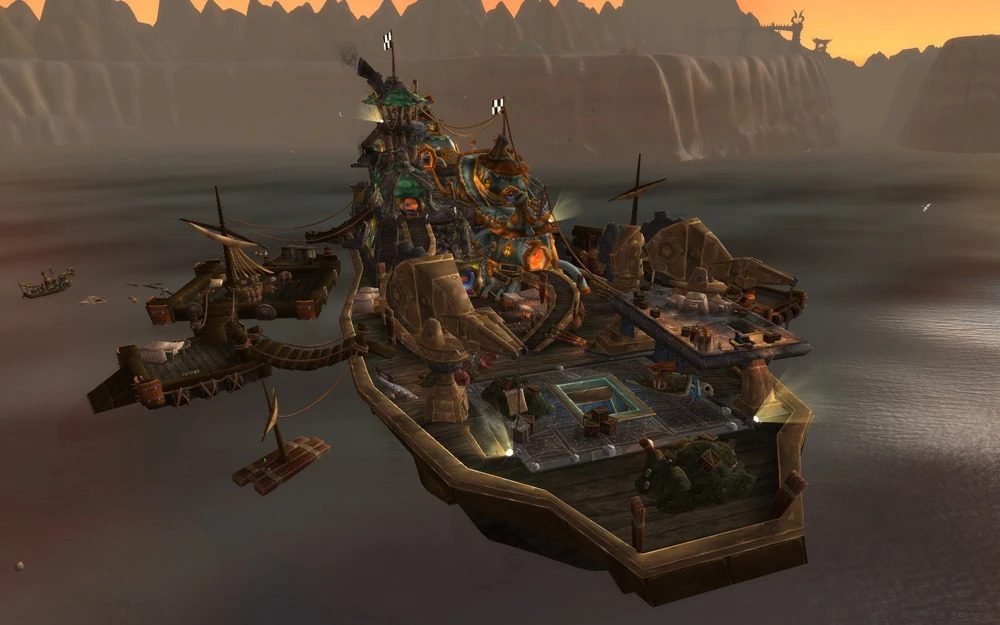
The Shimmering Deep now occupies most of the region’s interior areas, but scattered remnants from earlier constructions can still be found beneath the waterline, including the once-renowned Mirage Raceway. It was the testing place for gnomes and goblins to see which of these two races were the best engineers in the whole of Azeroth, pitting their rockets against each other in races along the constructed raceway. Nowadays though, a floating island sized structure above water called the Speedbarge serves as the central hub, showing how adaptation has become vital to maintaining any presence in the zone. The rivalry between local gnomes and goblins still remains to this day however, uninfluenced by the bigger events outside of the zone. Even if the inhabitants adapted to this sudden change, it shows that access to Thousand Needles still remains challenging after the flooding.
Personal Thoughts on Thousand Needles
Thousand Needles is a great case of study in transformation, where geography and history come together to create a place familiar to the ones that knew it before, but also changed enough to see the difference very clearly. Its towering spires still rise with the same towering presence, while the waters below tell of a different story. The region’s identity wasn’t erased by these changes, but deepened to the extent that it gained new meaning beyond its looks.
I have to admit, I don’t have much time under my belt when it comes to leveling in Thousand Needles. Sure I did spend time in the area, and saw the highs and lows of it (literally), I didn’t pay much attention to it mainly because I despised the difficulty of traversal in the zone. Seeing the version before Cataclysm while playing Classic however, changed my outlook slightly. For one, I hated Deathwing even more for changing the landscape and drowning this place, and also seeing that it was an even more of a hassle going around the zone. This could be interpreted as me hating it more than I did before, but I actually liked it because, as with the Barrens, it changed the dynamic of the whole zone. The feel of pathing your way either across the canyons in Classic, or the body of water separating the north and west side after the Cataclysm, felt engaging in a way that WoW couldn’t give to me for years. So it’s safe to say that Thousand Needles stands as an environmental challenge to players that want to experience the old WoW in the retail version, and without the hassle of downloading Classic.
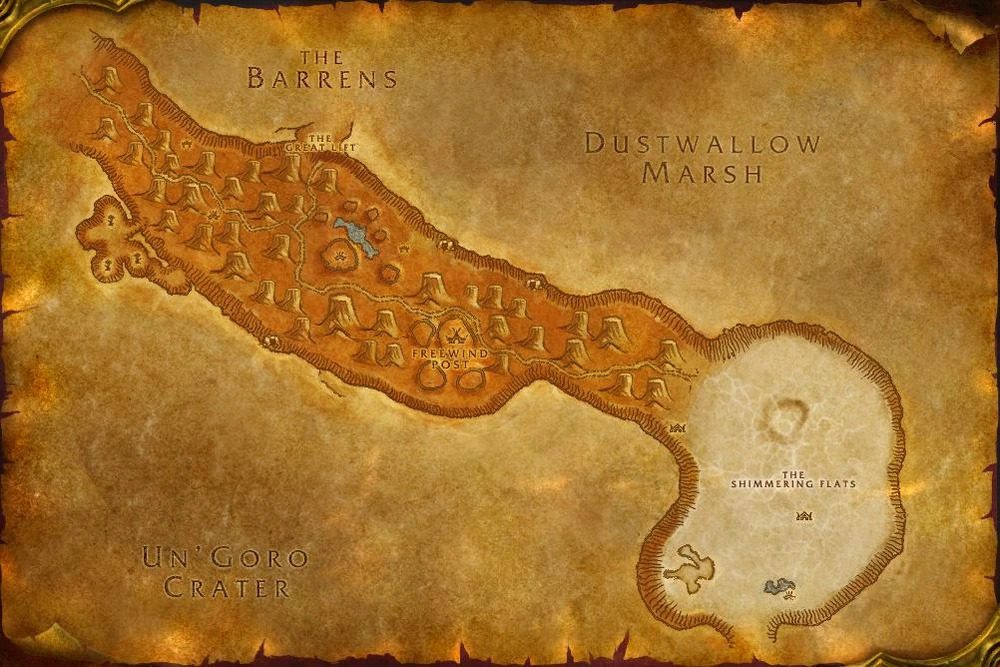
For more technical details and raw info, check Wowpedia. (Classic)
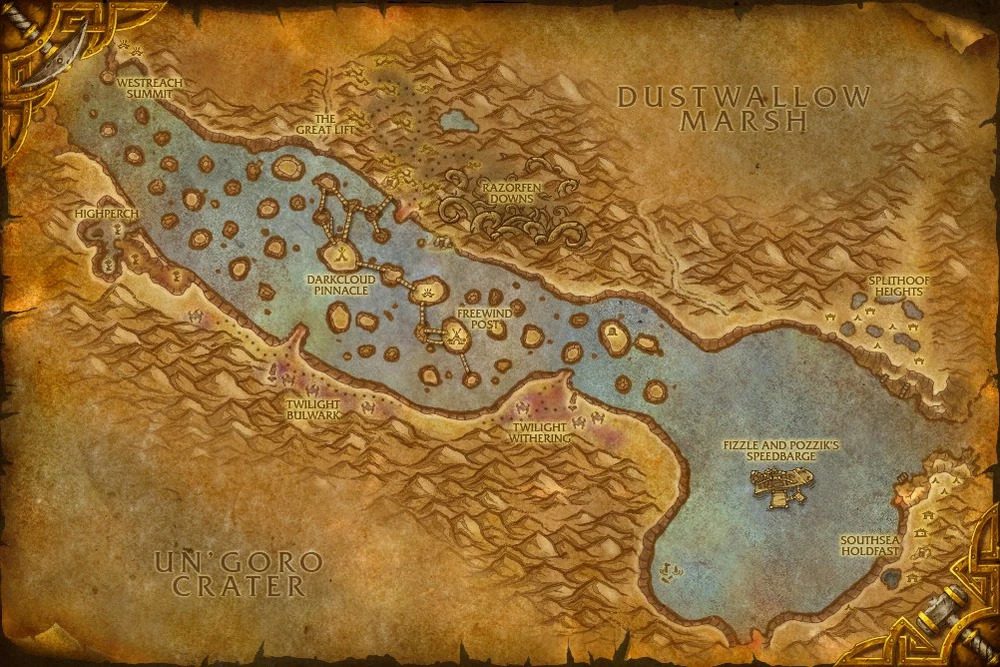
For more technical details and raw info, check Wowpedia. (Retail)