
 World of Warcraft

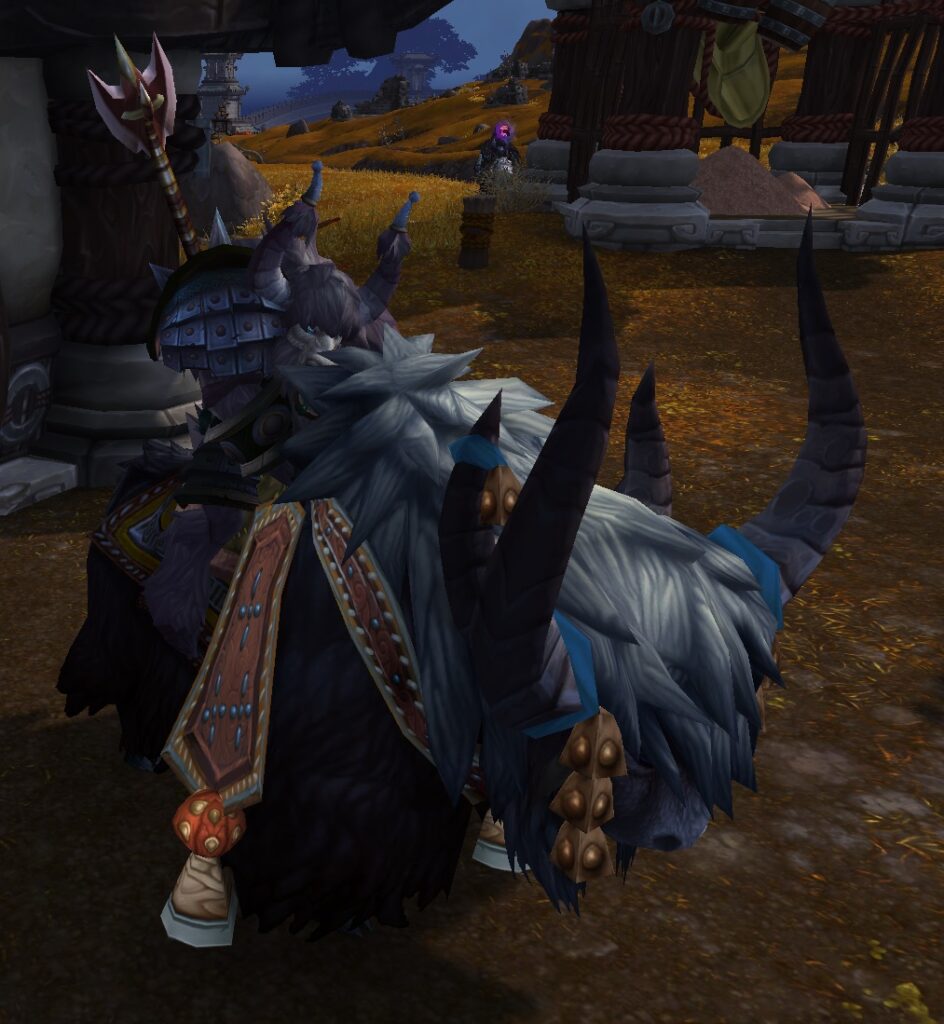
Across the steppes of ancient Pandaria walks a race forged by endured hardship and memory. Towering figures bearing the strength and endurance of the wild yak, they are one of the oldest known ancestors of the tauren and the taunka. Their history travels far beyond the walls of modern empires and into a time when the world itself had not yet been broken by the Cataclysm.
Time has not been kind to the yaungol. War, exile, and unending struggle have nearly always shaped their destiny, pressing their tribes onward across harsh lands. Yet within that harsh existence lives a proud culture. One that is defined by resilience and an unyielding will to survive. The story of these wild yak creatures is not only one of conflict, but transformation, sacrifice, and the quiet persistence of a people determined to endure even as the world around them changes.
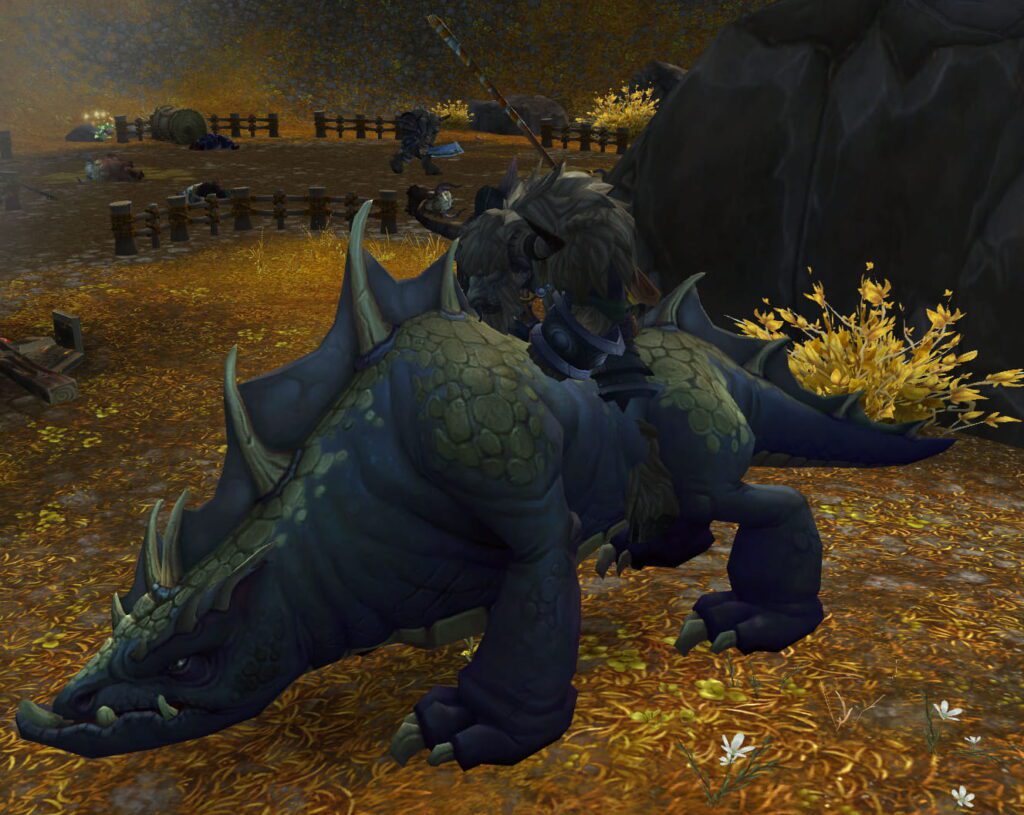
Origins Beneath Ancient Skies
Long ago, before the rise of many modern civilizations we see today, the yaungol roamed the vast lands of what was once central Kalimdor. In that distant era (more than 12.000 years before the opening of the Dark Portal), they lived as nomadic hunters who followed the cycle of the natural world. Their lives were shaped by the seasonal migrations, fertile hunting grounds, and the patient guidance of the demigod Cenarius, whose wisdom taught harmony with nature and reverence for the wild places of the world. For a time, the yaungol lived in this balance greatly. Their tribes wandered freely across the plains, sharing the land with the other ancient races. However, the world was large and competition for its resources was inevitable. As their numbers continued to grow, tensions with neighboring troll tribes also grew to a more noticeable size. Hunting territories became contested, and resentment spread among the yaungol clans.
Eventually, many tribes turned away from the path Cenarius had urged them to follow. Seeking new lands where they would not be forced to compete for survival. They journeyed south, their migration carrying them into territories dominated by one of the most formidable empires of that age, the Mogu.
Chains of the Mogu Empire
When the yaungol reached the borders of the Mogu dominion, they encountered a civilization unlike any they had seen before. The Mogu, masters of powerful arcane magic and rulers of Pandaria, saw the strength of the yaungol not as something to respect, but as something to exploit. Under the rule of the emperor Qiang the Merciless, the yaungol were captured and forced into servitude. Generations passed while this oppression continued. Mogu flesh-shapers altered their bodies, giving even more strength to their already formidable physiques while increasing their aggression and cunning. These changes were intended to create stronger laborers and effective soldiers for the empire. Yet even under such conditions, the yaungol somehow endured. Across the slave populations of Pandaria, anger grew to greater heights, and eventually rebellion took root. When the appropriate moment came, the yaungol joined the other enslaved races in an uprising that would shatter the Mogu dominance. The empire that had once seemed eternal was brought down, and the enslaved races of Pandaria reclaimed their freedom. Freedom, however, came at a great cost. The Mogu had forbidden many traditions of the yaungol, particularly their oral storytelling, which had long since preserved the memory of their past. When the empire fell, much of the yaungol cultural heritage had already faded into non-existence and half-remembered legends.
Paths Divided by Destiny
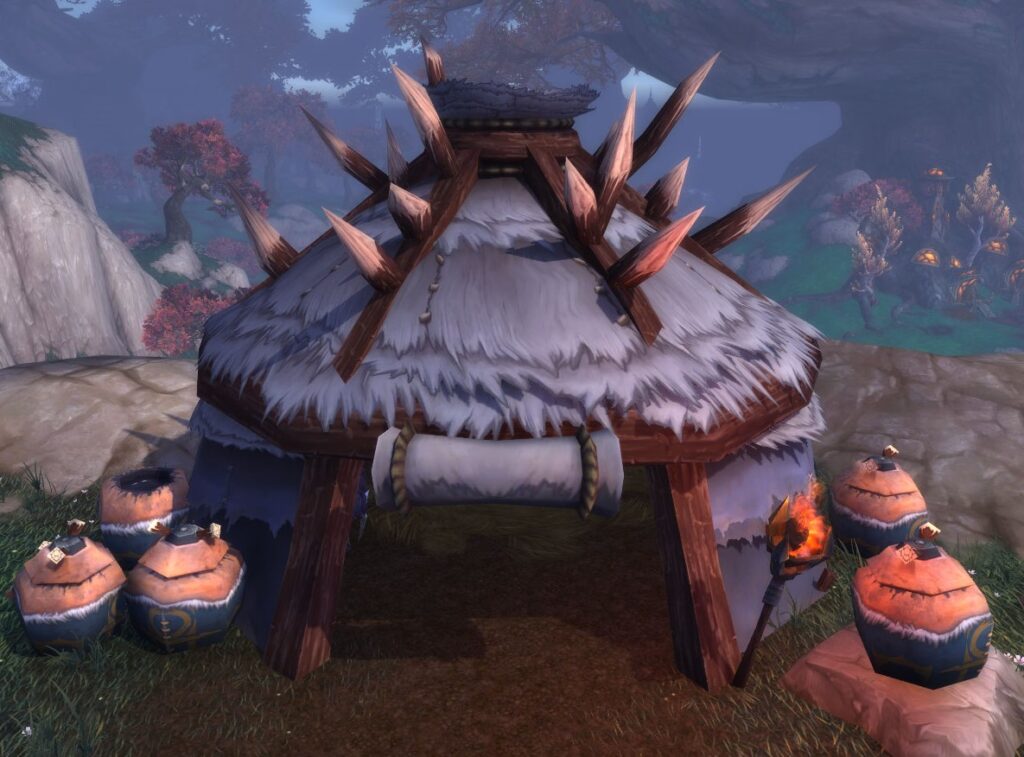
In the aftermath of the rebellion, the yaungol faced a question that would shape their future greatly. What path should their people follow, now that their chains have been broken? Some among them wanted to rediscover the ancient teachings of Cenarius and restore the harmony that once defined their ancestors. Others believed that survival needed strength above all else, and that the world, as they’ve learned from their time of enslavement, would only respect power. These disagreements slowly divided the tribes. Different groups migrated across distant regions of the world, each shaped by the lands they eventually called home.
One of those groups traveled north across the continent, eventually settling in the harsh and frozen territories near the Storm Peaks. The energies surrounding titan-forged structures in that region slowly altered them, giving rise to a new people known as the taunka. Another group returned to the central lands of Kalimdor and reunited with Cenarius. There they rediscovered the druidic teachings and spiritual traditions of the natural world. Over many generations, mystical energies surrounding the Well of Eternity transformed these yaungol into a new and distinct race, the tauren. However, not all tribes left the continent. Some remained within Pandaria, settling near the region surrounding the Vale of Eternal Blossoms. Conflicts with other newly liberated races soon forced them to seek safer territory, and they eventually moved west, beyond the massive Serpent’s Spine. It was there that the yaungol would face a new and relentless enemy.
The Fire-Bound Tribes
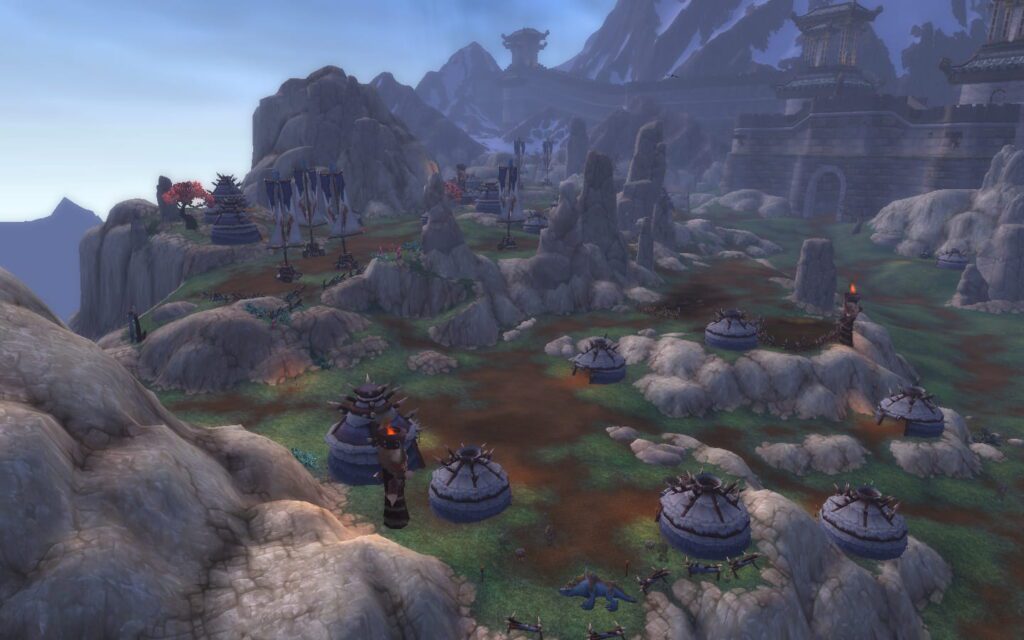
Beyond the great wall lay the unforgiving lands of the Townlong Steppes. Here the yaungol rebuilt their civilization, though life in this region proved harsher than the plains their ancestors once knew. The steppes were constantly threatened by the mantid, a fearsome insect race that launched periodic attacks against anything that entered upon their territory. Under such pressure, yaungol society hardened. Strength, courage, and resilience became the most valued qualities within their culture, especially among those who wanted to lead the tribes. Yet even in this harsh environment, the yaungol recognized the dangers of internal conflict, and a tribe weakened by rivalry could not hope to survive the mantid.
To prevent needless bloodshed among their own people, they developed ritualized forms of combat. Disputes between warriors were settled using blunt weapons, allowing rivals to prove their strength without risking the loss of valuable fighters. Leadership itself was determined through similar contests, where challengers faced the would-be chieftain in ceremonial combat under the banner of their tribe. Fire also became central to yaungol identity. The harsh terrain offered natural stores of oil, which the tribes learned to weaponize to great effect. Flaming weapons, burning siege engines, and rivers of blazing oil became the tools of yaungol warfare. Entire camps were built around these resources, forming temporary settlements often referred to as “fire camps”. Within their spiritual traditions, flame carried an even deeper meaning. Fire-keepers honored the legendary figure Ordos, a yaungol shaman who once sacrificed himself to the living flame and was transformed into a being of immense power. Through ritual fire ceremonies, they sought to echo his transformation and honor the suffering that had taken him beyond mortality.
Even in death, the yaungol continued sacred traditions. Their fallen were buried in burial grounds maintained by caretakers known as deadtalkers. These guardians were entrusted with preserving the dignity of the departed, though in darker times some would betray that duty through forbidden magic.
War Beyond the Serpent’s Spine
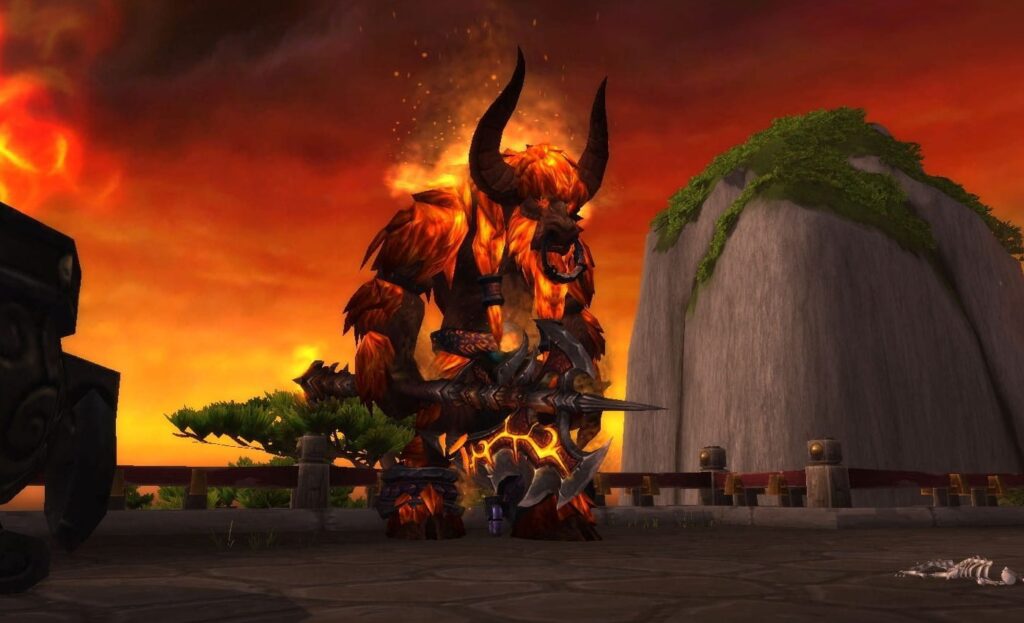
In more recent years, the relentless pressure of mantid assaults forced many yaungol leaders to reconsider their people’s future. Survival within the Townlong Steppes had grown increasingly harsher, and the tribes began searching for safer lands where their culture might endure. Their gaze turned towards the mountains beyond the Serpent’s Spine, in Kun-Lai Summit. Crossing the ancient wall was no small feat, but their desperation gave the yaungol courage. Warbands began pushing towards the north, establishing camps and attempting to carve out new territory.
The defenders of Pandaria, already weakened by mantid invasions and the spreading corruption of the Sha, struggled to stop the advance. Some yaungol fell under the influence of the Sha, their already fierce tempers twisted into something darker and more destructive. Though the invasion was eventually repelled by the defenders of Pandaria, the conflict revealed the truth that the yaungol were not a race that would easily break. A trait that endured throughout their history.
Personal Thoughts on the Yaungol
All from the beginning, the yaungol have endured conquest from powerful foes, exile from their own people, and transformation by the hands of their captors. Their descendants now walk many different paths across the world. The tauren of Kalimdor, the taunka of Northrend, and the warlike tribes that still roam Pandaria. Yet under their different appearances remain the inheritance of endurance.
The yaungol wasn’t a race that took my attention at first, being that I started WoW in the Pandaria expansion and didn’t know much about the greater world it had. So I would go around leveling my thousand different chars and not give a single thought to my surroundings that much. Only after diving into the races and their past that I saw the resemblance they had to the tauren. What luck that they were sharing history from the start. Even though they didn’t have too much written knowledge about them (compared to the tauren for example), they still liberated themselves from the grasp of the Mogu, and that speaks volumes in itself. That aspect alone was enough for me to show me their closeness to the tauren, or rather the taurens closeness to them. You perhaps may not pay too much mind to them on your way around Pandaria, but know that they exist not just by some pure luck, but through their own hard earned freedom.