 World of Warcraft

Among the various spiritual traditions of the tauren, few are as striking as the path walked by the Sunwalkers. To those not familiar with their ways, a tauren wielding the power of the Light might seem unusual, since on surface it’s a different kind of power and belief. Yet to the tauren, whose reverence for the Earth Mother teaches that harmony lies in the balance of all things, the sun has always held a sacred place. Known in their native language as An’she, the sun is one of the two great eyes through which the Earth Mother gazes upon the world, the other of course being the moon Mu’sha.
The Sunwalkers came to be from a quiet rediscovery of this truth. Their order did not come from conquest or sudden revelation of secret teachings, but from an effort to restore a balance that had slowly faded from memory. In honoring An’she, these warriors became guardians of both life and tradition, blending their ancient belief with the discipline of paladins.
Awakening of the Sun
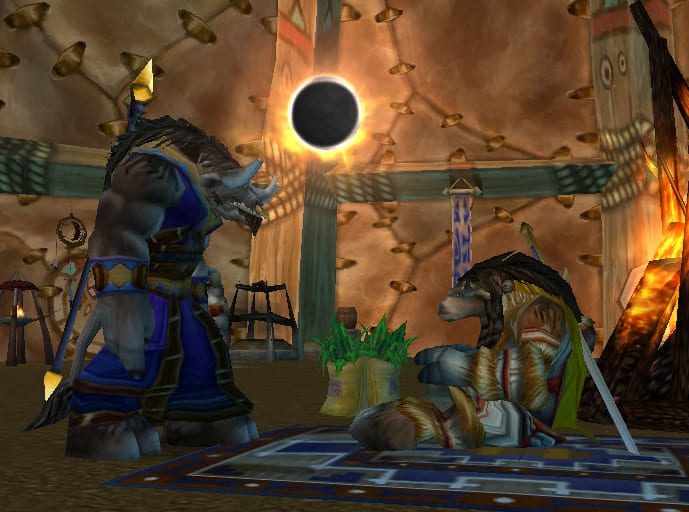
The origins of the Sunwalkers can be found all the way back in the years of war against the Lich King, when the tauren of Thunder Bluff struggled with the spiritual weight of a changing world. It was during this era, upon the Elder Rise in Thunder Bluff, that two respected figures, warrior Aponi Brightmane and Seer Tahu Sagewind, engaged in an exchange about their spiritual ways. Their discussion was about the balance of all things. The Earth Mother, seen as the source of all life, was said to watch the world through her two celestial eyes, Mu’sha, the moon, and An’she, the sun. Yet in practice, tauren spirituality always leaned towards Mu’sha, influenced by centuries of druidic ways shared with the night elves, who themselves were also children of the moon. The sun, though acknowledged in story and memory, had gradually faded from the ritual life.
Aponi and Tahu saw this imbalance, and the disharmony it brings with it. If the Earth Mother’s gaze came from both the moon and the sun, then honoring only one would be considered a half devotion. Inspired by this realization, they’ve gone on to rediscover the spiritual strength that lay within An’she’s light. From then on emerged a new path, one that would combine ancient tauren belief with the martial discipline paladins had. Those who followed it would not simply wield the Light as other paladins did, but they would experience it as the radiant light of the sun itself, a divine warmth flowing from An’she into the world.
The Birth of the Sunwalkers
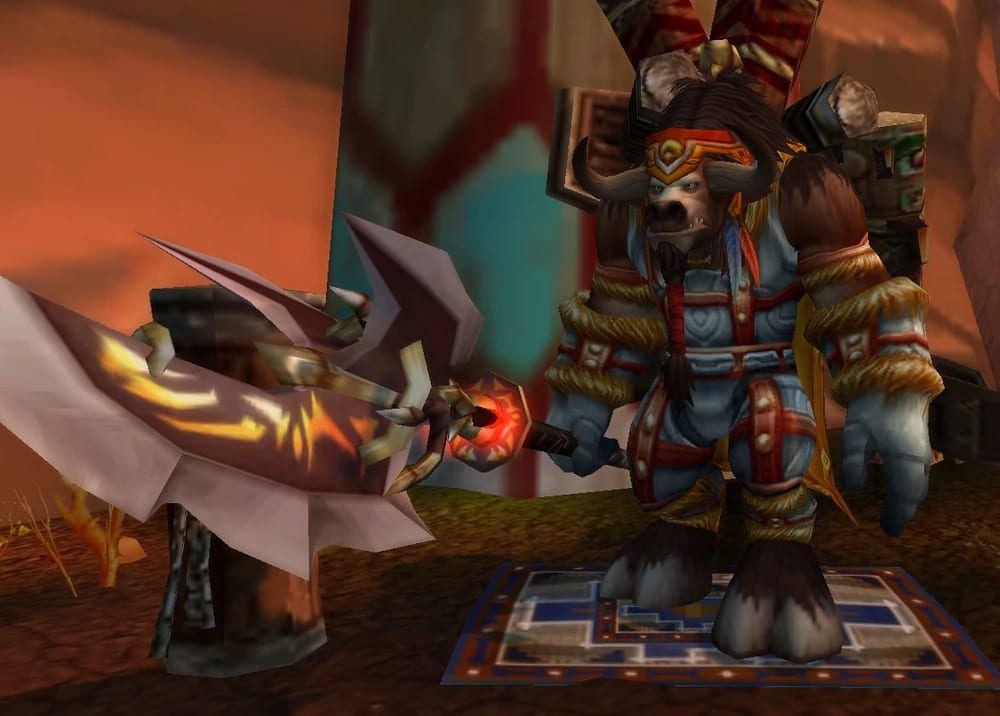
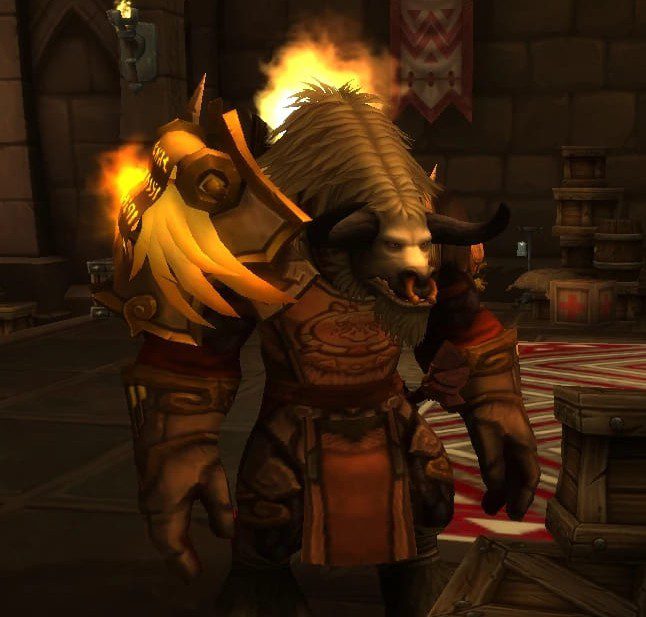
The true formation of the order came during the Cataclysm. As the world was reshaped under elemental fury, Aponi gathered those willing to walk this newly rediscovered path. This was how the Sunwalkers were born, tauren warriors dedicated to channeling the Light through reverence for An’she. Though much younger than many knightly traditions, the order quickly earned respect among their people. The tauren had long since valued protectors who fought for the preservation of life, and the Sunwalkers embodied that ideal. Their first duty was guardianship, standing between danger and those who could not defend themselves (so a typical paladin’s duty, but believeing in the Light from a different perspective much like troll’s from the Loa and blood elves from the Naaru).
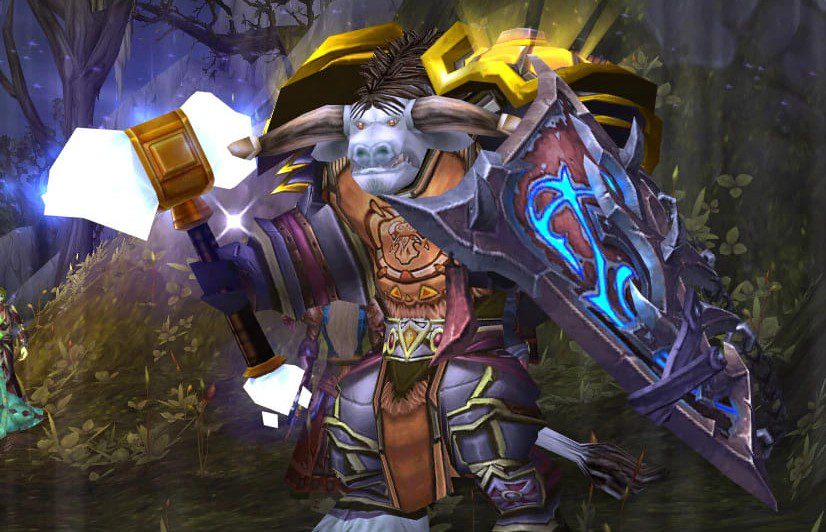
Their spiritual practice laced faith and discipline together. Apprentices learned to lead dawn rituals, honoring An’she and the Earth Mother, recognizing that the sun’s rising light symbolized both renewal and sacrifice. The power they channeled often manifested in forms both beautiful and formidable. Some described flames of crimson rising from a white-hot core (reminds me a lot of the Scarlet Crusade), while others saw the familiar golden radiance known to paladins across Azeroth.
Traditions Beneath the Rising Dawn
Among the sacred customs revived by the order was the ancient Yeena’e ceremony. Held in the quiet hours before dawn breaks, the ritual honored the spirits of heroic ancestors who had sacrificed themselves to protect others. Drums echoed across the quiet of morning as participants gathered in ceremonial attire, waiting for the first light of day to come up. In tauren belief, this moment of sunrise carries deep symbolism. As An’she climbed above the horizon, it was said that he bled light into the world, offering a fragment of himself to awaken the day (imagine this in an in-game cutscene, if only…). The Yeena’e (the name for the ancestral spirits who had died in acts of sacrifice) were believed to help guide this dawn, announcing the sun’s return. For Sunwalkers, this ceremony served as both remembrance and a promise. It affirmed that the path they walked was not merely a martial teaching or spiritual understanding, but an ancestral path etched into their very being. Their interpretation of the Light also reflected this cultural perspective. Rather than seeing it as an abstract cosmic force, Sunwalkers experienced it as the living radiance of An’she. To which I have to say, is a much better interpretation of the Light in my opinion, since cosmic force answer is said for every single thing nowadays in WoW.
Trials Across Distant Lands
The order’s trials were not limited to the tauren-heavy lands of Mulgore. As conflicts across Azeroth spread to distant lands, the Sunwalkers carried their faith into these new and unfamiliar horizons.
During the campaign in Pandaria, the renowned Sunwalker Dezco led an expedition guided by the visions shared by his pregnant wife Leza Farwalker. Their journey led them to the southern shores of Krasarang Wilds. There the Dawnchaser tribe established a small foothold in an unfamiliar land filled with ancient spirits. Some scouts never returned from their patrols, falling either to the hostile forces or the hidden dangers of the wild. Others disappeared investigating ruins whose secrets had long been guarded by powerful creatures. Despite these hardships, Dezco demonstrated the true strength of a Sunwalker. His mastery of An’she’s light allowed him to shield his allies, mend their wounds, and unleash bursts of holy energy against their enemies. Yet even he came to know the fact that certain dark influences (such as the Sha in Pandaria) could weaken the clarity of the Light he wielded.
The Sun’s Light in an Age of War
In later years, when the Burning Legion launched its invasion during the events of Legion, Aponi Brightmane led her order to stand beside the now reborn Order of the Silver Hand beneath the sacred halls of Light’s Hope Chapel. There, they honored the fallen Highlord Tirion Fordring and pledged their strength to the united cause of Azeroth’s defenders. Sunwalkers trained side-to-side with paladins from many races, proving that the Light could be understood through many different traditions and interpreted in many ways, yet it can still shine with the same purpose.
When the Fourth War started, however, loyalties shifted. The ancient order fractured, and the Sunwalkers returned fully to the cause of the Horde. On the battlefields of the Arathi Highlands, they fought beside the Blood Knights of Quel’Thalas, facing the champions of the Alliance.
Personal Thoughts on the Sunwalkers
The story of the Sunwalkers is an odd one, at least for me. It is so, simply because I would always see the tauren as the nature guys and gals, becoming druids, shamans, and warriors and hunters in service and harmony with the nature around them. When it came to their culture and beliefs, I’d always assume that yes, they would correlate Mu’sha the moon with druidism, as it’s the same “entity” as the one in the night elven belief. But An’she the sun, maybe because it wasn’t as dominant as Mu’sha would always make me think that “Ah yes, it’s the more earthly counterpart to the moon because of elementalism and fire and stuff.”. Delving more into how the Earth Mother’s story goes was an eye-opener in that regard, as the elements are a different thing than the sun and the moon. And so came my stumbling upon the Sunwalkers.
Even though they are still attuned heavily to earthly forces, the taurens that become a part of the Sunwalkers make sense to me, as they’re not necessarily under the influence of the Light itself, but instead see it as a part of their own belief system. It’s at least better than being a devotee blinded by the Light like Turalyon, or almost getting turned into a battery like my man Illidan.