
 World of Warcraft

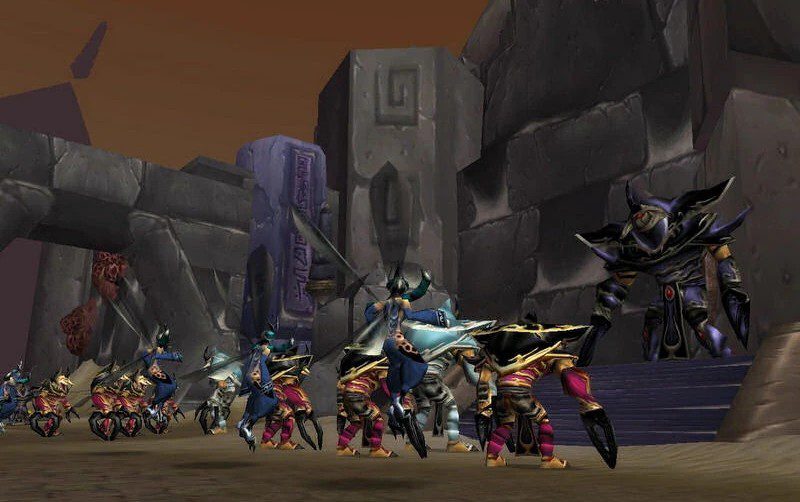
In the desolate reaches of Kalimdor, to the south, where the sands of Silithus hide both ruin and memory, exists a legacy older than the dusty and shattered ruins of Ahn’Qiraj. The qiraji are not merely the crustecean-insectoid hybrid creatures we see as at first, but inheritors of a design born in the age when Azeroth itself bent beneath the dominion of the Old Gods. Where the silithid embodies instinct, the qiraji reflect something more intentional, the echoes of a purpose shaped by will, hierarchy, and devotion. Their empire, though now buried and broken, was once a rising force that threatened to swallow all of Kalimdor beneath its advance. Even now, their story lingers like a scar upon the lands they occupied, a testament to their ambition intertwined with unwavering servitude, and to a war that reshaped the fate of Kalimdor.
Children of a Divided Legacy
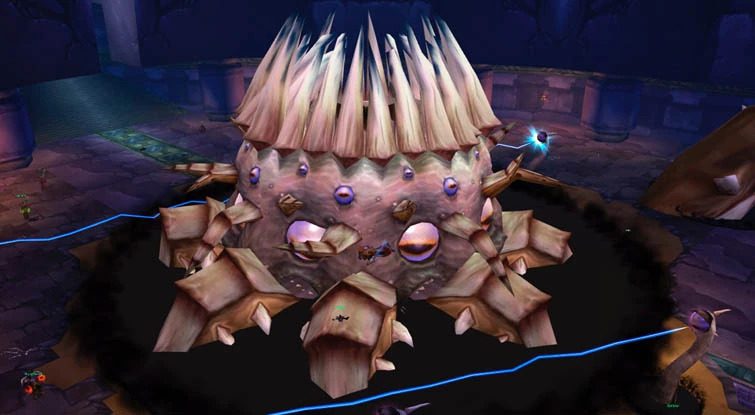
The qiraji trace their origins to the ancient aqir, a race born during the oppressive reign of the Old Gods, in the era of the Black Empire. When that mighty empire fell to ruins, the aqir were also scattered, driven into distant corners of the world where they would adapt and transform. Those who journeyed south became the qiraji, carving their destiny into the lands near Uldum. There, they discovered what had once been a titan research facility, a structure not only for the purpose of study, but of imprisonment. Beneath its foundations lay C’Thun, one of the Old Gods, bound yet not silenced (shaped like a humongous eye, needs several hundred eye drops at least). The titans had intended this to be a containment, but the qiraji found their revelation here instead. They reshaped the facility into what is known as Ahn’Qiraj, a living city of stone and chitin, and in doing so transformed a prison into a throne.
Their devotion was absolute. Like their ancestors, the aqir, they turned to the Old Gods not as captors, but as rightful masters. Over centuries, their society evolved into a firm and unshaken structure of castes and commanders, unified beneath the will of the Twin Emperors, Vek’nilash and Vek’lor, whose combined strength represented both dominion and balance within their kind.
The Ordered Might of the Qiraji Castes
Unlike their silithid counterparts, the qiraji embody a more defined hierarchy. Their existence is divided into castes just like the silithid, but each of them fulfilling more precise roles within the greater design of their empire. These castes not only embody their own functional distinctions, but they are also the expressions of identity, each with its own leaders, traditions, and forms.
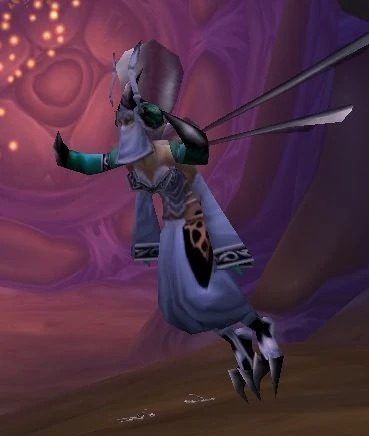
The gladiators for instance, consist of the males of the qiraji, and stand as the most numerous, grounded and relentless. Their forms blend humanoid posture with the hardened resilience of their signature insectoid design. They march as the backbone of the qiraji war machine, guided by figures of authority such as General Rajaxx. In contrast, female warriors called the battleguards move with a grace that can’t be seen in any other. Swift and aerial, they keep their faces covered with veils constantly. These veils are used to what end, nobody knows, but it is a part of the clothing they wear, along with the carapace their form holds. Where their clothing ends and the carapace begins however, none yet knows.
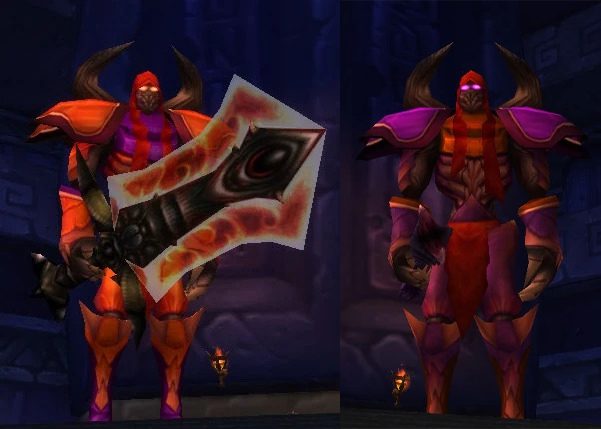
Beyond these martial castes stand the prophets, enigmatic and unnerving spellcasters of the qiraji forces. Their bodies defy simple understanding, and their forms obscured beneath robes that conceal much of it. Through their mastery of mental dominion, they bend the minds of their enemies until their resistance becomes self-destruction. Above all of them stands the emperors, whose power is not just merely physical or strategic, but psionic. Their strength is amplified through proximity to other emperors, forming a unity that mirrors the collective nature of their race.
Qiraji Culture of Reverence and Hostility
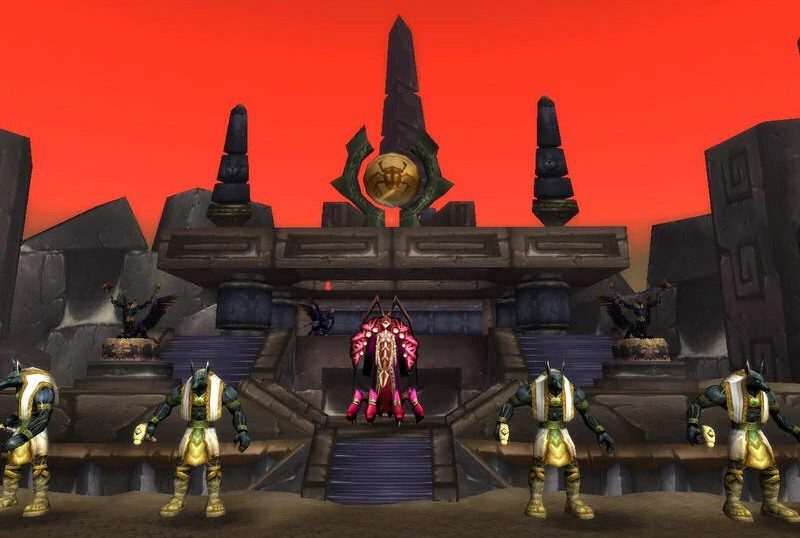
The qiraji are defined as much by their beliefs as by their biology. They hold a profound and unyielding hatred for all non-insectoid life, viewing other races as aberrations. This disgust is especially sharper towards the titans and their creations, whom they regard as usurpers who dared to reshape Azeroth that once belonged to their masters. Yet within this hostility also is a culture of remarkable craftsmanship and respect. The artifacts they wield are forged from rare and ancient materials, mainly bones of colossal beasts, metals of unmatched purity, and gems drawn from the deepest reaches of the earth. These are not just mere tools of war, but symbols of status and power. Their connection to the silithid further reveals the extent of their influence. Through the crystal prisms hidden deep within the hives, the qiraji send forth commands to their silithid forces, extending their reach across far distances without need for simple speech. In this way, their dominion is both seen and unseen, stretching far beneath the sands by a network of unique communication.
The War of the Shifting Sands
The rise of these mighty qiraji simply could not go unanswered. As their forces spread across the whole of Silithus, it was only the night elves who stood as the bulwark against their advance. What followed was a conflict of immense scale, remembered as the War of the Shifting Sands.
For months, the night elves fought a losing battle, driven backwards little by little, by the overwhelming numbers of the qiraji and their silithid allies. The land itself seemed to fall under their control, each retreat marking another step towards total conquest. In desperation, the night elf leader Fandral Staghelm finally sought aid from the bronze dragonflight, who declined this call for help initially, but when the qiraji dared to strike at the Caverns of Time, they took action. With the intervention of the dragons, the tide of war began to shift. Even with such powerful allies as these, the endless swarms proved nearly impossible to defeat. In the end, victory came through containment. A great barrier was raised with the blessing of Elune, sealing Ahn’Qiraj and trapping the qiraji within its walls.
Yet this victory carried with it a heavy cost. Fandral broke the scepter into pieces, with the hope of containing the threat within once and for all, but with it, he also broke the bonds between the night elves and the bronze dragonflight. A consequence that still can be seen to this day.
Awakening Beneath the Scarab Wall
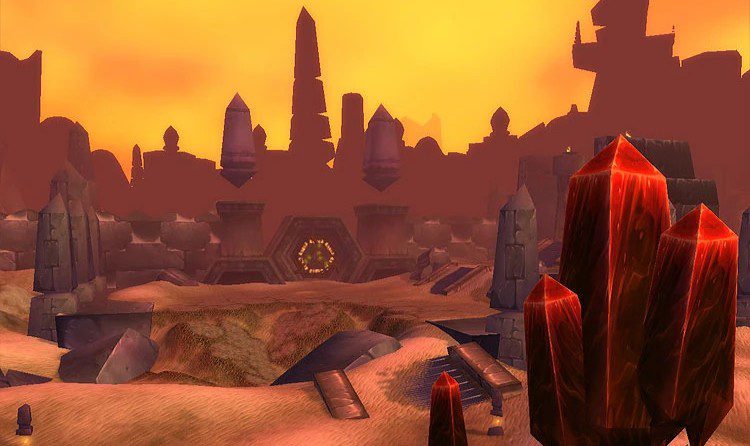
For thousands of years, the qiraji remained imprisoned, their empire reduced to a mere silence behind the Scarab Wall. But silence should not be confused with death. Beneath the sands, the Old God C’Thun stirred awake once more, and with that awakening came the slow revival of his devoted servants. The qiraji began to gather their strength again, preparing for a renewed assault upon the world that had once denied them. Their influence seeped beyond the barrier, subtle at first, but undeniable by each passing moment. The need to confront this rising threat led to an effort previously unheard-of among the races of Azeroth, uniting former enemies in a shared purpose.
The reopening of Ahn’Qiraj was not a moment of triumph, but a settlement of old grudges. As the gates fell, the horrors within emerged once more, and the war resumed where it had once left off. This time, however, the combined might of Azeroth stood at the ready. The qiraji, after a gruesome advance, were driven back. Their forces shattered, and their god, C’thun, struck down within the depths of the city they had built in his name.
Personal Thoughts on the Qiraji
The story of the opening of Ahn’Qiraj (a story for me since I wasn’t there), is a prime example of how a resurging enemy should be made. It isn’t like the story of an expansion, where the villain escapes over and over again only to be seen with new toys we must break through, or one where it sits on top of its throne, waiting for adventurers with funny looking transmogrified gear to best him (although it was a funny sequence, the one they made in Legion showing the battle with Illidan atop the Black Temple). It has a proper history of what happened, connected with both the grand scheme of things, and the local happening considering it hurt the lives of the local inhabitants of many zones under its destruction. And after all that came to be, they resurface not through some random things happening just at the right time, but by machinations of beings unsleeping.
But perhaps the most fitting thing for the prime example part would be that it wasn’t something that has gone on for an entire year or so. It was in the shape of a simple, 10 hour catastrophic event that any and all living on Azeroth participated to bring an end to, which brought with it an effort of cooperation that in my opinion modern WoW stories simply can’t replicate. And hey, we can still hear the fall of the gates of Ahn’Qiraj even to this day, so that must account to its grandeur.