 World of Warcraft

Hidden deep within the sweltering, unforgiving jungles of Stranglethorn Vale lies a place where the canopy grows so thick that the sun barely touches the ground. If you follow the distant, rhythmic echoing of voodoo drums through the dense foliage, you will eventually stand before the massive, moss-covered stone gates of Zul’Gurub.
Zul’Gurub is a geographical, atmospheric masterpiece and the bloody crown jewel of the once mighty Gurubashi Empire. It is a city that has witnessed unimaginable power, devastating betrayals, and a complete geographical and magical transformation over the years.
The Architecture of a Fallen Empire
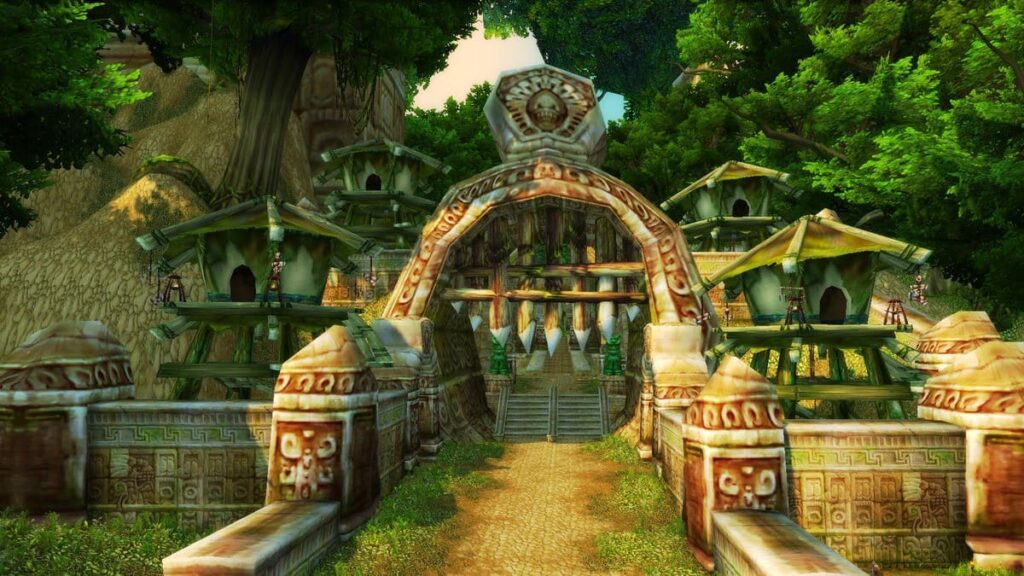
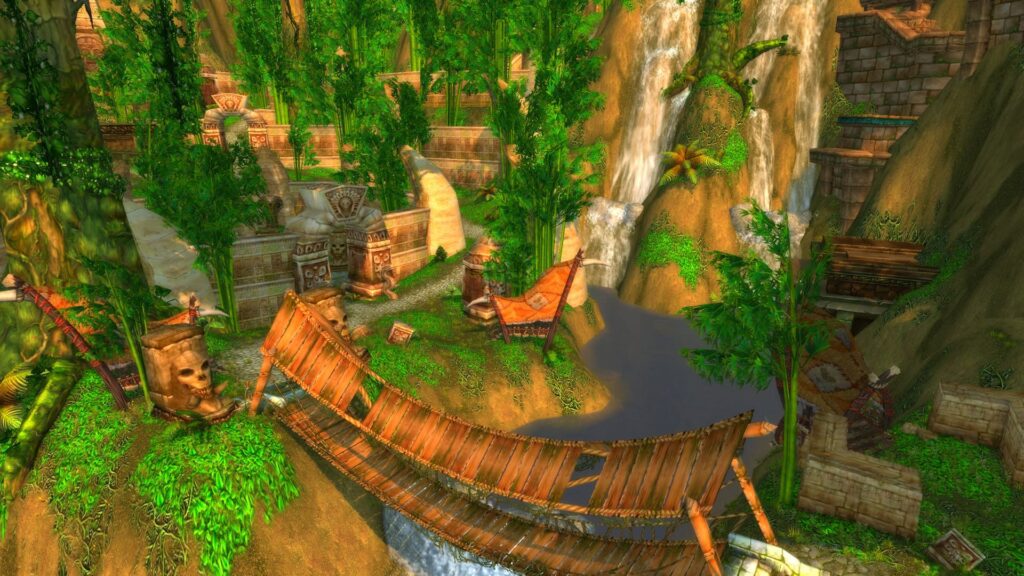
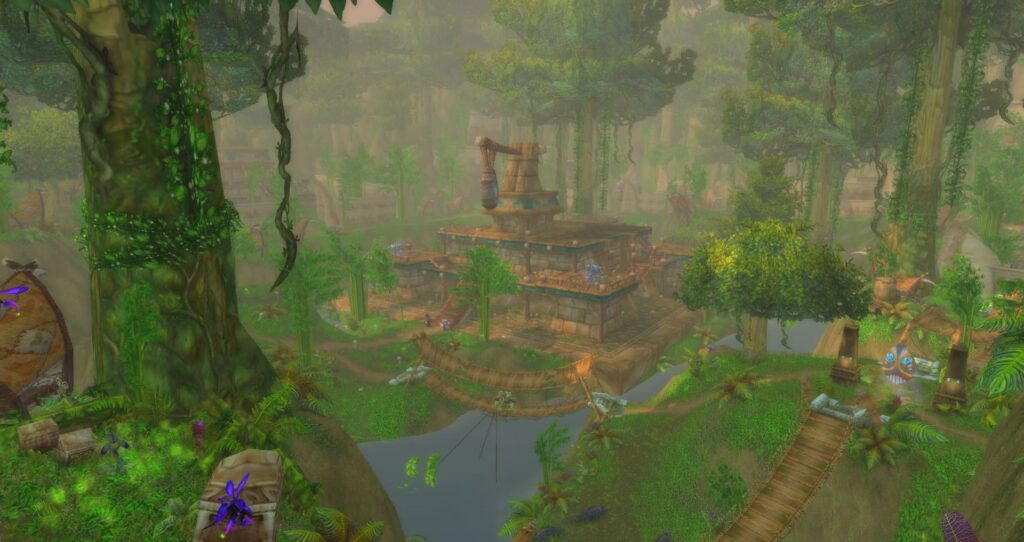
Visually, Zul’Gurub is a breathtaking homage to Mesoamerican (Aztec and Mayan) architecture, completely swallowed by the jungle. The city is a sprawling complex of towering step-pyramids, sacrificial altars, and ancient suspension bridges hanging over crocodile-infested waters.
Every stone in Zul’Gurub tells a story of a civilization that was deeply connected to the primal forces of nature. The ruins are overgrown with massive vines, while exotic wildlife such as venomous snakes, giant bats, and ferocious jungle panthers have reclaimed the sacred temples. It perfectly captures the aesthetic of a lost city frozen in time, where ancient hexes still linger in the green and humid air.
The Blood God Hakkar, Zul’Gurub in Classic Era
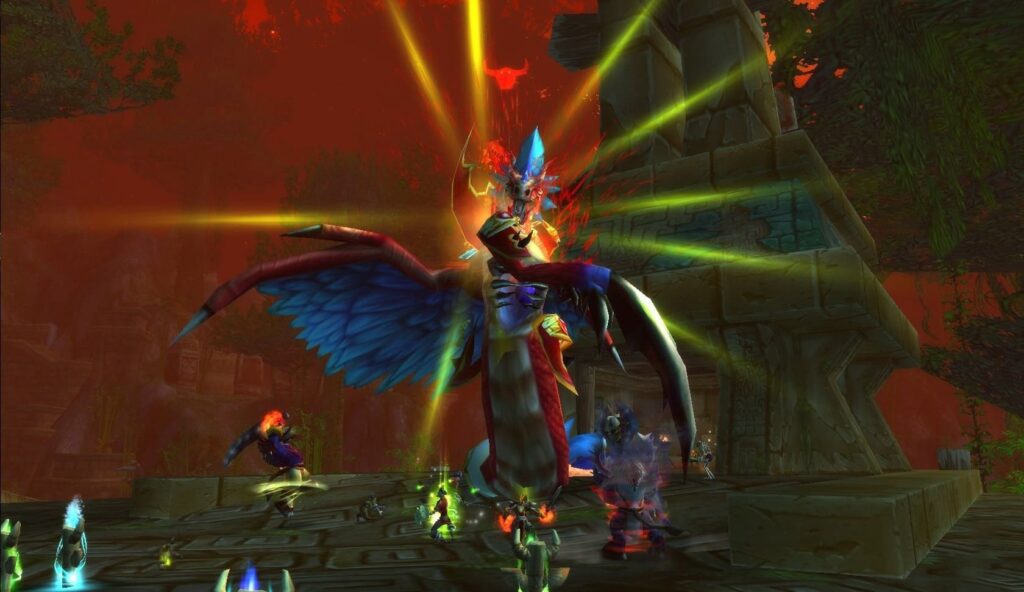
The lore of original Zul’Gurub is rooted in pure desperation. Centuries ago, the Gurubashi Empire was massive, but following a catastrophic civil war and famine, the trolls turned to dark, forbidden magic. The radical Atal’ai priests summoned Hakkar the Soulflayer, a terrifying, bloodthirsty Loa (god). Hakkar promised them immense power, but his price was endless blood sacrifices. During this bloody era, the Darkspear tribe, led by Sen’jin and later his son, Vol’jin, refused to participate in these extreme sacrifices. Because they were the smallest tribe, they were violently driven out of Stranglethorn Vale by the other Gurubashi to Echo Isles in Durotar, eventually forcing them to ally with Thrall’s Horde years later.
To sustain Hakkar, the High Priests of the Gurubashi representing the Bat, Panther, Tiger, Spider, and Snake aspects, channeled their powers into the Blood God. Zul’Gurub was first introduced as a massive 20-man raid in classic WoW, the goal was to assassinate these High Priests to weaken Hakkar before banishing him from the physical realm.
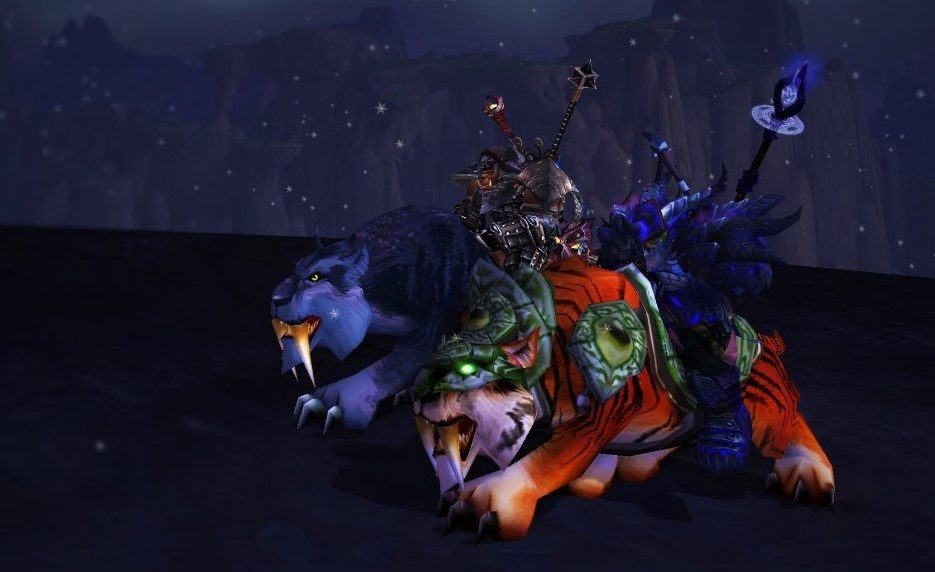
High Priest Thekal, the Tiger aspect, rode a majestic, armored beast. My brother spent over a year running into those ancient ruins every single week without fail, just trying to get that legendary Swift Zulian Tiger to drop. He never got it, and it was hard enough clearing it during the Wrath of the Lich King era of the game when max level was just 80. You required another person in the party to convert it to a raid, you needed potions, various buffs and knowledge of the boss mechanics just to stand a chance.
Jin’do’s Revenge, Zul’Gurub After Cataclysm Era
Years later, the Cataclysm physically shattered Azeroth, and the story of Zul’Gurub took a dark turn. The ruins were transformed into something different. Hakkar was dead, but the Gurubashi were secretly rebuilding. The Zandalari, original scholars of the troll race, decided to unite all fractured troll tribes into a new, terrifying global empire.
Geographically, the city felt darker and heavily fortified. Visually, the bright jungle greens were overshadowed by the eerie, dark-blue glow of spirit magic and voodoo wards. The raid was revamped into a tighter, more brutal 5-man dungeon experience. The mastermind behind this was Jin’do the Godbreaker. In a massive lore twist, Jin’do wasn’t trying to serve Hakkar, but he had actually enslaved the spirit of the Blood God, chaining him in the spirit realm and forcefully draining his power to fuel the new troll army.
Personal Thoughts on Zul’Gurub
As someone who actively played during the Cataclysm, Zul’Gurub was an incredibly thematic experience. Playing as a Troll Hunter, walking through the ancestral ruins of my own race felt cozy and dangerous. It was also a different era for Hunters, back when we could equip both a ranged weapon and a melee weapon simultaneously as “stat sticks.” I vividly remember a beautiful, snake-themed bow and a matching voodoo staff from those ruins. To this day, those two weapons sit proudly in my bank, fully enchanted, serving as relics of a bygone era.
Zul’Gurub also left me with a permanent scar. The revamped city introduced a new prize, the Swift Zulian Panther. I ran that dungeon relentlessly through the Random Dungeon Finder. I saw that gorgeous, dark jungle cat drop four separate times. I rolled for it four times and lost it every single time. I even farmed it for a year or so, on separate characters every week, but to no avail. This place is a stunning, breathing piece of Azeroth’s history. A beautiful, cursed jungle city that adds good lore to the game, some of the best aesthetics, and the absolute worst luck.