
 World of Warcraft

Feralas stands apart within the continent of Kalimdor as a region where abundance has withstood against the surrounding desolation. Bordered by arid wastes of Silithus and Desolace, and the fractured land that is the Thousand Needles, this dense rainforest forms a very striking contrast. Its towering canopy and deep green expanse suggests a resilience shaped over the ages, yet beneath this vitality lies a terrain marked by conflict and lingering corruption. Feralas is not an untouched wilderness, it is a contested environment where ancient legacies persist alongside a more recent unrest. From its overgrown ruins to its shifting settlements, the region shows a constant tension between preservation and disruption, where natural splendor and coming forces remain in an uneasy balance.
Ancient Growth and Hidden Origins
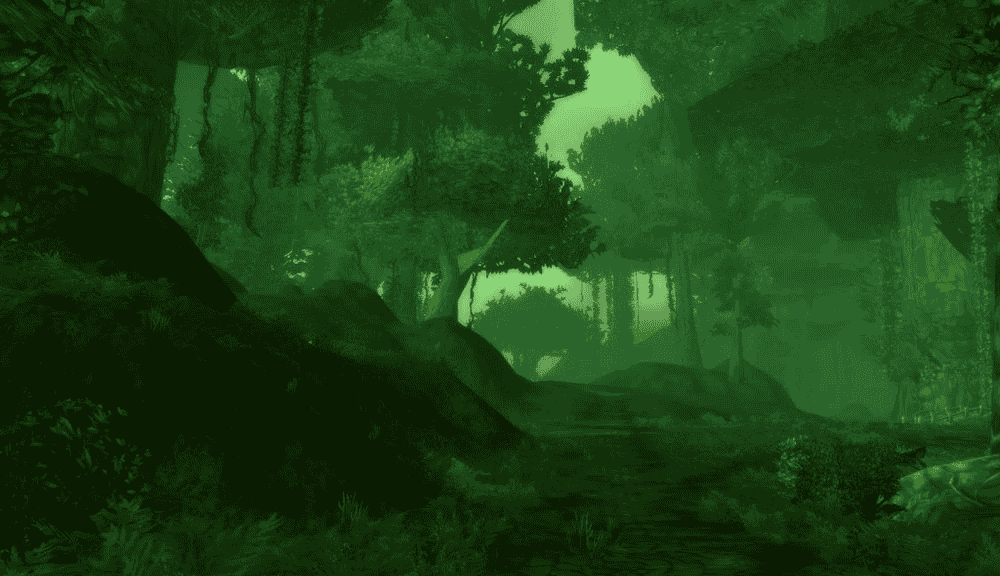
Feralas is defined by its immense and ancient forest, an ecosystem that has resisted the environmental extremes found in neighboring regions such as Desolace and Thousand Needles. The jungle’s scale is shown by colossal trees with canopies that obscure much of the sky, creating a layered landscape where light, moisture, and life interact in complex ways. This green fertility has long suggested the presence of deeper natural or magical influences sustaining the region.
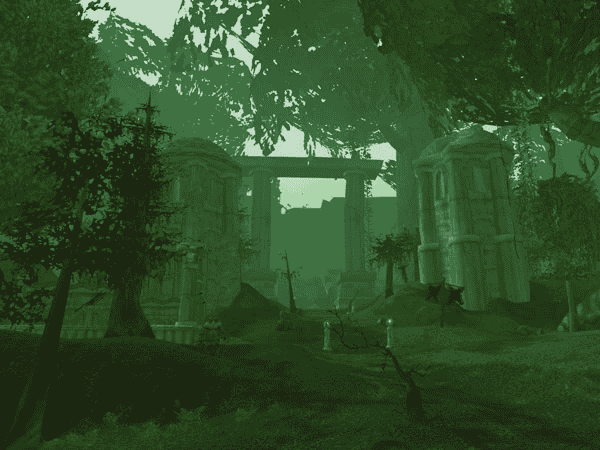
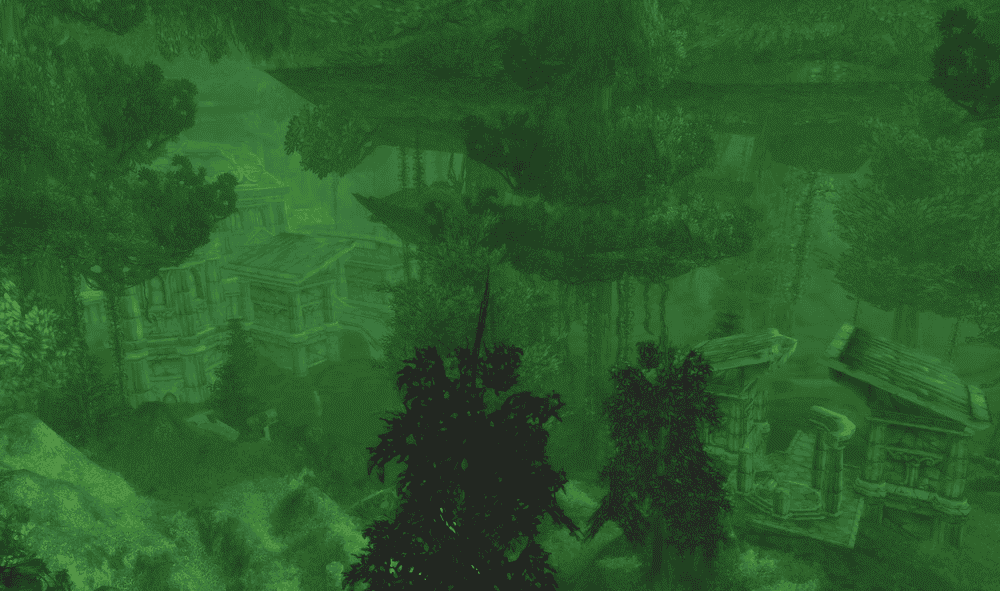
Scattered throughout the jungle is the remnants of a far older civilization, known most commonly as Dire Maul. Once known to be a grand elven city, its structures are now fractured and overgrown, their original purpose obscured by time and occupation of enemy forces. These ruins form an important link between Feralas’s natural present and its arcane past, showing that the zone’s history goes way back to even before its current inhabitants took shelter. The forest’s continuity, however, didn’t remain untouched. Over time, external forces have settled within, altering the land. What appears as an unbroken wilderness is instead a terrain where history can be seen in fragments, embedded within roots.
Conflict and Cultural Presence
Feralas has long served as a meeting ground for competing groups, each shaped by and adapting to the jungle’s needs. Settlements are often positioned along its edges or in carefully maintained clearings, reflecting the difficulty of creating structures upon such dense terrain. Both Horde and Alliance maintain a presence within the region, not just to hold territory, but to give some kind of response to the persistent local threats. Among the most influential of these forces are the Gordunni ogres, whose occupation of ancient ruins has altered both the physical and the arcane landscape. Their use of destructive magic introduced a form of corruption that stands in contrast to the forest’s natural vitality, creating pockets of areas where the environment itself appears distorted. This imbalance has made Feralas not just a contested zone, but a land that is actively shaped by conflict. Other inhabitants, including gnoll packs, tauren groups, and coastal nagas, contribute to a fragmented and more often than not a volatile cultural landscape.
Geography and Distinctive Features
Stretching far from the inland borders of Thousand Needles to the western coastline, Feralas houses a wide range of terrain unified by its dense vegetation. The interior is dominated by rainforest, while the outer regions transition more into coastal environments and plateaus. This diversity allows for a variety of ecosystems to exist within a relatively contained space, each contributing to the region’s complexity. Off of the western coast, chains of islands extend the reach of the jungle all the way into the sea, where the presence of hostile forces further shows the region’s instability. Additionally, one of the Great Trees connected to the Emerald Dream rises within Feralas, reinforcing the idea that the region is not only physically significant but also tied to deeper and unseen realms of natural balance.
One of the most significant and eye-catching landmarks within Feralas is also the Dire Maul, whose ruins remain one of the most prominent architectural features in the jungle. Its scale and structure distinguish it from the surrounding natural environment, serving as both a visual and historical focal point. Elsewhere, hidden clearings, minor caverns, and overgrown pathways create a unique sense of depth, suggesting that much of the region remains unexplored.
Transformation and Continuing Relevance
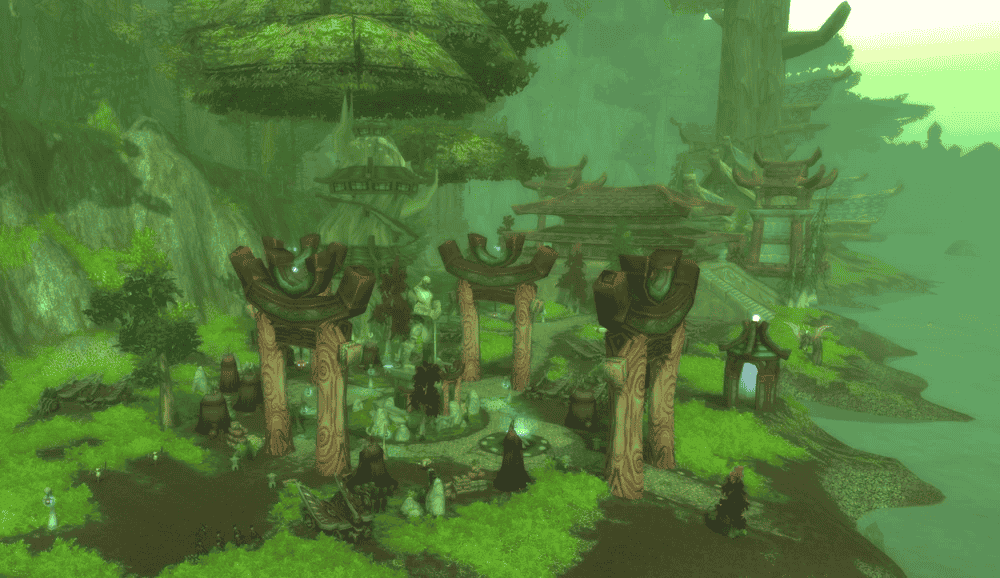
Feralas has undergone significant changes in the wake of the Cataclysm. Flooding and environmental disruption reshaped parts of the region, displacing settlements and forcing inhabitants to adapt to new living conditions. Coastal strongholds were damaged or destroyed, leading to the establishment of new outposts positioned to better withstand both natural and external threats. At the same time, the heightened intensity of faction conflict brought increased attention to Feralas as a strategic location. Its resources, geographic position, and connection to ancient sites made it an important point for both expansion and defense. The continued presence of corruption within its interior, especially around ogre-controlled territories, ensured that the region remains unstable despite these efforts. That said, Feralas’s broader significance lies in this dual nature. It is both a sanctuary of enduring natural growth and a landscape marked by repeated intrusion and conflict.
Personal Thoughts on Feralas
Feralas remains as an example to resilience shaped under pressure, where the vitality of the natural world persists alongside the marks of conflict and decay. Its forests remain dense and imposing, yet they house the remnants of past civilizations and the influence of present struggles. The region does not resolve these contradictions, instead it sustains them, allowing growth and disruption to exist side by side with it. That nature alone, in my opinion, would capture the attention of many who visit Feralas. One of the most wild and untamed lands in Kalimdor, it remains to this day a green paradise for the players coming from any side of its borders. The existence of all these different cultures, be it friendly, neutral or enemies, and the footholds that forcibly break a space for themselves between the harsh and dense jungle all offer an intense diversity that isn’t found freely anywhere else.
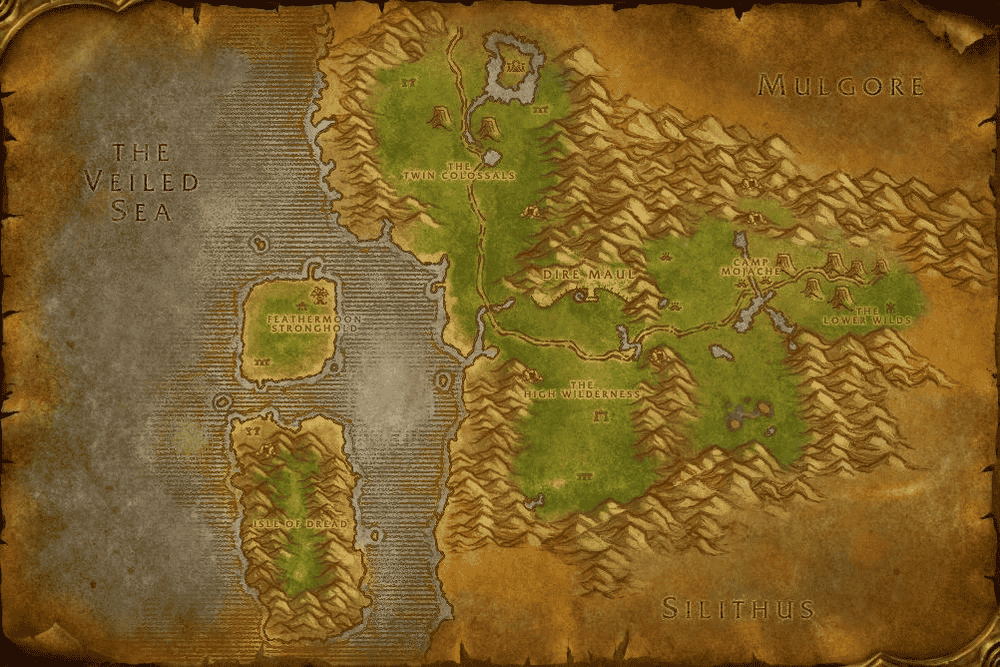
For more technical details and raw info, check Wowpedia. (Classic)
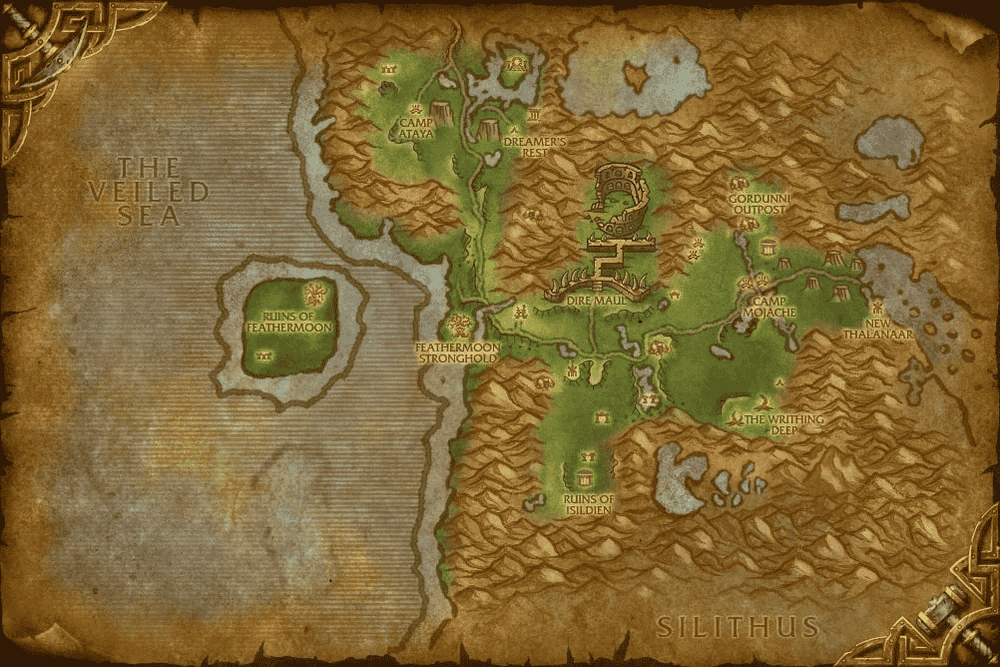
For more technical details and raw info, check Wowpedia. (Retail)