 World of Warcraft

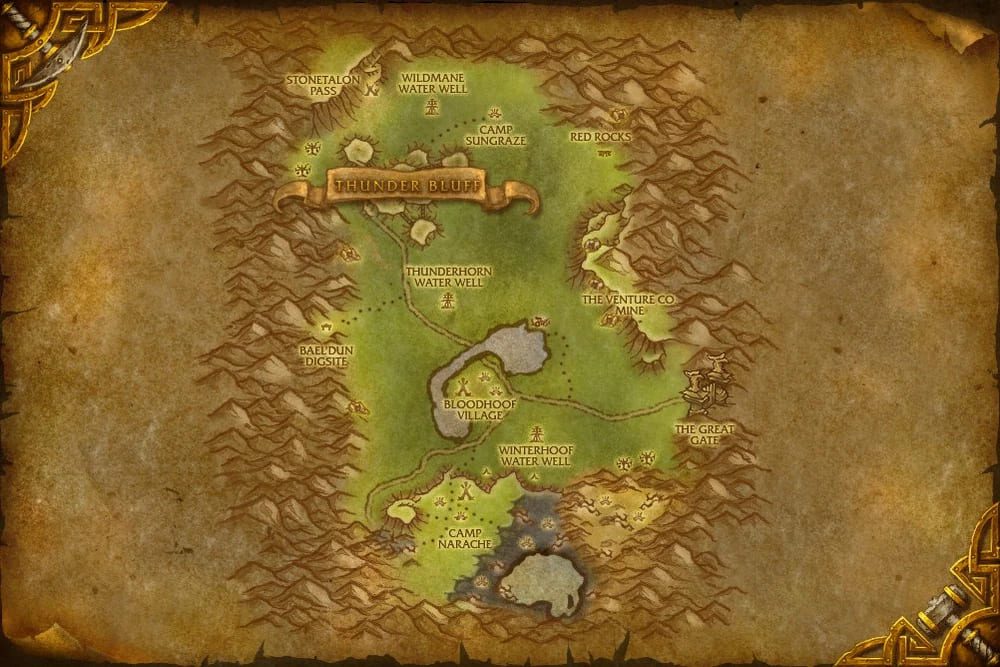
Mulgore rises as a lush expanse of rolling plains, mesas, and wind-swept valleys, located within the protective walls of the surrounding mountains, and stands as the ancestral homeland of the tauren. Lush green grasses wave under pine-scented soft winds, and waters from Stonebull Lake and scattered springs thread through the land, sustaining both wildlife and the tribes that have called this region home for generations. The giant mesas of Thunder Bluff dominate the skyline, their sheer cliffs acting as both a natural fortress and a center of culture. While the plains offer bounty for hunters and space for wandering herds, the land is far from untouched. Threats both ancient and newly arrived press against its borders.
Mulgore’s identity is inseparable from its terrain: a sheltered, vibrant domain where the Earth Mother’s presence is felt in every rock, stream, and gust of wind.
Origins and Early History
Mulgore’s story begins as the enduring homeland of the tauren, whose roots in the region trace back centuries before the Sundering. Its grassy plains, dotted by mesas and carved valleys, provides both sustenance and sanctuary to these nomadic herders. Myth and oral tradition speak of the early tauren (shu’halo as known at that time) traversing the area alongside herds of kodo and other neutral creatures, guided by the Earth Mother’s will and the land’s natural rhythms. Legends hint at encounters with centaur and other beings whose conflicts would shape the borders and safety of Mulgore for generations. Through cycles of migration and settlement, the plains became more than a hunting ground, they became a cradle of culture and ritual, a place where rites such as the Great Hunt and the Earthmother ceremonies would take root.
Even when distant catastrophes, such as magical disturbances from Sorcerer-Thane Thaurissan’s summoning of Ragnaros, rippled across Azeroth, Mulgore remained a secluded land of continuity, its identity firmly tied to the enduring presence of its rolling hills, lakes, and mesas.
Geography and Natural Features
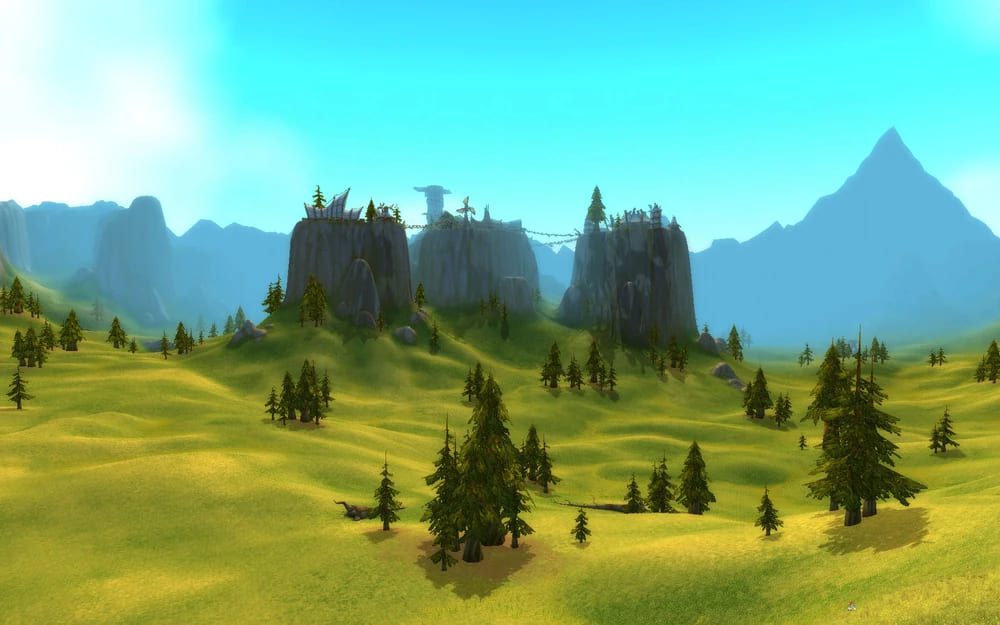
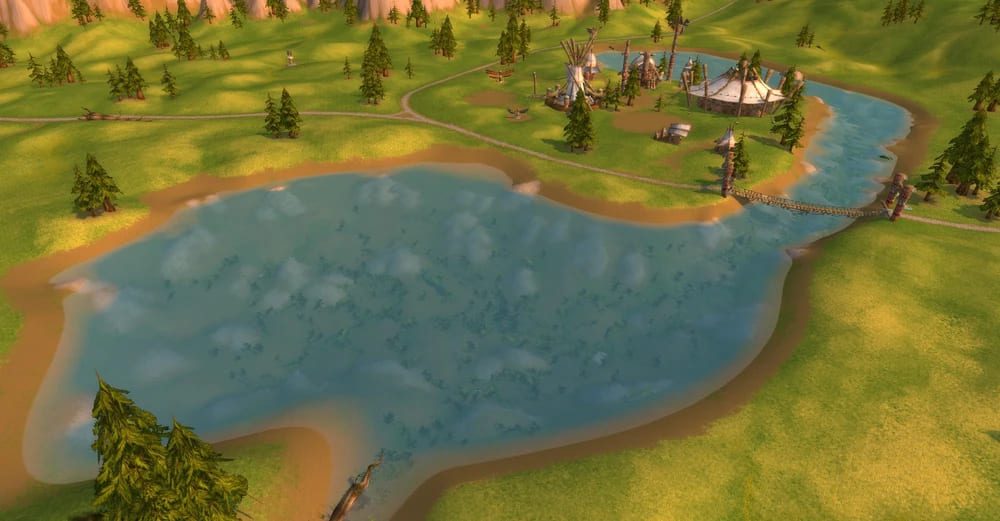
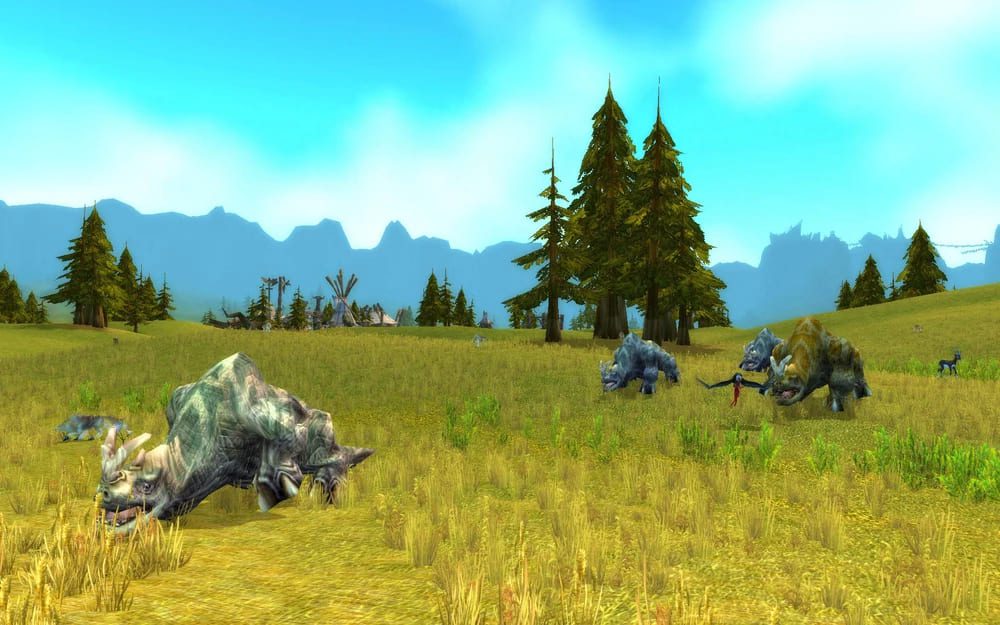
Mulgore is a sheltered basin, enclosed on all sides by mountains, with a single southeastern pass allowing controlled access to the Southern Barrens. Its terrain is dominated by grasslands that stretch across as far as the eye can see, interrupted only by groves here and there, and the towering cliffs of Red Cloud Mesa (south of Mulgore) and Thunder Bluff. Stonebull Lake and smaller water sources can be seen around the plains, offering to quench the thirst of both the wildlife and the tribal settlements. The mesas rise dramatically from the fields, their red and yellow tones contrasting with the green of the pasturelands, forming natural watchpoints and fortifications. Northern corners are shadowed by the foothills of the Stonetalon Mountains, where pine forests blend into rocky terrain, while southern mesas are open and windswept, ideal for grazing and ceremonial hunts. Scattered totems and windmills mark the influence of the tauren culture all over the land. Despite its peaceful air, the geography of Mulgore shows the movement of all who walk upon it, shaping patterns of settlement and trade across the plains.
Cultural and Political Significance
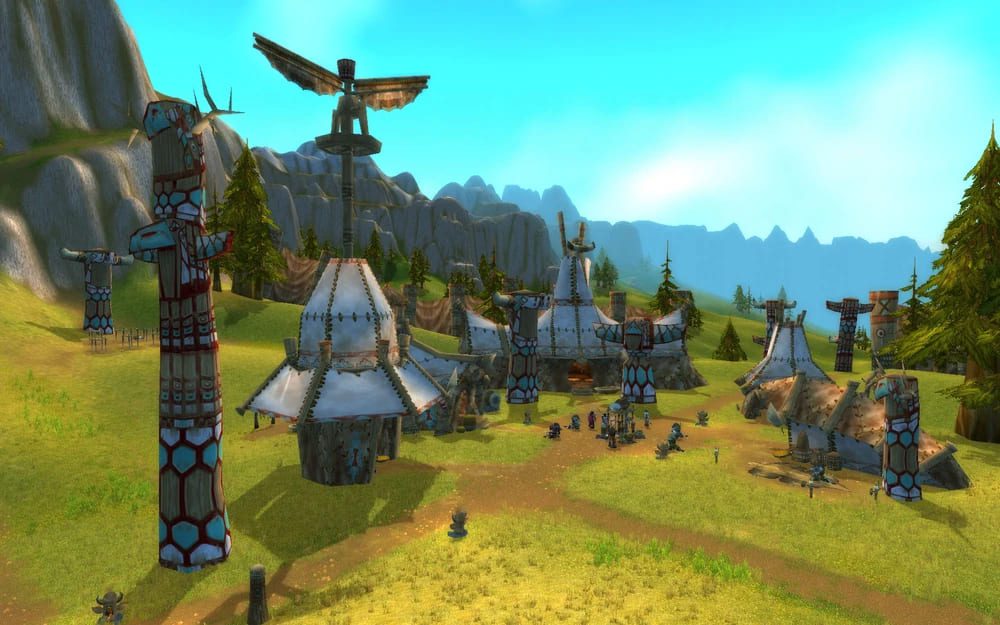
Mulgore has served as the cornerstone of tauren society, shaping both the governance and spiritual traditions of its people. Thunder Bluff, seen atop the central mesas, functions as the primary seat of power, connecting the tribes under a united leadership while honoring the rituals and ways of the Earth Mother. Camp Narache and Bloodhoof Village (which is also the starting zone for tauren characters) act as centers for education, ceremony, and the maintenance of natural resources. The Great Hunt and Rites of the Earthmother are not merely traditions but integral mechanisms for maintaining harmony with the land, with young tauren getting tested against the plains’ challenges to ensure the continuity of their cultural knowledge.
Each mesa, lake, and forested slope carries significance: sacred sites like Red Rocks or Brambleblade Ravine are focal points for ceremonies and defense. By balancing stewardship and spirituality, the land itself has guided tauren society, shaping political structures that are inseparable from the geography and resources of Mulgore.
Threats Around the Plains
Though naturally protected, Mulgore has been subject to recurring pressures from both sentient and wild forces. Invasive creatures, such as the Bristleback quilboar in the southern mesas and Palemane gnolls along the mountains, have altered patterns of feeding and hunting. External groups, most notably the Venture Company of goblins, have sought to exploit the eastern mountains’ mineral reserves, disrupting water supplies and local ecosystems. Harpy tribes from the northern ranges periodically contest control of aerial territory, while the Grimtotem faction interferes with resources like wells, dirupting the stability of the plains.
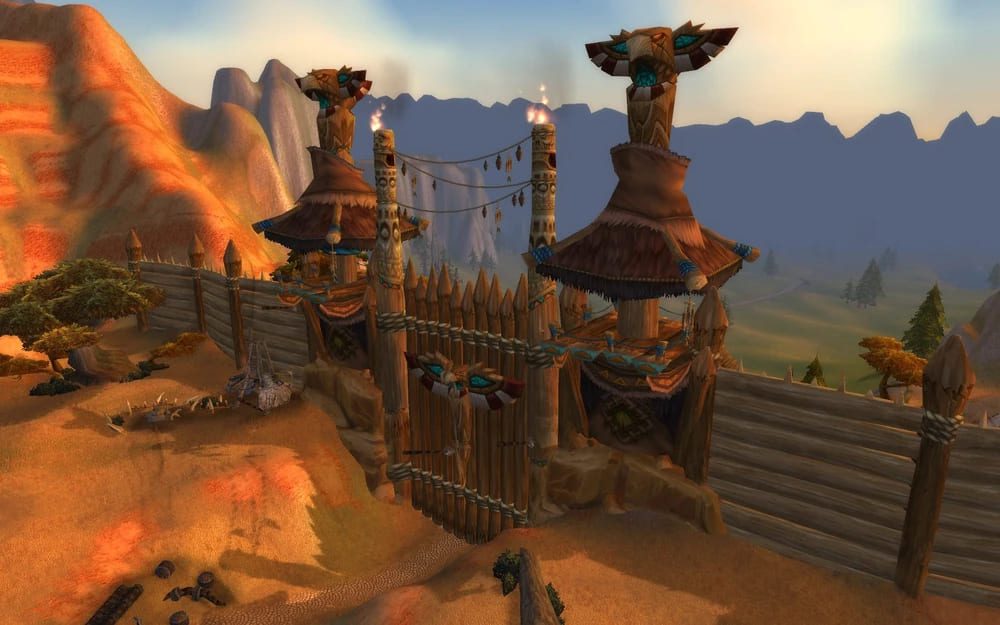
Even distant wars and catastrophes have left their mark. The Scourge invasion (Wrath of the Lich King), the Cataclysm, and later conflicts of the Fourth War (Battle for Azeroth) prompted both defensive construction (such as the Great Gate), and collaborative efforts with allies. These pressures have not reshaped Mulgore entirely, but have required careful stewardship, forcing the tauren to adapt and maintain the land’s integrity while safeguarding its cultural and ecological systems.
Modern Mulgore and Legacy
In the current age of Azeroth, Mulgore retains its identity as both a pastoral sanctuary and a hub of tauren heritage. Thunder Bluff continues to dominate the land, its mesas rebuilt and maintained to reflect the enduring traditions of the tribes. Plains once threatened by external attacks have seen a gradual restoration, with water sources and grazing lands returned to a more controlled use. Despite ongoing threats (whether from lingering factions, wild predators, or resource exploitation) the region remains a vibrant ecosystem where ceremonial, economic, and ecological functions get together. Mulgore’s mesas, cliffs, and lakes act as natural archives of tauren history, harboring cultural memory in the landscape itself. Beyond its borders, the plains symbolize resilience and continuity, a region whose character has shaped not only the communities living within it but also their interactions with the wider world of Kalimdor and the Horde.
Personal Thoughts on Mulgore
Perhaps (a certainty for me but you do you) one of the most peaceful zones in WoW, Mulgore is a dream for any who just wants to take a breather from all the chaos that ensues around Azeroth. Its green hills, cute wildlife, vibrant blue skies and ambient music (oh god the music…) all make up for an experience that one cannot forget even after traversing through all the zones the game has to offer. It simply remains a delicacy to both your eyes and ears. Even after all the events that happened throughout the history of the game, the land still endures as it did the first day. From its lakes to the cliffs and the wind-swept grass, Mulgore’s presence remains certain: a testament to the perfect relationship between a land and its culture, continuing to influence the world beyond its borders, while standing firmly as the heart of tauren tradition.