
 World of Warcraft

From Yaungol to Shu’halo
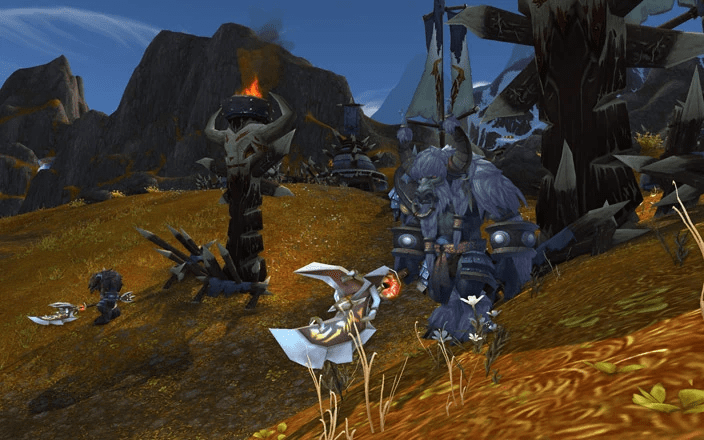
Long before the tauren named themselves children of the Earth Mother, their ancestors walked another path. These forebears, remembered as the yaungol, once roamed the heart of ancient Kalimdor alongside the demigod Cenarius, sharing wide hunting grounds and a simple accord with the land. That harmony fractured when territorial pressures and rising conflict (mainly for not wanting to share ground with the trolls) drove them southward, where their fate darkened beneath the shadow of the evil mogu empire. Enslaved and reshaped by cruel hands, much of what the yaungol had been was stripped away, language, ritual, and memory alike.
Freedom came at great cost during the uprisings that toppled their masters, but it did not restore what had been lost. Divisions followed, born of grief and disagreement. Some traveled north into colder, harsher lands, becoming the taunka, hardened by necessity. Others turned back toward warmth and growth, settling near the Well of Eternity. There, reunited with Cenarius, they relearned ancient ways. The energies of that sacred place reshaped them once more, not through torment but through renewal. Thus, over generations, the tauren emerged, distinct from their kin, yet carrying echoes of what they once were. Even so, with features different from one another, they remained in contact, until the events of the Great Sundering finally ended the tribes’ connections with one another.
The War That Forged a Name
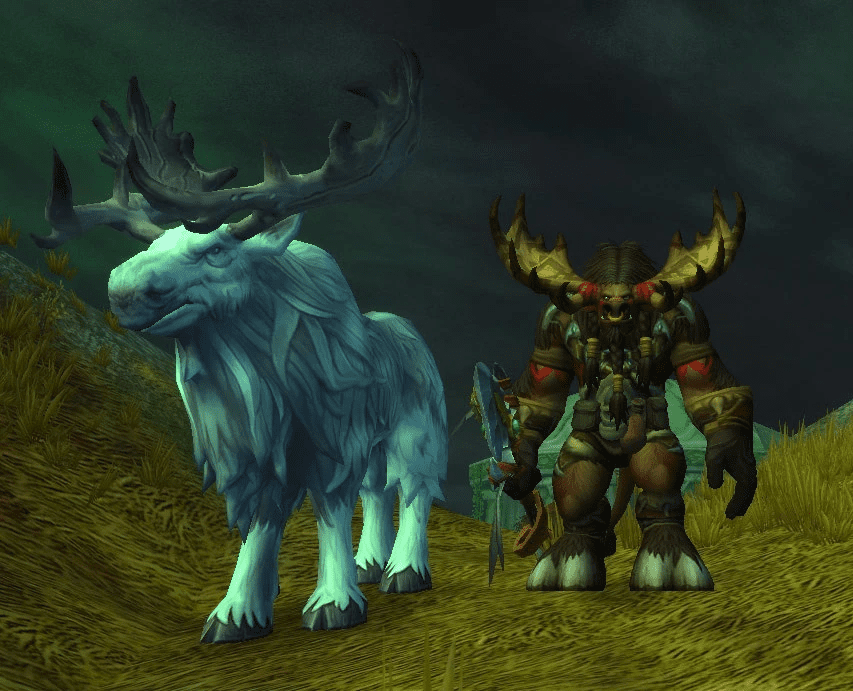
When the Burning Legion first came to unmake the world, the tauren of Highmountain were drawn into a conflict far greater than themselves. Under the leadership of one Huln Highmountain, they joined an uneasy alliance with the night elves and others who resisted the Legion’s advance. Suspicion and fear marked those early days, some allies (mainly a night elf commander) saw only brute strength where discipline and honor lived. Yet war showed its way of revealing truth. With the death of the night elf commander Desdel Stareye, his replacement Jarod Shadowsong led the re-deployed tauren into battle, and they proved indispensable. Unyielding on the front lines, steadfast where others faltered.
Surely for seeing their importance and great deeds in time of war, Cenarius himself marked Huln and his people with a blessing that would shape their legacy, granting them the great antlers that distinguished the Highmountain tribes. When the war ended and the world shattered in its wake, those survivors returned home changed. Their bonds with the night elves tempered by shared sacrifice, and their home region now took the name of Highmountain, after the heroic acts of Huln Highmountain.
Desolace and the Birth of an Enemy
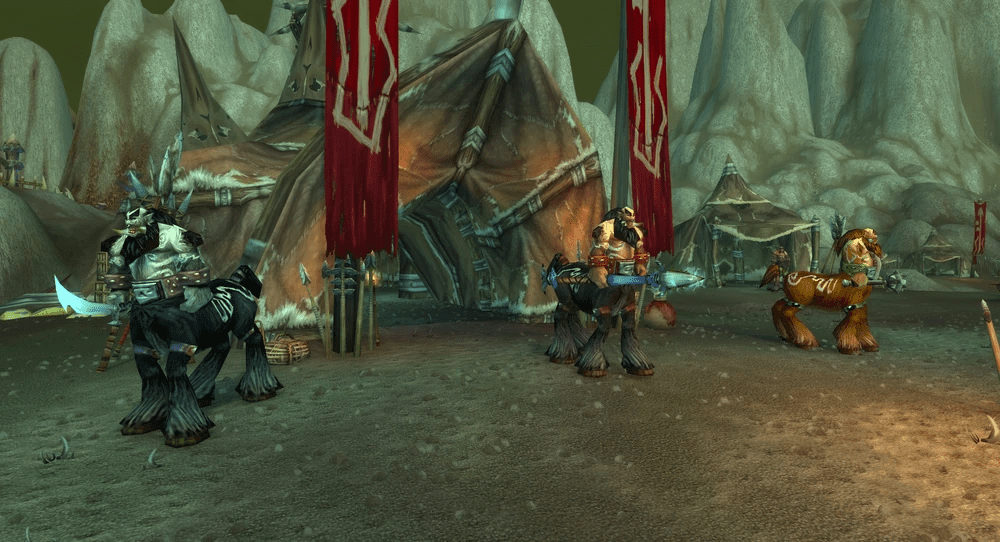
Centuries later (1100 years before the Dark Portal to be exact), another turning point scarred the tauren spirit. Drawn by whispers they believed sacred, they gathered in the lush grasslands known as Mashan’she, convinced the Earth Mother herself slept beneath its soil. Their reverence and decades of attempts to wake her from her slumber, however, awoke not a goddess but an ancient elemental power, Princess Theradras, daughter of the elemental lord of earth Therazane the Stonemother. The land was stripped of life in moments, transformed into the desolation that would forever give this land the name Desolace.
From this calamity arose tragedy upon tragedy. Zaetar, son of Cenarius sensed the ripples of power all the way from the Emerald Dream and came to investigate. Upon seeing Theradras, his mission was to imprison this devastating source of power, but by what kind of reason is anyone’s guess, he fell in love with her. The union between Theradras and Zaetar then birthed the centaur, creatures born of imbalance and rage. Their violence was swift and merciless. First they murdered their own father Zaetar, and then came the destruction of those around them. Tribes were scattered, sacred lands lost, and what followed was an age of wandering defined by flight and survival. For generations, the tauren roamed the Barrens, united only by shared memory and the constant threat of centaur raids. They endured not because they loved war, but because they refused to abandon one another.
A Home Won Through Alliance
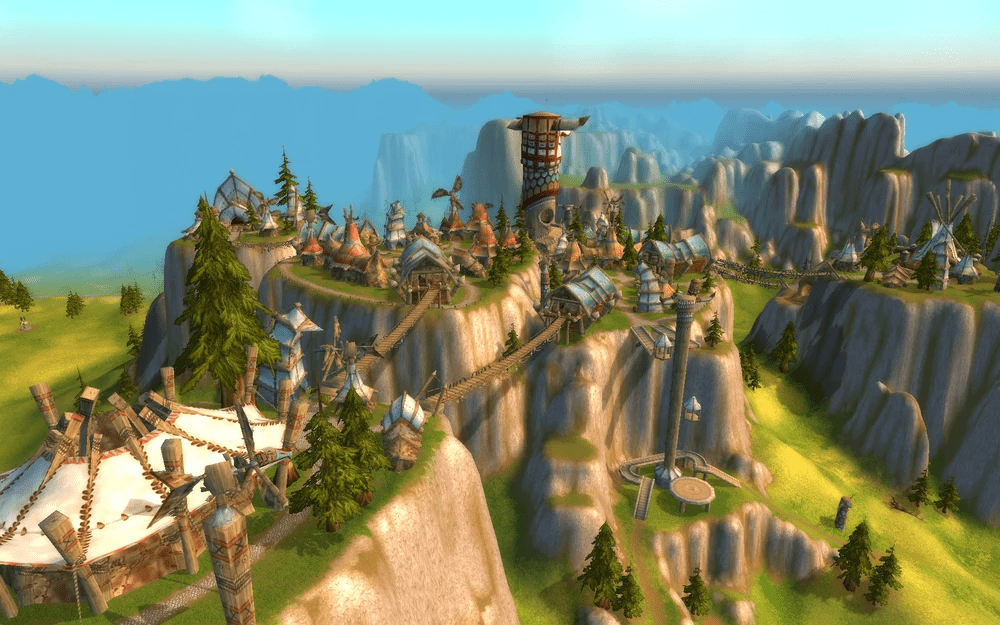
That cycle of endless movement finally broke during the Third War. Near extinction, the tauren found unexpected kinship in the orcs who had crossed the sea all the way from the Eastern Kingdoms. Between the tauren chieftain Cairne Bloodhoof, Warchief Thrall and the orcs grew a bond forged of shared values. They found themselves akin with the orcs in regards to their love for battle and honor, and saw that both the orcs and the Darkspear Trolls wanted to be closer to the shamanistic ways around them, one found very well amongst the tauren. With orcish aid, the tauren claimed Mulgore from the centaur, a land where the plains opened wide enough for healing as well as defense. Finally, the tauren had a place to truly call home.
Upon the mesas of Thunder Bluff, Cairne built more than a city. He built a promise: that no tauren would again wander alone. Tribes once scattered were drawn together, guided by wisdom rather than conquest. Though threats persisted (from civil unrest to outside threats) the tauren endured, standing alongside the Horde at Mount Hyjal and beyond, not as subjects, but as equals bound by shared sacrifice.
Trials of the Modern Age
The Cataclysm tested that unity. When a meeting between the tauren and night elf druid was cut short by the disguised Twilight’s Hammer cultists, Cairne mistakenly blamed the new Warchief Garrosh Hellscream for this outrageous act. He challenged the warchief to a “Mak’gora” for the warchief title itself. But Cairne’s death, dealt by the hands of Garrosh (which was poisoned against his knowledge by the tauren Magatha Grimtotem), shook the tauren to their core. This chaos gave way to the Grimtotem tribe taking control of Thunder Bluff. But under the newly appointed chieftain Baine Bloodhoof they reclaimed their home from the Grimtotem tribe and banished them to Stonetalon Mountains.
Baine’s leadership shifted toward patience and diplomacy, even when such restraint drew criticism from within the community. Internal strife, exile, and the burning of Camp Taurajo by the Alliance reminded the tauren that survival did not end with settlement, it demanded vigilance and moral resolve.
In later years, visions carried tauren beyond familiar shores to Pandaria, where hope briefly bloomed amid the horrors of renewed war. Baine’s refusal to abandon honor, even when marching beneath banners of the Horde he barely trusted, reaffirmed the ancient values of his people. When rebellion rose against the tyranny of Garrosh Hellscream, the tauren stood once more on the side of balance. Even as the Legion returned and old kin were rediscovered among the Highmountain, the tauren continued forward, not unchanged, but unbroken.
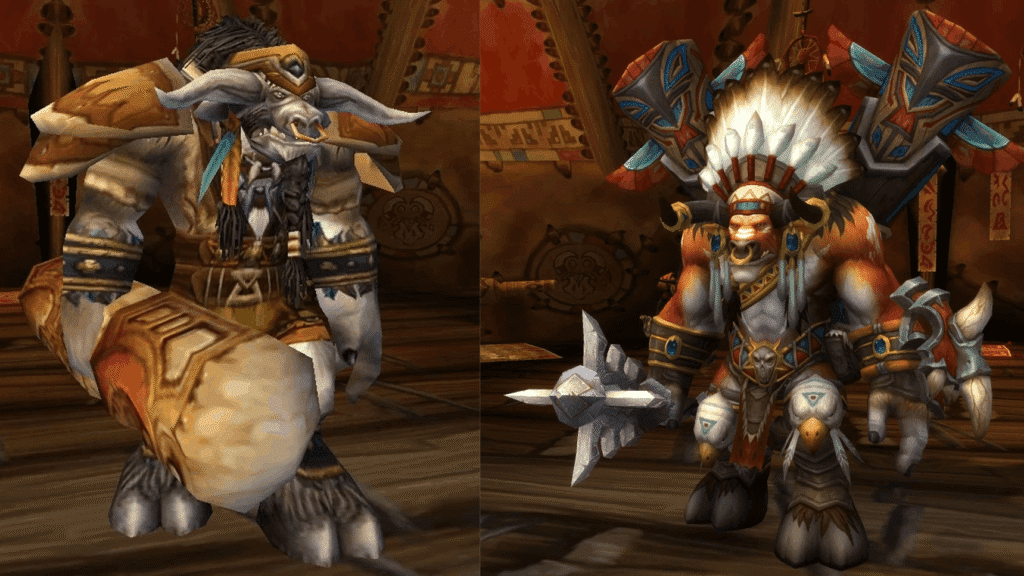
Personal Thoughts on the Tauren
If it was only up to my own satisfaction, I would call nearly every race in WoW my favorite. But it’s true when I say I also like tauren very very much alongside orcs and dwarves (dwarves still number 1 though). The calm of Mulgor, Thunder Bluff and its music just makes it worth all the more for me to just sit around and appreciate what a fine job they made while creating everything that is related to the tauren. The history being embedded into the very core of the world of Azeroth and its main events (just like how dwarves are) makes it very engaging and also somewhat easier to follow through compared to some others.
This down-to-earth shamanistic minotaur race has seen many a loss and tragedy, but they’ve also seen renewal and return. From the suffering of their ancestors to the fragile peace of Thunder Bluff, each generation has carried the same question forward: how to remain strong without surrendering compassion.
They have answered that question not with empires like the humans or dominion like the orcs, but with memory. In the weight of their totems, the patience of their councils, and the reverence with which they walk the land, the tauren continue to be the embodiment of balance rather than seeing it as an abstract ideal. Though the world around them fractures and reforms from time to time (like in every single expansion), the shu’halo endures, guided by the sun and the moon, by earth and sky, and by the quiet certainty that harmony, once lost, must always be sought again, even if the circumstances present darker alternatives.