 World of Warcraft

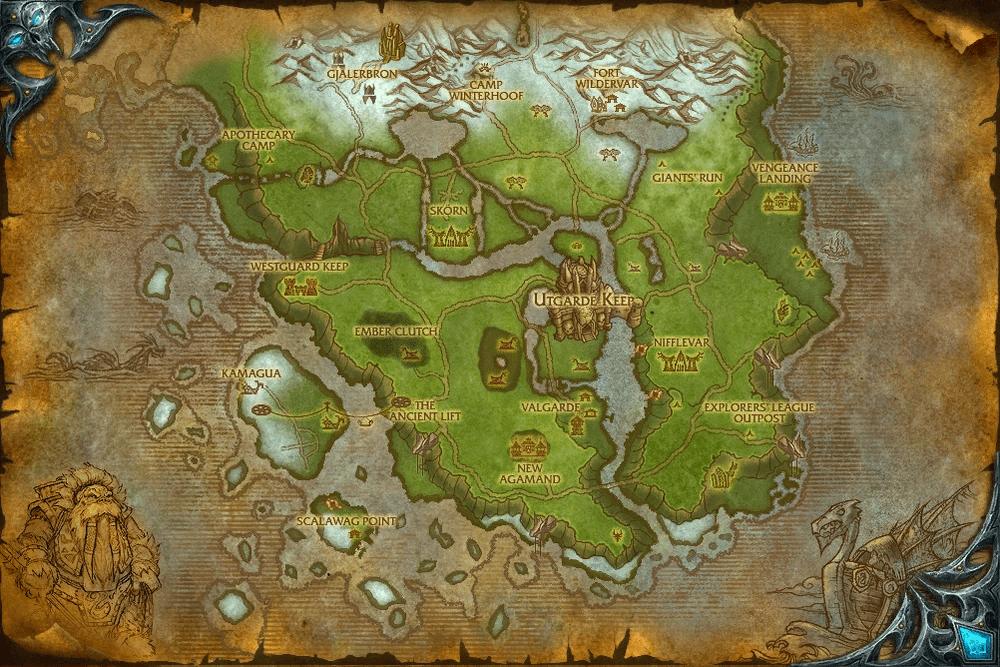
Easiest access point to Northrend for the Alliance players, the Howling Fjord is one of Northrend’s most striking and historically rich regions, a land where ancient giants, fierce warriors, and hardy coastal communities have left their mark. From the icy waters of Daggercap Bay to the rugged cliffs of the fjord’s interior, every corner of this landscape tells a story of survival, conflict, and enduring legacy. Adventurers entering the fjord will encounter a land of contrasts: sprawling meadows juxtaposed against jagged fjords, tranquil pine forests giving way to icy rivers, and the silent strength of vrykul fortresses looming over modern settlements. For long a crossroads for explorers and factions alike, the fjord serves as both a defensive gateway and a hub of connection to the wider lands of Northrend, inviting all who enter to uncover its secrets while respecting the power and history embedded in every stone and shoreline.
The Fjord’s Icy Entryways
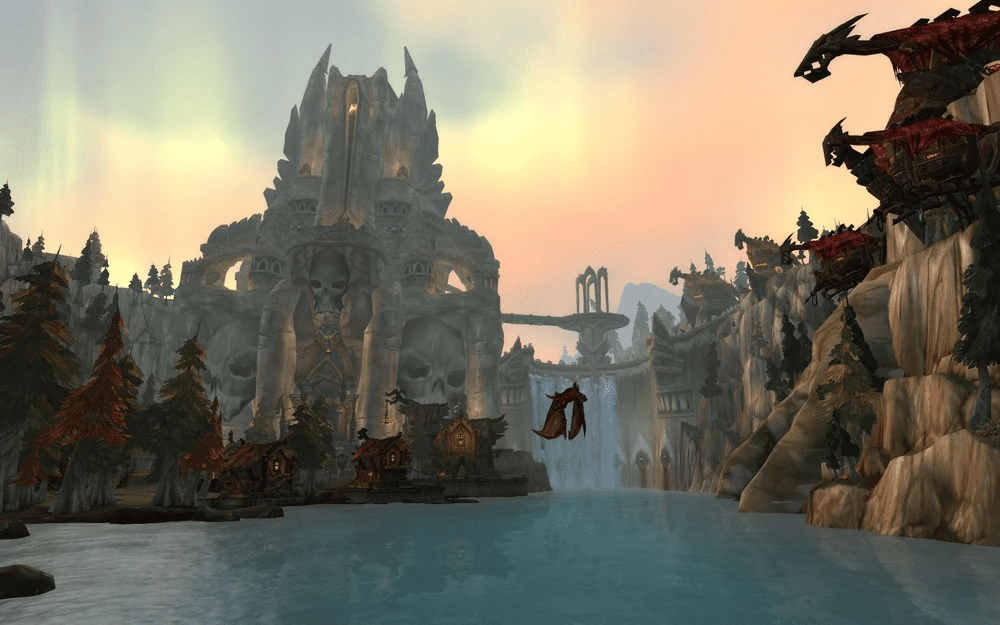
The Howling Fjord lies along southeastern Northrend, a land carved by glaciers, wind, and time. Its jagged cliffs rise from icy waters, while deep fjords and sheltered bays shape both travel and settlement. Daggercap Bay cuts into the southern coastline, offering a natural harbor that has drawn explorers, merchants, and armies alike. The region’s strategic location makes it a crossroads between southern lands and the interior of Northrend, creating a landscape alive with history and tension.
At the heart of the region stands Utgarde Keep, a monumental fortress of the vrykul, the giant race that first claimed these lands. Its massive stone walls, ramparts, and ceremonial halls reflect a martial culture built to endure centuries of change. Today, Utgarde Keep is a key dungeon, welcoming adventurers and reminding visitors that the fjord’s history is written into its very stones. Along the coast, both Alliance and Horde maintain outposts, creating a patchwork of influence that underscores the region’s contested nature.
Off the southwestern coast, the Isle of Spears hosts the Tuskarr settlement of Kamagua. From here, a giant turtle carries travelers to Moa’ki Harbor in Dragonblight and onward to Unu’pe in the Borean Tundra. This maritime route highlights the fjord’s continued role as a hub connecting southern Northrend to its northern and central zones.
Vrykul Heritage and Ancient Echoes
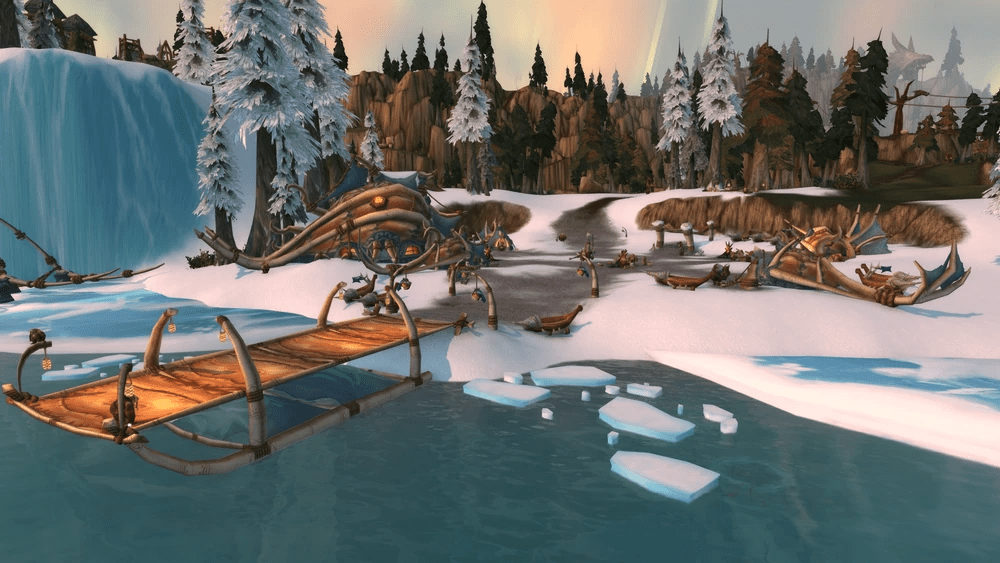
The fjord is steeped in the legacy of the vrykul, whose massive halls, fortified villages, and defensive structures dominate the landscape. Long considered the ancestral rulers of these lands, the vrykul shaped the region both culturally and geographically. Some stories even suggest that the vrykul may have entered long periods of slumber to survive changes like the Curse of Flesh, though the details vary depending on the source. This long sleep may have let them endure disasters and upheavals across Northrend. Evidence of their past, ritual sites, burial mounds, and abandoned fortresses, reminds travelers that Howling Fjord has a layered and ancient history.
Tales also speak of ice trolls and nerubian outposts in the fjord’s valleys or along the coast. While these mentions come from older accounts, they help illustrate the long-standing diversity of the region and its many inhabitants.
The Lich King and the Reawakening of the Fjord
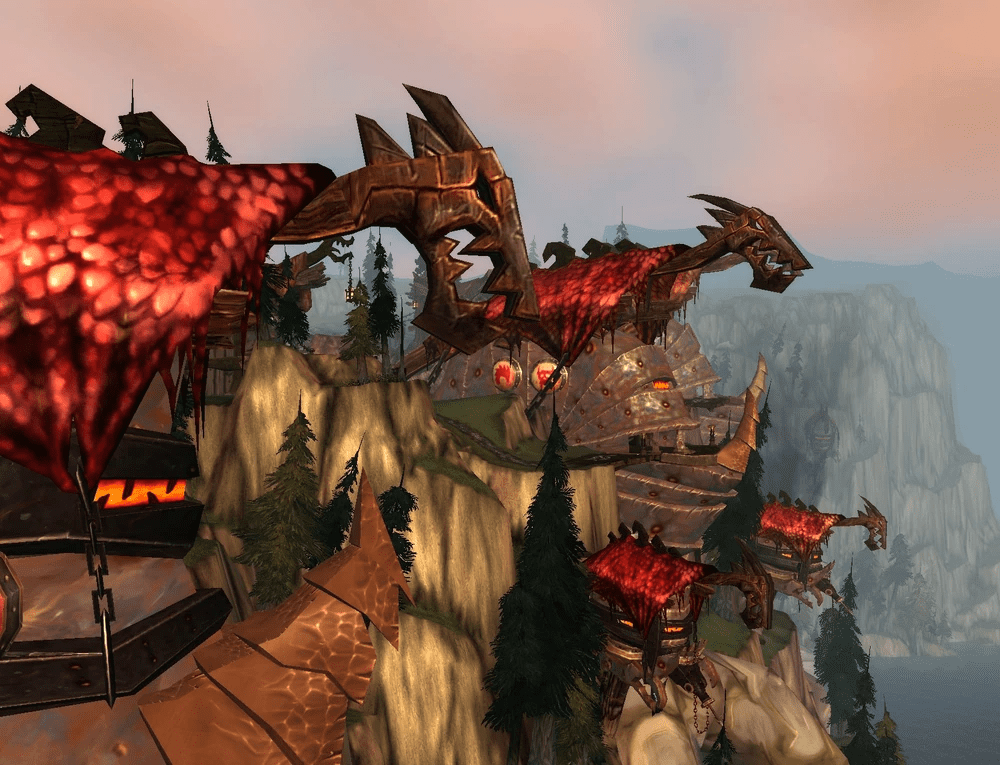
When the Lich King unleashed his Scourge across Northrend, many of the slumbering vrykul returned to reclaim their ancestral homes. Strongholds like Utgarde Keep once again saw activity, while coastal towns such as Valgarde faced raids from reawakened giants. The fjord’s rugged terrain made it a natural defensive landscape, shaping both conflict and settlement.
The Valiance Expedition established a beachhead in the fjord, using Valgarde to observe and counter Scourge movements. Meanwhile, the Forsaken settled in Vengeance Landing and New Agamand, serving as footholds and experimental outposts. Some say that vrykul at times allied with Scourge forces, and figures such as Prince Keleseth may have orchestrated raids from Utgarde Keep. This itself paints a picture of Howling Fjord as a place where ancient powers and current conflicts intersect.
Geography and Natural Landmarks
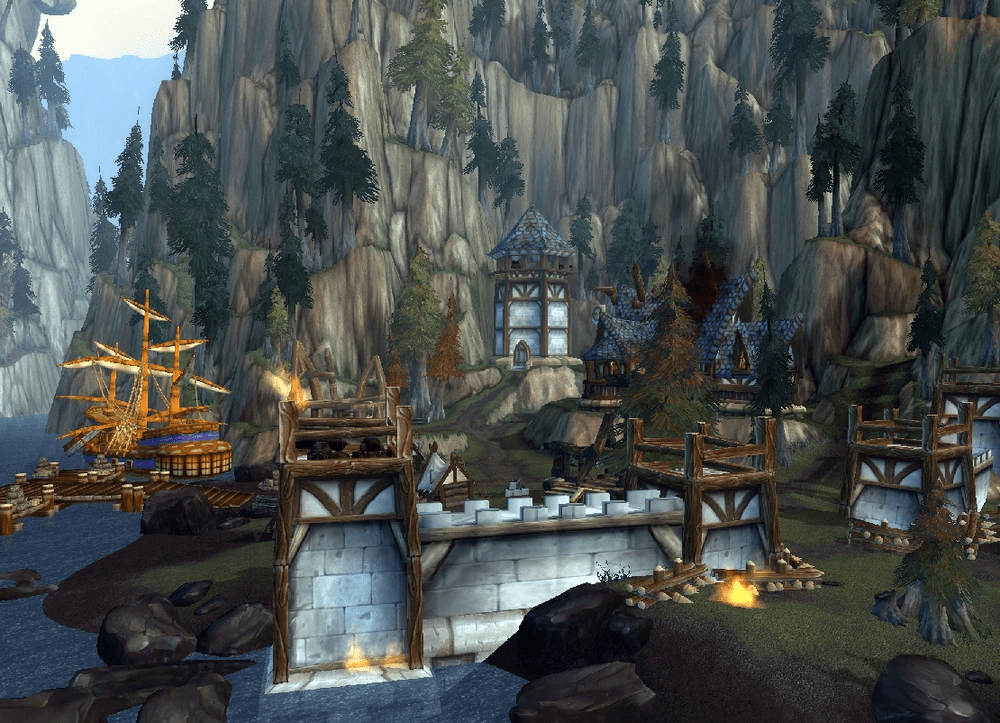
The fjord’s landscape is a tapestry of contrasts. Icy rivers thread through green meadows, pine forests release crisp, chilly breezes, and jagged cliffs rise dramatically from sheltered bays. Eastern coasts are steep and fortified, perfect for defense, while western inlets are gentler, historically attracting pirates and seafaring communities. The central highlands meanwhile, are dominated by vrykul fortresses, with cliffs, ridges, and valleys guiding both travel and combat. Fjords, rivers, and ridges act as natural barriers, forcing careful navigation and giving the region its enduring strategic importance. These geographic features not only shape the flow of conflict but also contribute to the fjord’s wild, dramatic character.
Current Significance and Cultural Layers
Today, Howling Fjord remains a zone of balance and tension. Alliance fortresses focus on diplomacy and protection, tuskarr villages maintain their coastal homes, and vrykul occupy inland highlands, mostly keeping to themselves while remaining vigilant.
The region hosts more than 140 quests, highlighting ongoing conflicts and explorations. Eastern coasts see skirmishes between Alliance and Horde, western waters are occasionally disrupted by pirates, and the central lands remain influenced by the vrykul. Stories hint at lingering spiritual currents and ancient secrets held by the fjord’s giant inhabitants, suggesting that not all mysteries have been uncovered.
It is even said that legendary figures and artifacts appear here, like Tirion Fordring and the Ashbringer. These encounters may or may not be a part of adventurer stories, but they add to the impression that the fjord is a place where history, myth, and modern events meet, shaping both its character and its enduring significance.
Personal Thoughts on Howling Fjord
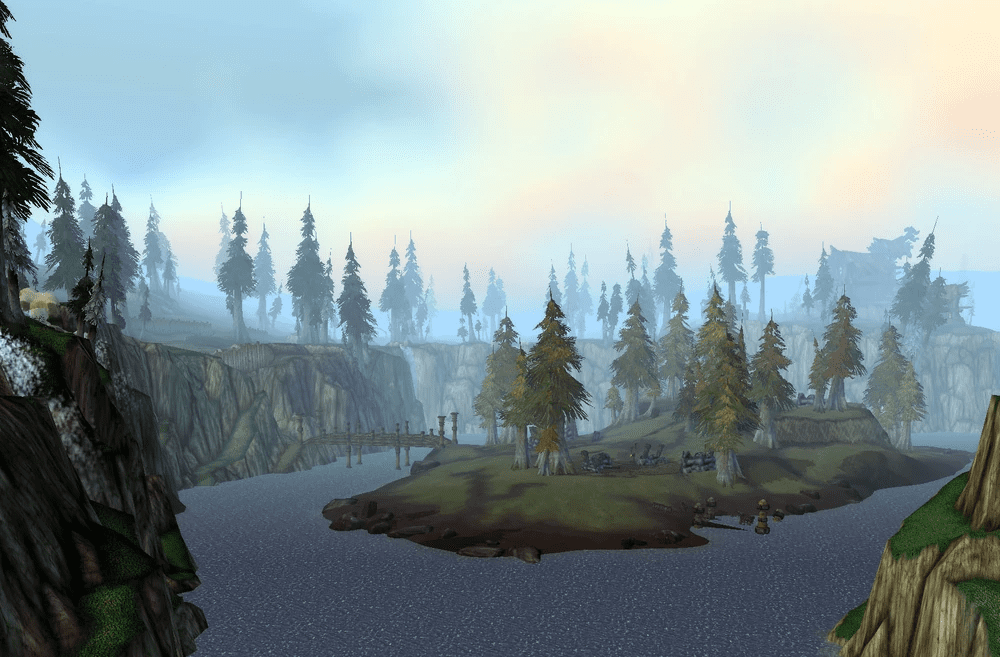
Howling Fjord stands as more than just a gateway to Northrend; it is a living chronicle of ancient power, human ambition, and natural grandeur. Its cliffs, rivers, and fjords bear witness to the rise and fall of civilizations, the return of long-dormant giants, and the ceaseless clash of factions seeking to carve their place in the north. The settlements, fortresses, and hidden ruins scattered across the region remind travelers that every journey here is layered with history, mystery, and challenge. Even in times of relative peace, the fjord hums with stories waiting to be discovered, tales of vrykul might, tuskarr resilience, and the enduring allure of Northrend’s wild, wind-swept southern coast. For those who venture here, Howling Fjord offers adventure, a vivid connection to the world’s deeper past, and a lot of viking vibes for the nordic culture enthusiasts.