
 World of Warcraft

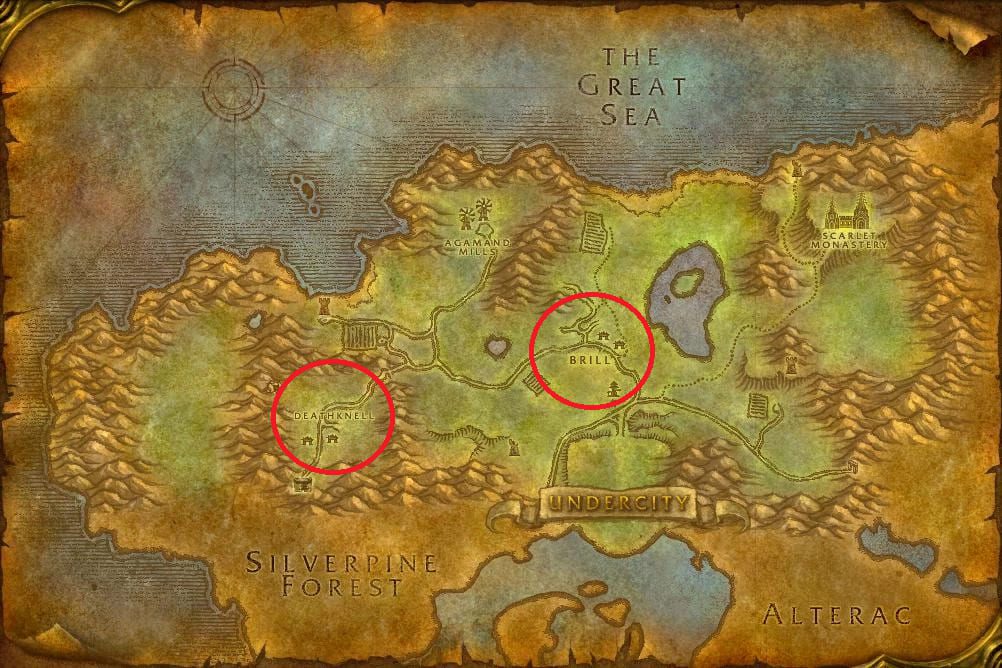
In the shadowed heart of Tirisfal Glades, where the sun remains a distant memory and the air carries the scent of damp earth and ancient pine, lies a story of a quiet, somber rebirth. For the Forsaken, the journey of undeath begins with a silent awakening amidst the rain-soaked gravestones of Deathknell and the flickering green lanterns of Brill. It is a journey of finding a place to belong, when the rest of Azeroth offers only a cold grave.
A Rude Awakening
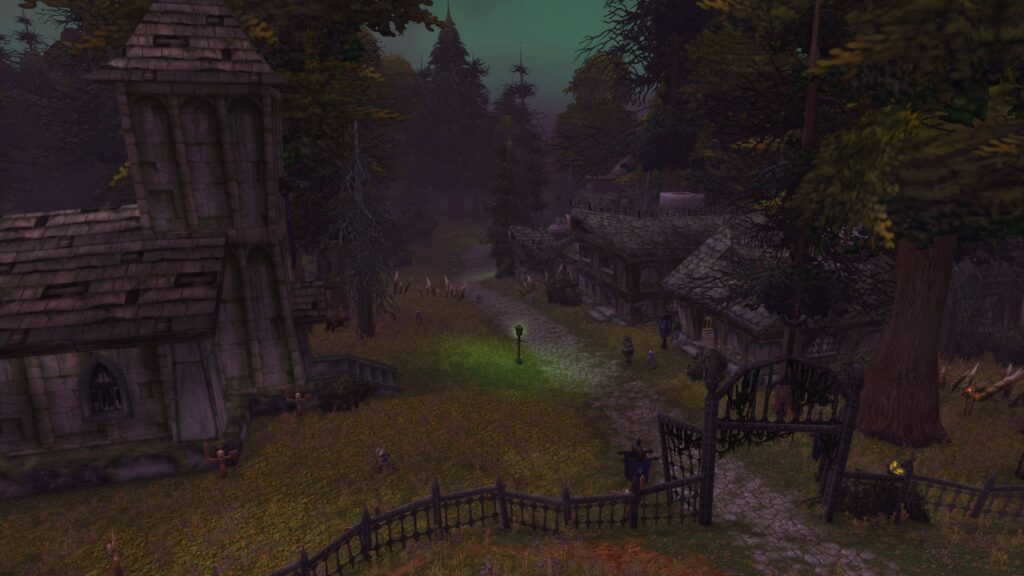
The beginning of every Forsaken is one of shattered continuity. Once loyal subjects of Lordaeron, then mindless thralls of the Scourge, they finally broke their chains only to find themselves in a world that no longer recognized them. This transition is anchored in Deathknell, a secluded graveyard that serves as the world’s melancholic cradle.
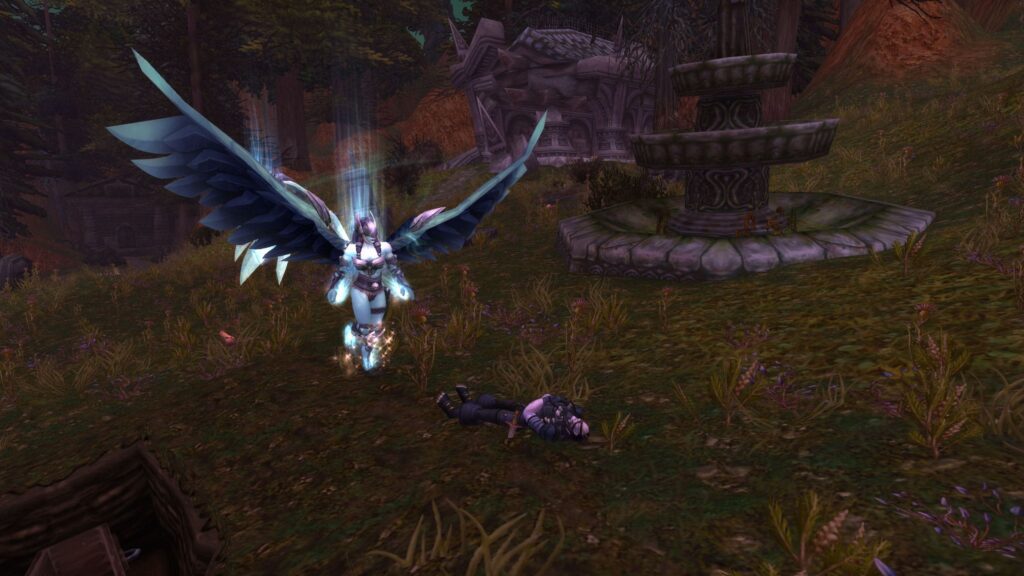
Unlike the chaotic resurrection of the Scourge, the awakening in Deathknell is a deliberate process of reclamation. After the fall of the Lich King, this awakening became even more structured with the presence of Sylvanas’ Val’kyr, who actively resurrected fallen humans to bolster the Forsaken’s ranks. The caretakers and executors who roam these crypts are the silent architects of a new society. Not seeking mindless obedience, they instead offer a guiding hand to souls who have forgotten the weight of their own names.
Newly raised undead are immediately put to the test, tasked with putting down those who couldn’t handle the resurrection and devolved into mindless zombies. Deathknell is built upon this moment of clarity, the realization that while the heartbeat is gone, the soul remains, defiant and free. It is here that the Forsaken first learn the most vital lesson of their existence: they are not monsters, but only survivors.
Gothic Solace and Conflicts of Brill
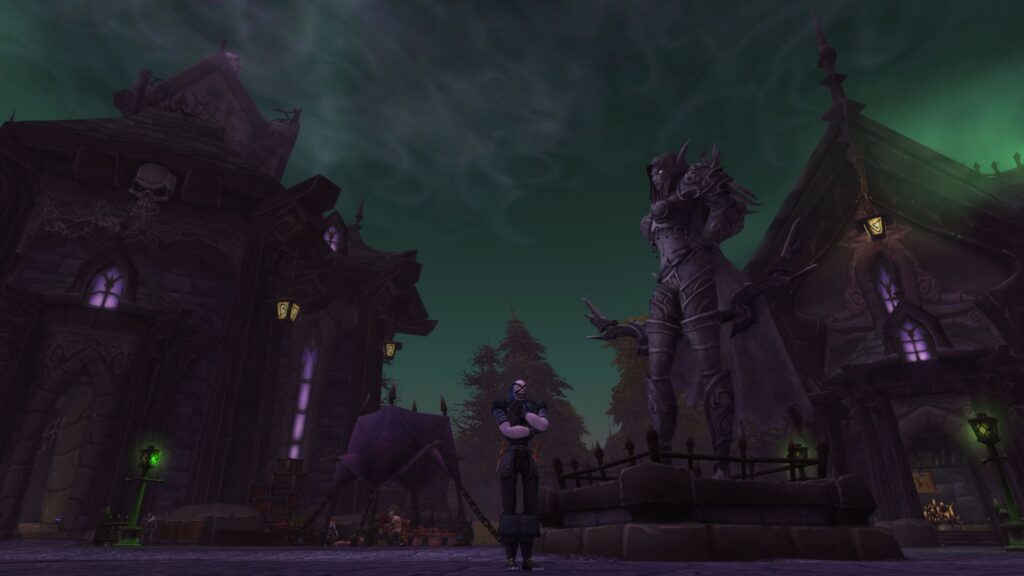
Following the winding path through the perpetual autumn leads to Brill, a town that stands as a monument to the Forsaken. With its crooked architecture and pumpkin patches glowing under an eerie luminescence, Brill captures a unique aesthetic, a “cozy” gothic atmosphere that exists nowhere else in Azeroth.
Brill may be a military, questing outpost, but it is also the culture of the Forsaken’s early days. Yet, it was never a peaceful town, as it was surrounded by constant threats. Newly awakened Forsaken immediately faced the lingering horrors of the Scourge at the Agamand Mills, a once-prosperous Lordaeron family now cursed to wander their ruined farmlands. The zealous Scarlet Crusade operated out of the Scarlet Watchtower, constantly harassing the borders in their fanatical mission to purge the undead.
The town’s history is etched into its very foundations, mirroring the transformation of the people who inhabit it. This is where we witness the weight of undeath through figures like Lilian Voss. Her story, a harrowing journey from denial to acceptance reflects the collective trauma of a people who were once heroes of the Light, now forced to find solace in the shadows. The town serves as a sanctuary where the remnants of humanity are preserved in a world that fears them.
Destruction, Rebirth, Alliances
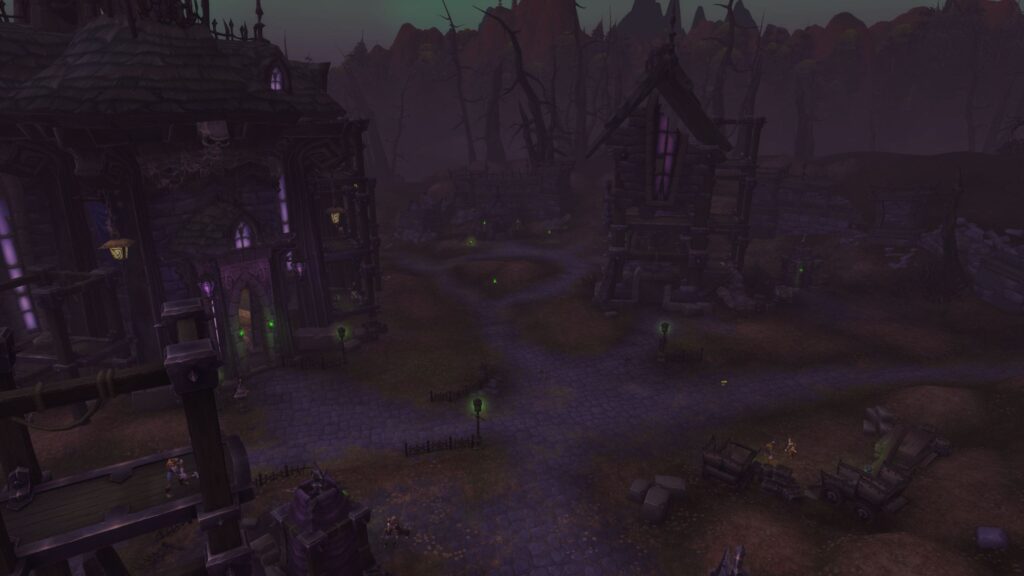
The cozy solace of Brill was not meant to last forever. During the Battle for Azeroth expansion, the Alliance launched a massive siege on the Ruins of Lordaeron. In a scorched-earth tactic, Sylvanas Windrunner unleashed a devastating plague of Blight, obliterating Brill in the process and reducing it to a toxic, uninhabitable wasteland. Following the events of the Shadowlands, players helped clear the deadly blight through the Return to Lordaeron questline. Today, Brill is actively being rebuilt from the ashes, with scaffolding surrounding the ruins as the Forsaken restore their crooked, beloved homes.
The integration of the Forsaken into the Horde was never an act of shared ideology, but one of desperate necessity. This alliance of convenience, however, slowly forged a deeper bond, a kinship of the unwanted. In Tirisfal, Forsaken brought a cold, calculated intelligence to the Horde, while the Horde provided the political legitimacy the undead so desperately lacked. Historically, this path was carved by the iron will of Sylvanas Windrunner, but the legacy of Brill and Deathknell has now transitioned into the hands of the Desolate Council. With leaders like Calia Menethil and Master Apothecary Faranell, the focus has shifted from mere vengeance to the preservation of their unique culture. They are a people who have learned to cherish the gloomy silence of their home, proving that even a shattered kingdom can find a sense of peace.
Personal Thoughts on Deathknell & Brill
Beyond the pines, Brill holds a nostalgic place in my heart. I fondly remember the days of leveling an undead rogue, slowly melting those exclamation marks and scraping together every copper I could find just to return in the future and purchase my very first Skeletal Horse. The aesthetic of Deathknell and Brill is a masterpiece, the mournful cello of the soundtrack, the constant drizzle, and the flickering lanterns create a sense of cozy melancholy that is immersive. It reminds us that stories are sometimes found in the quiet resolve of an undead citizen tending to a pumpkin patch in the dead of night. In the end, the journey through Brill is a reminder that even when the light of the sun is lost, there is still warmth to be found in the shadows of one’s own kin.
For more technical details and raw info, check Wowpedia. (Brill)
For more technical details and raw info, check Wowpedia. (Deathknell)