 World of Warcraft

Icecrown stands as one of the most terror-inducing and symbolically charged regions in all of Azeroth. Carved from glaciers and mountains at the top of Northrend, it is a land defined not only by perpetual cold, but by the long shadow of undeath that has shaped its terrain, structures, and legacy. The ice itself bears the scars of immense necromantic power, stained dark by corruption that has seeped into the land over countless years. Towering citadels, saronite ramparts, and vast causeways dominate the landscape, transforming the natural glacier into a fortress continent unto itself.
More than a battlefield or a ruined stronghold, Icecrown has served as a focal point for both the armies of the Lich King, but also cosmic forces that reach beyond the mortal realm. Its history is inseparable from the rise of the Scourge and the balance between life and death, making it not merely a location of past conflicts, but a permanent anchor in the greater structure of the world.
The Land of Blackened Ice
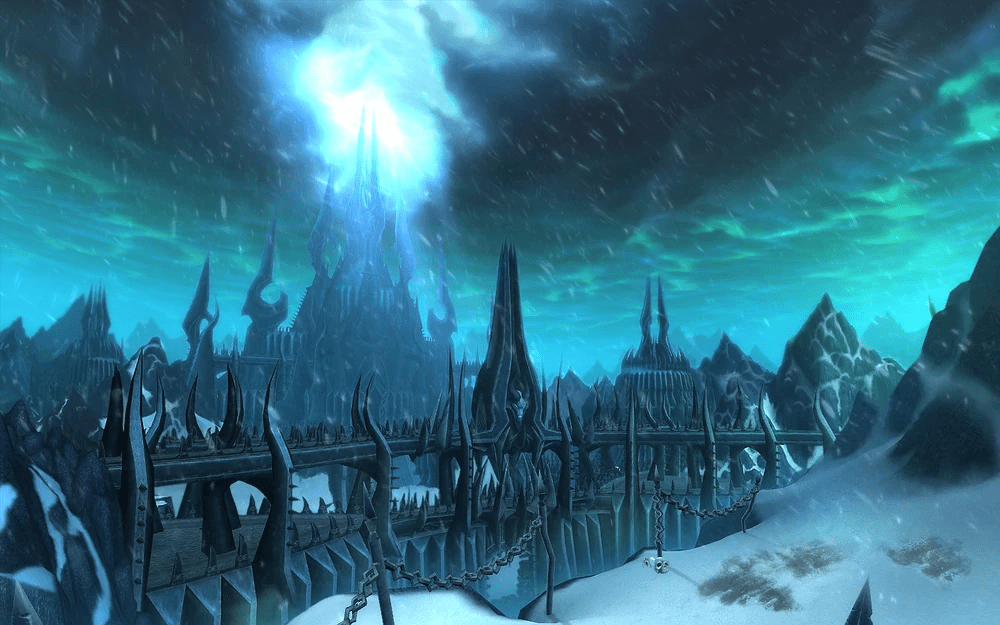
Icecrown’s physical character is immediately defined by its unnatural cold and corrupted terrain. The region is dominated by a massive glacier ringed with jagged mountain ranges, funneling movement through narrow valleys and elevated passes. Over time, the ice has darkened, infused with necromantic energies that have permanently altered its appearance and composition. Snow rarely falls here in a natural sense; instead, the air is filled with ash-like frost and crackling storms that scour the land.
The Scourge reshaped this environment to suit both defense and domination. Colossal walls of saronite divide the region into distinct zones, each accessible only through fortified gates. These barriers do not merely mark territory but enforce isolation, ensuring that any force advancing deeper into Icecrown must do so methodically and at great cost. Massive constructs and undead guardians stand watch over these choke points, blending seamlessly into the land’s hostile geometry. In Icecrown, geography and fortification are inseparable, forming a single, oppressive landscape engineered to resist invasion.
Origins of the Frozen Throne
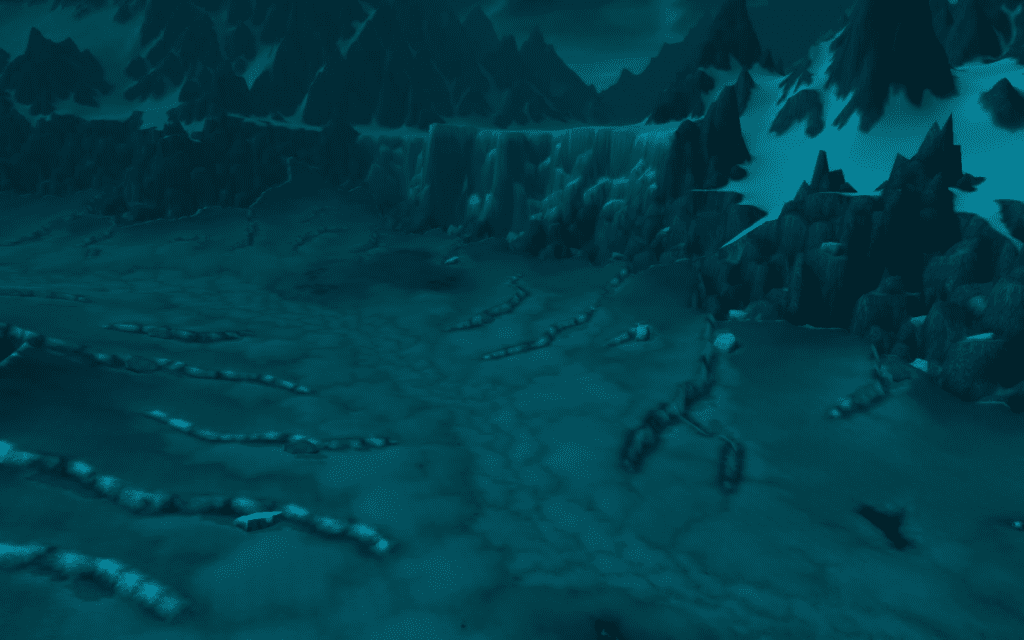
Icecrown’s descent into infamy began when Kil’jaeden cast the imprisoned spirit of Ner’zhul into the mortal world. The impact of that fall reshaped the glacier itself, giving rise to the Frozen Throne at the heart of the region. The shockwave of this event was felt across Northrend, marking Icecrown as a nexus of power long before its fortifications rose.
From this frozen prison, the Lich King exerted his will across the land. Indigenous life forms were subjugated through psychic domination and necromantic transformation, swelling the ranks of the Scourge and establishing Icecrown as the epicenter of undeath. The land became both laboratory and stronghold, its isolation ideal for experimentation and expansion. Over time, the influence emanating from the Frozen Throne extended far beyond Northrend, weakening Azeroth in preparation for external invasion. Icecrown was no longer simply remote, it was strategically essential, its very existence tied to the spread of the Scourge.
Citadels, Walls, and the Geography of Control
As the Scourge consolidated power, Icecrown’s terrain was further transformed through monumental construction. Icecrown Citadel rose around the Frozen Throne, its spires and battlements carved directly from saronite and ice. Vast causeways connected it to subsidiary fortresses, forming a network that allowed for rapid movement of undead forces while denying the same to intruders.
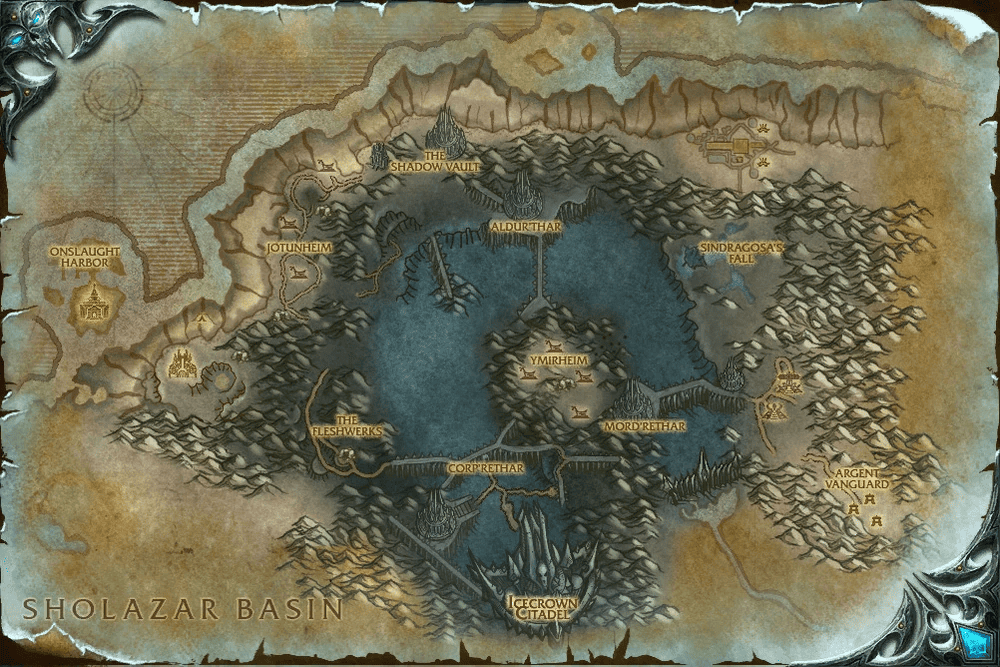
The glacier itself is protected by three immense gates, Mord’rethar, Aldur’thar, and Corp’rethar, each embedded within towering walls. These gates are the only viable land routes toward the Citadel, turning Icecrown into a layered defense system rather than a single stronghold. To the south, Angrathar the Wrathgate guards the approach from Dragonblight, reinforcing the region’s reputation as nearly impenetrable. Every ridge, wall, and rampart serves a singular purpose: control through inevitability. Advancement is possible, but only through attrition and sacrifice, a lesson Icecrown has imposed upon every army that has challenged it.
War, Ruin, and Occupation
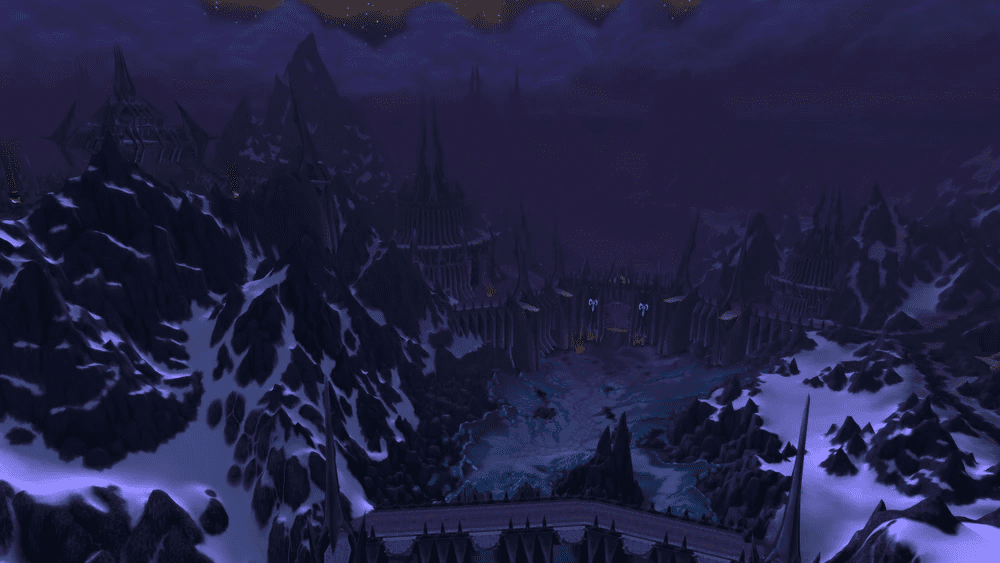
During the war against the Lich King, Icecrown bore the marks of both ancient devastation and recent militarization. The merging of Arthas Menethil with the Lich King unleashed destructive energies that scarred the region, yet this damage was rapidly subsumed beneath new fortifications. The Scourge reinforced every approach, transforming Icecrown into the final bastion of their dominion.
Following the fall of the Lich King, Icecrown entered an uneasy stillness. Horde and Alliance forces occupied key positions for weeks, dismantling Scourge operations and assessing the Citadel’s remains. In the years that followed, the region remained largely dormant, its undead forces restrained by the will of Bolvar Fordragon. Though quiet, Icecrown never truly recovered. The land retained its fortresses, its corrupted ice, and its lingering sense of containment, as though its purpose had merely been paused rather than ended.
The Veil Torn and the Shadowlands Connection
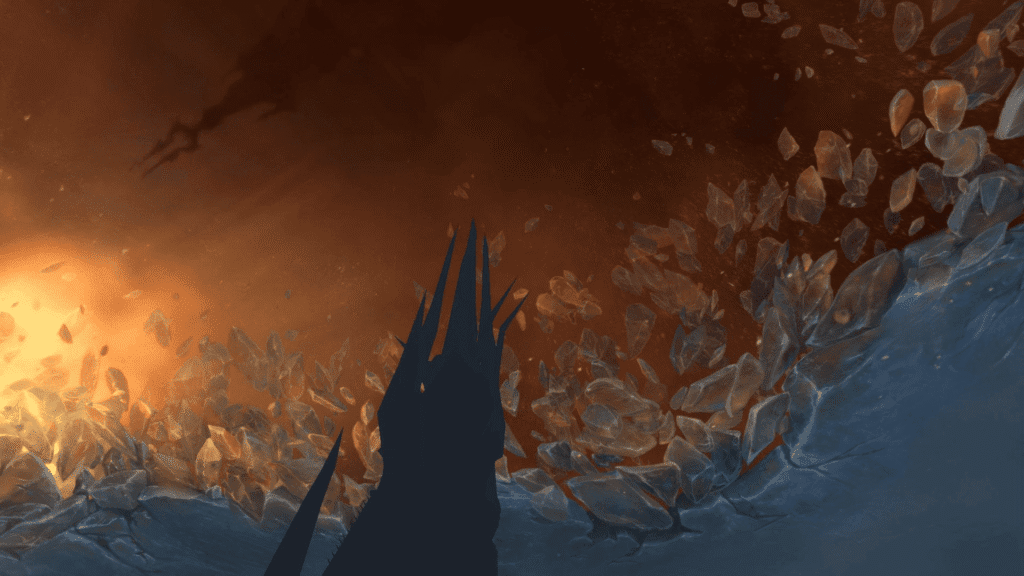
Icecrown’s role expanded dramatically in the Shadowlands expansion with the destruction of the Helm of Domination at the hands of Sylvanas Windrunner. The shattering of this artifact tore open the sky above the glacier, creating a rift that directly linked Azeroth to the Shadowlands. For a time, the heavens above Icecrown were fractured, spilling Maw energies and Mawsworn forces into the region. The land once again became a point of invasion, not merely between armies, but between planes of existence.
Though the rift was eventually sealed following the defeat of Zovaal the Jailer, Icecrown’s status was permanently altered. It was revealed not just as a Scourge stronghold, but as a metaphysical anchor binding Azeroth to the realms of death. Even in its current state, with the sky returned to its lightning-wreathed gray, Icecrown remains a place where boundaries are thin and consequences are vast.
Personal Thoughts on Icecrown
After all the catastrophic events it has seen, Icecrown endures as more than the site of fallen tyrants or shattered artifacts. Its importance lies in the way it has shaped the flow of power between life, death, and the world itself. Though active conflict has subsided, the land remains charged with residual influence, its corrupted ice and monumental architecture serving as lasting reminders of what once ruled there. As an anchor between realms and a testament to the dangers of unchecked power, Icecrown occupies a unique position in Azeroth’s geography and mythology. It is a place where history has not faded, but frozen just like its first master, preserved in blackened ice, waiting should the balance between worlds ever fracture again.