
 World of Warcraft
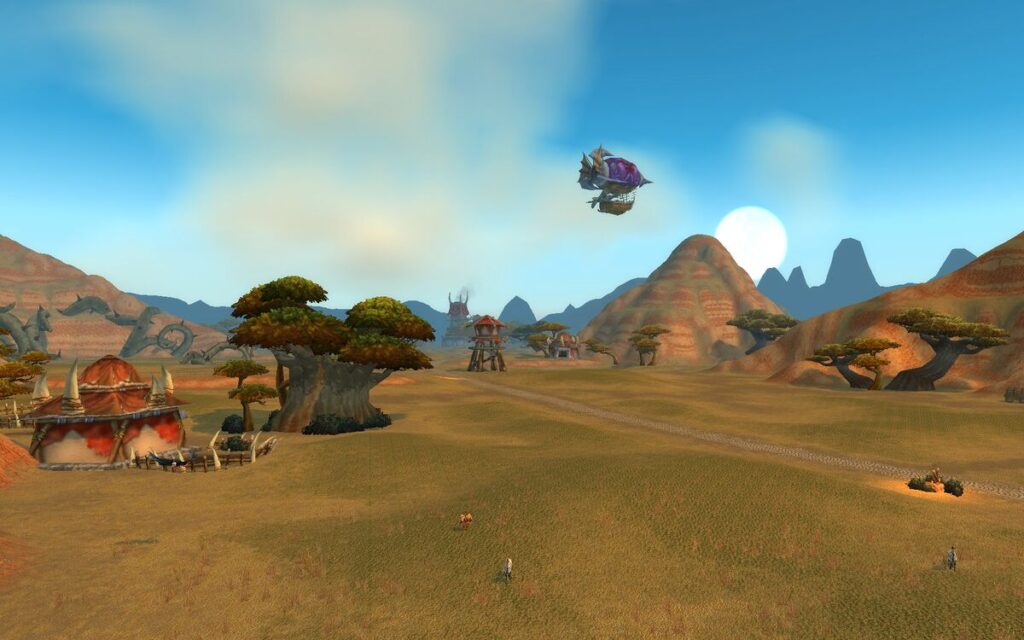
Before the world broke apart in Cataclysm, there was a golden savanna that stretched endlessly under the Kalimdor sun called the Barrens. It was a massive, dry expanse of cracked earth, dotted with iconic baobab trees and hidden, lush oases. If you leveled a Horde character in the early days of World of Warcraft, this massive zone was your true initiation. You arrived as a novice, and left as a hardened adventurer.
The Barrens can be considered a true rite of passage. The sun-baked plains, overpopulated Quilboar camps, duels outside the Crossroads, and the legendary chat channel defined a generation of players.
The Crossroads and a Legendary Search in Barrens
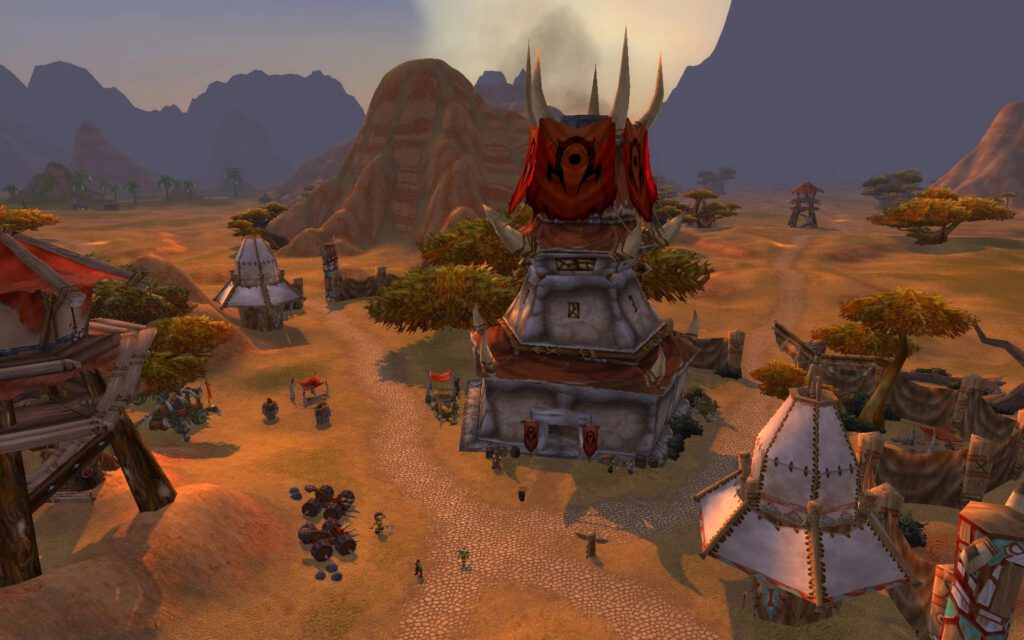
When you first stepped out of Durotar or Mulgore, your journey naturally funneled you into the very center of the map: The Crossroads. This bustling Horde outpost was the beating heart of the Barrens. It was constantly under attack by high-level Alliance raiding parties, forcing players to band together to defend the guards and protect the low-level questers.
But you cannot talk about The Crossroads without mentioning its most famous resident, Mankrik. Standing near the town’s entrance, this furious Orc asked players to find his missing wife, who had been lost during a Quilboar ambush. Because quest markers did not exist on the map back then, the general chat was endlessly flooded with the same, echoing question: “Where is Mankrik’s wife?” Finding her tragic fate at a small camp to the south became a universal Horde memory, turning a simple quest into an absolute internet legend. Players misleading other players into various different zones were really infamous back then. I even saw someone saying Mankrik’s wife was in Outland!
Ratchet and the Most Damned Escort Quest in Azeroth
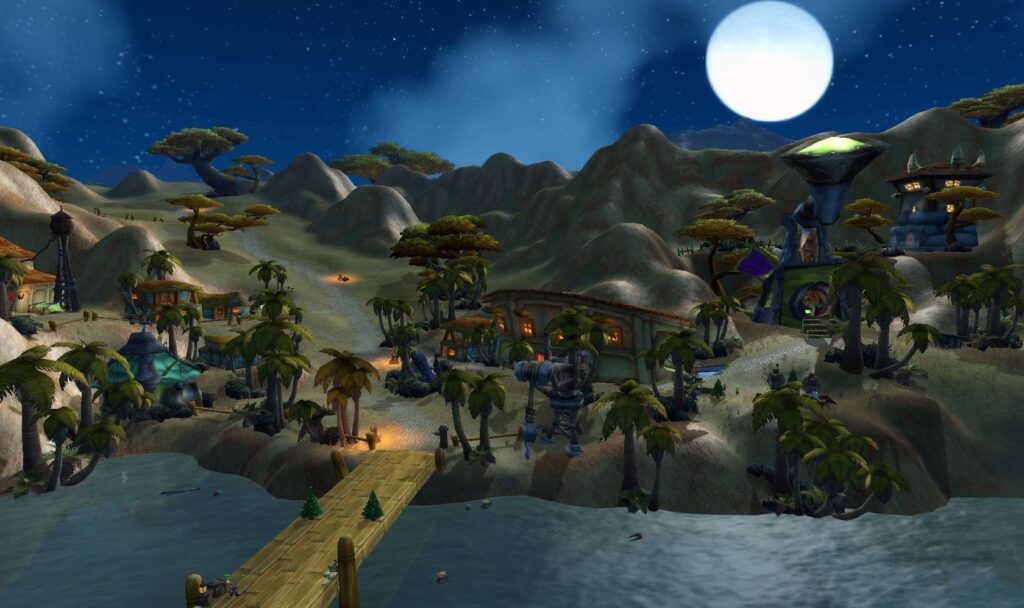
Further east along the Merchant Coast lay Ratchet, my favorite neutral Goblin port city run by the Steamwheedle Cartel. Ratchet was an oasis of chaotic charm. It was a place where Horde and Alliance players could briefly cross paths without immediate bloodshed, pirates roamed the southern shores, and the engineering marvels of the Goblins were on full display.
However, Ratchet was also the final destination for one of the most rage-inducing quests in WoW history, called Free From the Hold. If you ventured south to Northwatch Hold, a heavily fortified human military camp, there, you would find a captive High Elf named Gilthares Firebough in a cage. To complete the quest, you had to escort him all the way back to Ratchet.
The problem was Gilthares walked at an agonizingly slow pace, actively aggroing every single human marine, raptor, and pirate along the road, infuriatingly yelling “HELP ME!” Watching him slowly stroll through a massive human camp while you fought for your life was enough to make any player lose their sanity. Yet, despite the sheer frustration, completing that grueling trek and finally delivering him to Ratchet felt good.
The Blood of a God, Quilboars and the Wailing Caverns
The primary antagonists of the Barrens were the Quilboars, specifically the Razormane and Bristleback tribes. But there is a massive piece of lore behind these pig-men and the giant, thorny briar patches they call home.
Ten thousand years ago, during the War of the Ancients, a colossal ancient boar god named Agamaggan sacrificed himself to fight the Burning Legion. Wherever his immense blood spilled on the land of Kalimdor, massive thorny vines sprouted from the earth. The Quilboars believe they are the direct descendants of Agamaggan, and they fiercely defend these giant thorn-cities as holy ground.
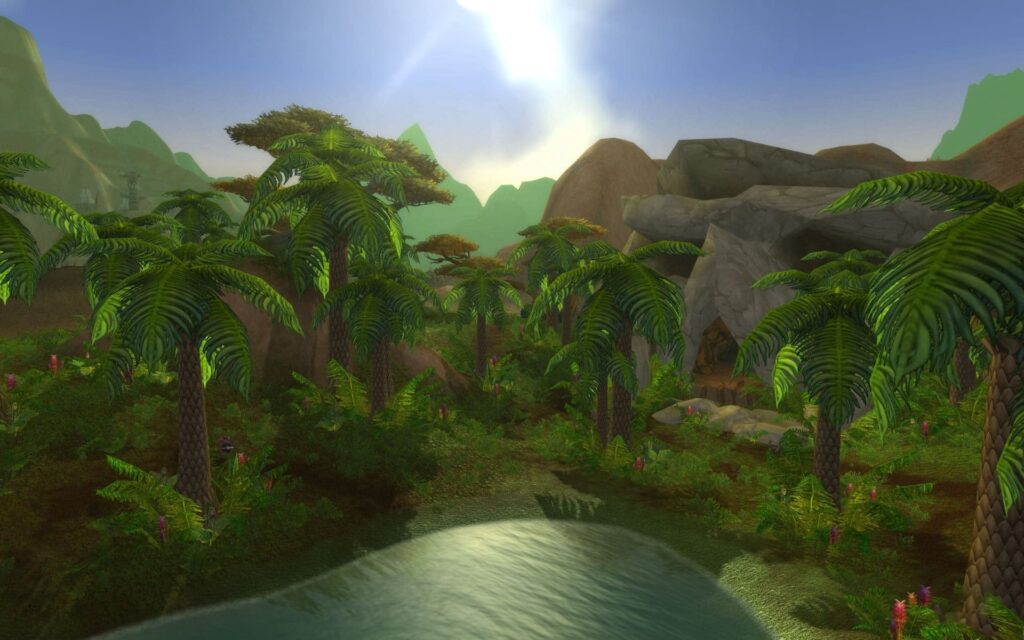
Deep within one of these massive thorny overgrowths lies the Wailing Caverns (WC), one of the most iconic early-game dungeons for the Horde. The caverns were meant to be a place of healing, where the Night Elf druid Naralex entered the Emerald Dream to restore the lushness of the Barrens. Instead, the Emerald Nightmare corrupted him, turning his followers into the venomous Druids of the Fang. Navigating that labyrinth of glowing mushrooms, raptors, and corrupted druids was a chaotic and unforgettable dungeon-crawling experience. It was full of frustrating group-killers. The infamous jumping gap that lots of players failed (often getting kicked from the group because of it), and the limited amount of quest herbs scattered around the dungeon that were never enough for everyone to loot.
The Cataclysm, The Barrens Torn in Half
For years, the Barrens stood as a single, colossal landmass. It was so massive that running from the northern border of Ashenvale to the southern lifts of Thousand Needles felt like a real-life 21K marathon.
But with the arrival of the Cataclysm expansion, the Barrens changed. Deathwing the Destroyer erupted into Azeroth, and his fiery wrath literally tore the Barrens in half. A massive, lava-filled chasm known as the Great Divide split the golden savanna down the middle.
The zone was officially separated into two distinct maps called the Northern Barrens and the Southern Barrens. The North remained a relatively low-level stronghold for the Horde, but the South became a heavily contested warzone. The Alliance pushed through from Dustwallow Marsh, establishing Fort Triumph and burning Camp Taurajo, which forced the Tauren to build the massive Great Gate to seal off Mulgore. Meanwhile, the Horde fortified Desolation Hold. The peaceful, open savanna was gone forever, replaced by trenches, siege engines, and the devastating consequences of war.
Aside from changing, the Barrens also became the center of a civil war. During the Mists of Pandaria expansion, the Northern Barrens served as the primary staging ground for Vol’jin’s Darkspear Rebellion against Warchief Garrosh Hellscream. Max-level players had to gather resources, escort supply caravans across the dusty plains, and raid elite Kor’kron camps to take back the Horde. Once again, the Barrens proved it was the true forge of the Horde’s history.
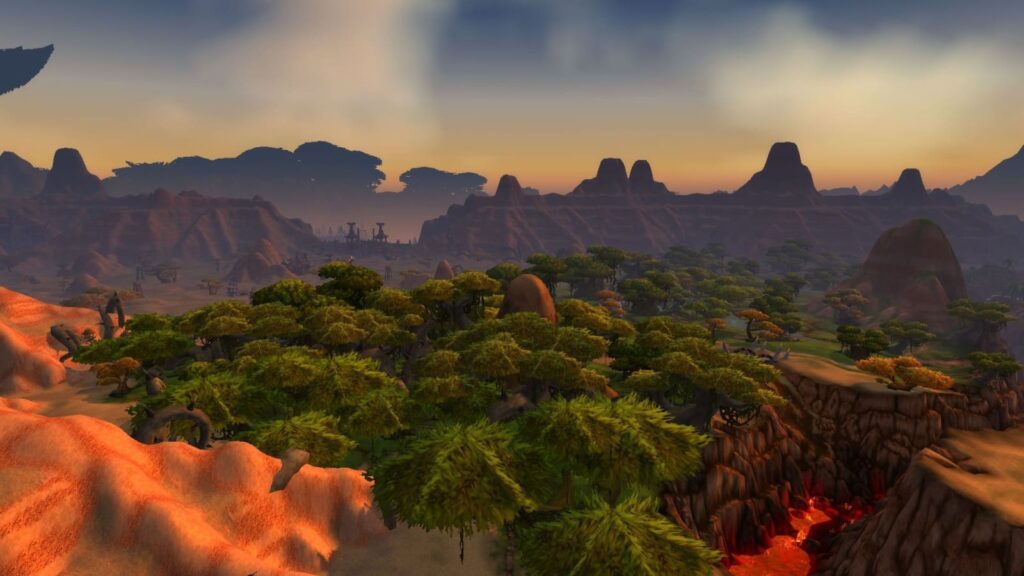
Personal Thoughts on The Barrens
As someone who has mained a Troll Hunter (can’t do it without mentioning this), the Barrens will always hold a special place in my heart (like lots of other zones in the game). After the lush jungles of the Echo Isles and the red rocks of Durotar, stepping into this vast, open savanna alongside my loyal raptor pet felt like the moment my true adventure began, the quests became harder, the creeps would hit harder.
Looking back at the original Barrens, there is something deeply magical about its straightforward design. Containing only a single graveyard near the Crossroads, if you died at the very bottom of the map, you were forced to make a frustrating, miles-long ghost run just to get back to your body. Now, I haven’t spent tons of hours in the original Barrens, experiencing most of it through a couple of hours on my brother’s account, but I absolutely get the feeling. The classic Barrens embodied that exact old-school philosophy for an MMO zone.
It did not rely on convoluted mechanics, overwhelming cosmic narratives, or endless daily grinds. You just grabbed your quests at The Crossroads or Ratchet, ran out into the sun-drenched plains, listened to the non-overwhelming chill soundtrack in the background and let the world pull you in. Despite the endless running, the incredibly slow escort quests, and the constant threat of high-level Alliance players, the Barrens was perfect in its simplicity. It was a crucible that forged the modern Horde, one Zhevra hoof at a time.
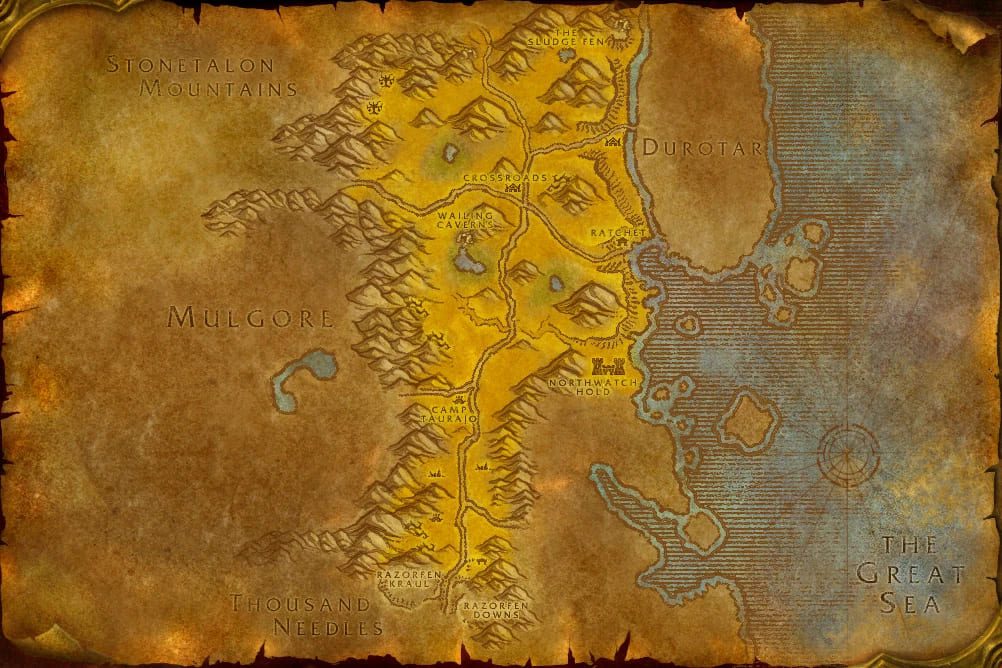
For more technical details and raw info, check Wowpedia. (Classic)
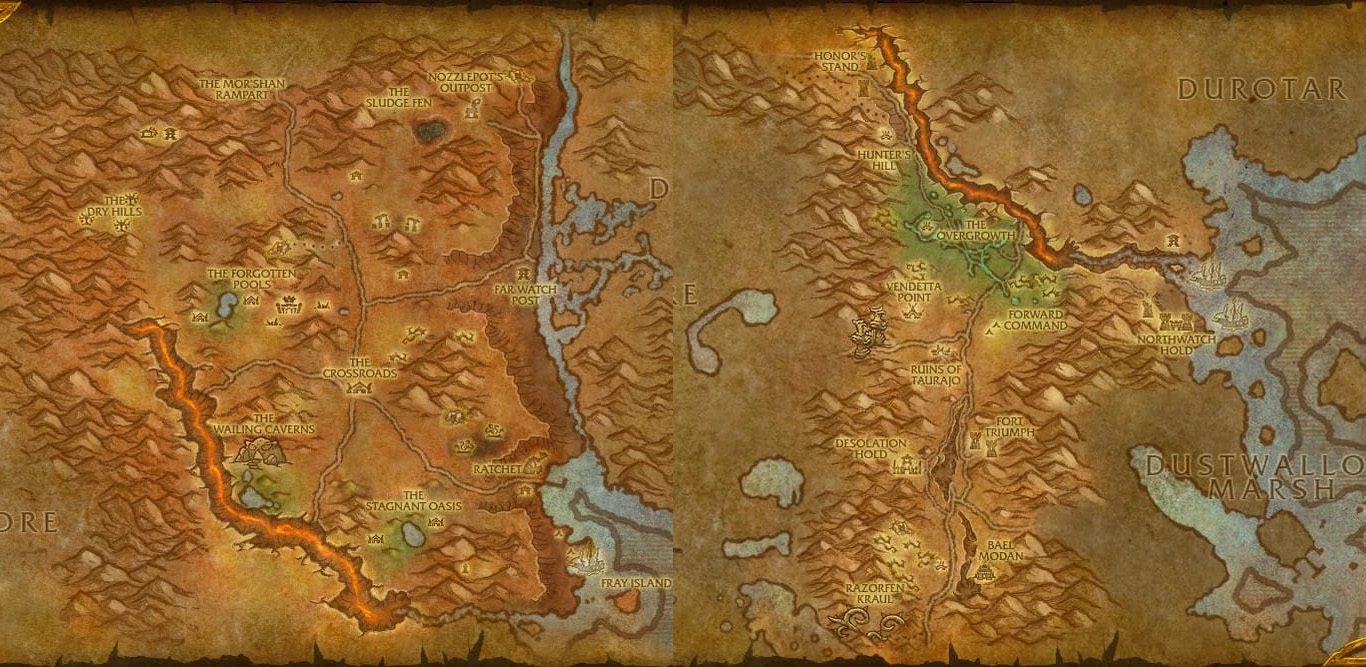
For more technical details and raw info, check Wowpedia. (Northern Barrens)
For more technical details and raw info, check Wowpedia. (Southern Barrens)