 World of Warcraft
Dragonblight stands as the somber heart of southern Northrend, a land where memory, magic, and mortality converge. Vast and austere, this frozen valley is defined not by bustling cities or fertile ground, but by the immense skeletal remains of dragons whose lives once shaped the fate of the world. For millennia, the land has served as both a sacred terminus and a contested prize, drawing dragonflights, mortal armies, and cosmic forces into its icy expanse.
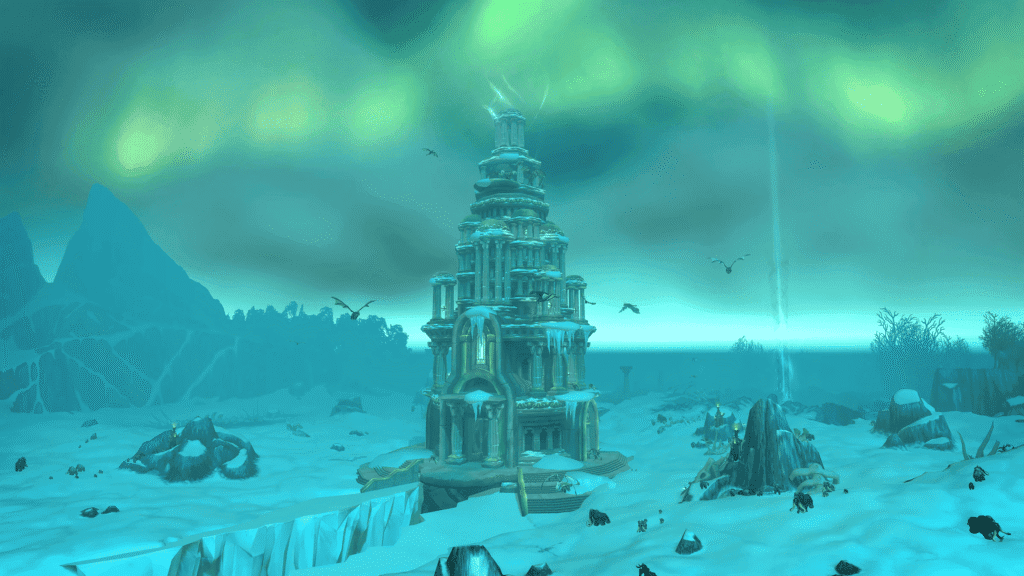
More than a graveyard, this zone itself is a crucible of world history. Titan-forged legacies, dragon sanctums, Scourge incursions, and shifting mortal ambitions have all left indelible marks upon its terrain. Its central spire, Wyrmrest Temple, rises above the tundra as a symbol of ancient purpose, while the surrounding wastes bear witness to repeated cycles of reverence, violation, and war. To understand Northrend, or Azeroth itself, Dragonblight cannot be ignored.
Origins of a Sacred Expanse
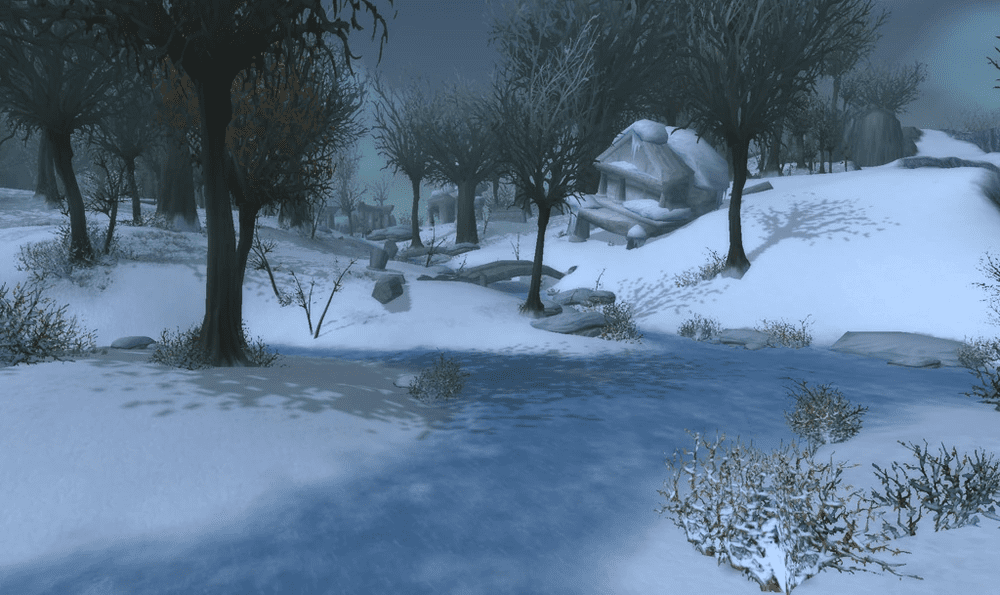
Long before Northrend was charted by mortal hands, Dragonblight was already marked as a place of endings and beginnings. It was here that Galakrond, the monstrous progenitor of dragonkind, was finally slain, his colossal remains still visible across the tundra. In the wake of that ancient conflict, the titans, acting through their keepers, chose this land to elevate five proto-dragons into the Dragon Aspects. Alexstrasza, Nozdormu, Ysera, Malygos, and Neltharion were charged at Wyrmrest with stewardship over life, time, nature, magic, and earth, binding the land of Dragonblight forever to the fate of dragonkind.
Over time, the land became an instinctual destination for aging dragons. Drawn by forces older than recorded memory, they came here to meet their end, enriching the soil with arcane residue and bone. This accumulation transformed the valley into a nexus of latent power, ensuring that its importance would persist long after the titans themselves departed from the world.
Geography and Defining Landmarks
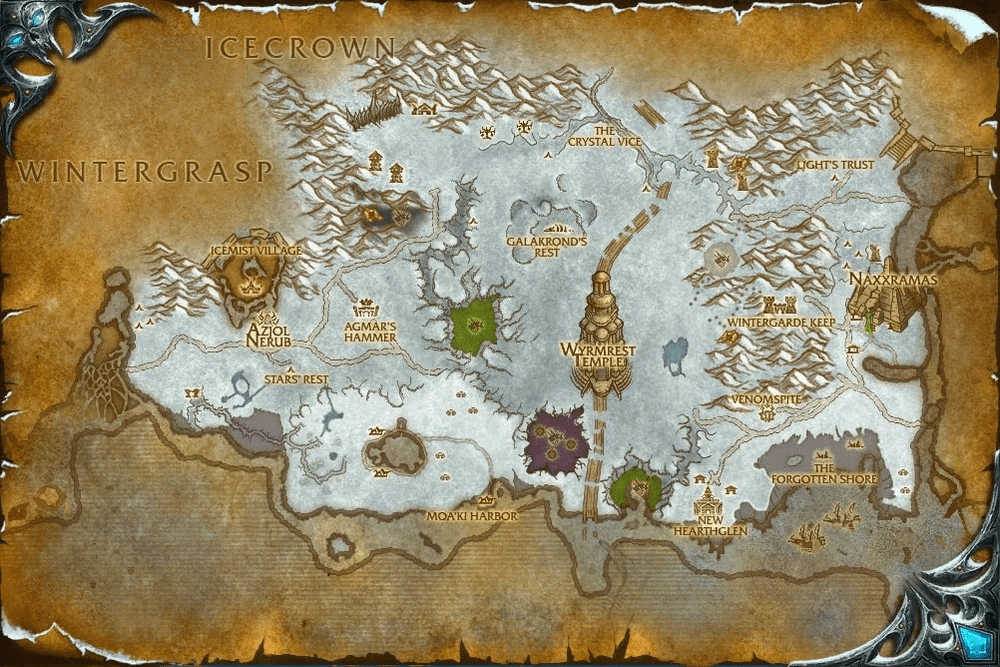
Geographically,Dragonblight occupies the southern center of Northrend, bordered by glacial plains, jagged ridges, and frozen coastlines. Its defining feature is the immense dragon graveyard stretching outward from Wyrmrest Temple, where ivory-white bones gleam against snow and ice. No glacier is deep enough to conceal this history; the remains lie exposed, forming both natural barriers and grim monuments.
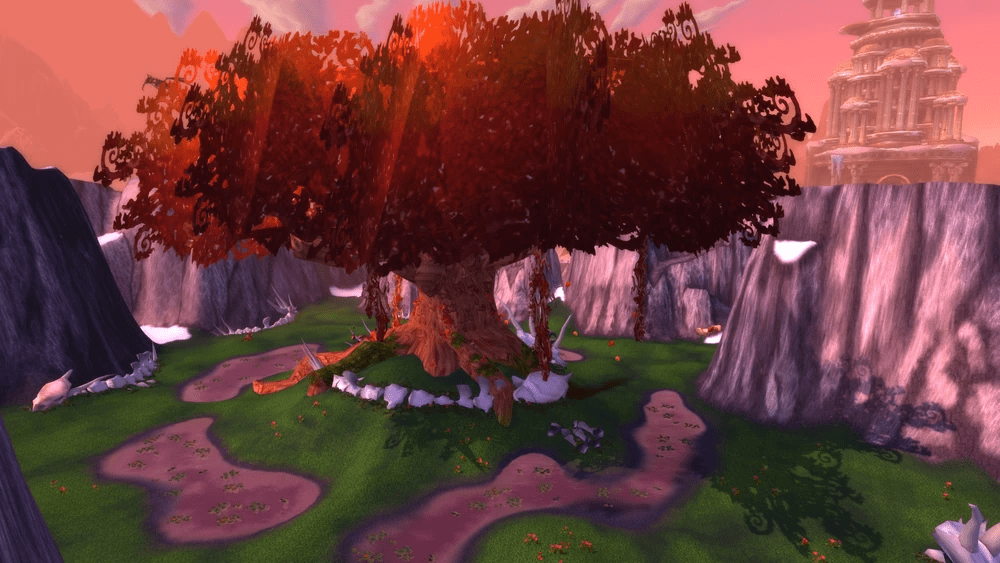
At the center stands Wyrmrest Temple, a towering titan-forged structure that anchors the region both physically and symbolically. Encircling it are five dragonshrines (Red, Bronze, Green, Blue, and Black), each reflecting the unique energies of its flight. These sanctuaries exist in stark contrast to one another: molten stone at the Obsidian Dragonshrine, lush growth at the Emerald, shifting sands at the Bronze, and arcane-scarred terrain at the Azure. Together, they fracture the otherwise uniform tundra into sharply distinct ecological zones.
Custodians, Settlements, and Subterranean Realms
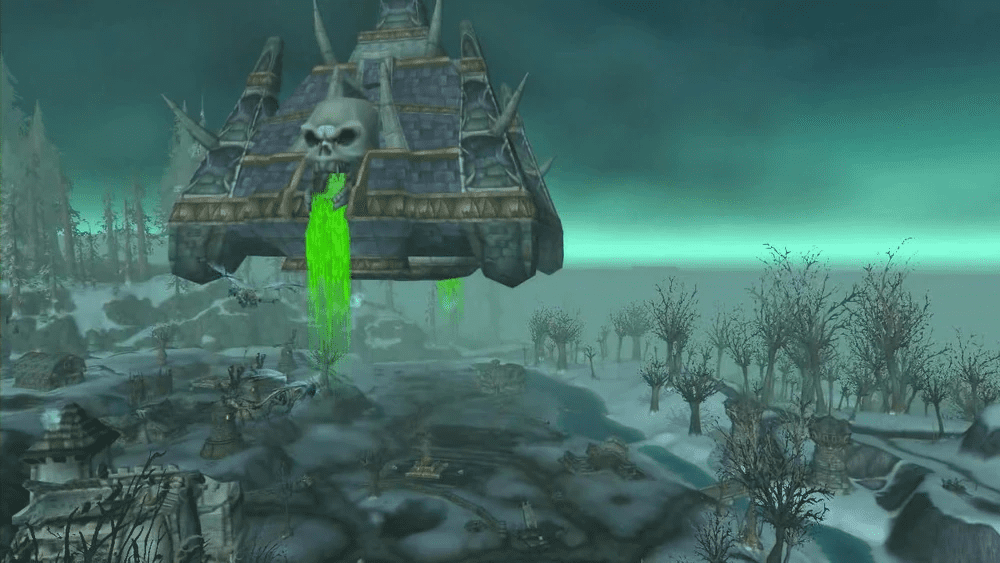
Despite its desolation, the zone hosts a surprising number of settlements and strongholds, each shaped by the land’s strategic and symbolic value. To the east, Wintergarde Keep rises as a bastion of human resistance, while the Forsaken stronghold of Venomspite anchors Horde-aligned interests nearby. Above this eastern expanse once loomed Naxxramas, the floating necropolis whose shadow reinforced the region’s association with death.
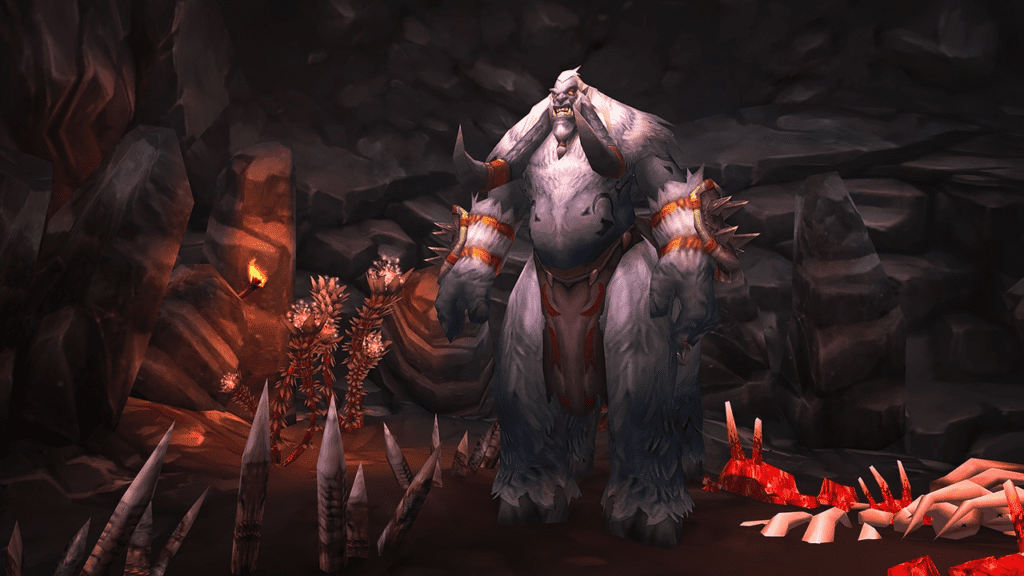
Scattered elsewhere are remnants of older cultures: the ruined taunka capital of Icemist Village, the magnataur settlement of Bloodmar, and the broken Nerubian structures such as the Sundered Monolith. Beneath the western reaches lies the entrance to Azjol-Nerub, an underground kingdom whose presence adds vertical depth to the Dragonblight’s strategic complexity. These locations exist not as centers of prosperity, but as footholds carved into an unforgiving land.
A Landscape Shaped by Conflict and Cataclysm
Dragonblight’s history is inseparable from repeated waves of devastation. During the rise of the Lich King, the Scourge desecrated the dragon graveyard, harvesting bones to construct frost wyrms and war machines. This violation permanently altered the land’s spiritual balance, transforming sacred remains into instruments of undeath. The region also witnessed the earliest spread of the Plague of Undeath among humans, marking it as a grim threshold between life and annihilation.
Later eras brought further upheaval. The blue dragonflight, under Malygos, attempted to realign ley lines beneath the land, erecting colossal constructs near sites such as Moonrest Gardens and the Azure Dragonshrine. These efforts threatened ecological and magical collapse, adding arcane instability to an already scarred environment. During the Cataclysm, the land once again became a focal point, as apocalyptic forces converged on Wyrmrest Temple, scarring, but not erasing, the ancient landscape.
Role in the Broader World
In every age, Dragonblight has functioned as more than a battlefield; it is a barometer for the state of the world. When balance prevails, it serves as a solemn sanctuary. When corruption rises, it becomes a resource to be exploited or a prize to be seized. Its central position in Northrend, combined with its concentration of magical, historical, and symbolic significance, ensures that conflicts elsewhere eventually echo across its tundra.
Even as factions rise and fall, it endures. The bones remain, the shrines persist, and Wyrmrest Temple continues to overlook the frozen plain. What changes is not the land’s purpose, but how those who arrive choose to treat it, whether as a place of reverence, ambition, or ruin.

Personal Thoughts on Dragonblight
The Dragonblight is not merely a region upon a map, but a convergence point of Azeroth’s deepest histories. Its frozen soil preserves the legacy of dragonkind, the imprint of titan design, and the scars of countless wars fought in pursuit of power over death and magic. Every shrine, ruin, and exposed bone reinforces its identity as a land where the past is never buried.
Though eras bring new banners and new threats, it’s role remains constant. It is a reminder that even the mightiest beings leave remnants behind, and that such remnants shape the world long after their fall (I wish this was also true for the expansions that came after Cataclysm). As long as dragons fly, magic flows, and mortals seek dominion over forces beyond their grasp, Dragonblight will remain essential, silent, enduring, and unforgotten at the heart of Northrend.