
 World of Warcraft

Mirroring the real life vikings in many ways apart from the height difference, the vrykul are a race of towering, powerful humans, shaped by the titans to be warriors of unmatched courage and strength. They were forged as part of the titan-forged during the ordering of Azeroth, intended to be the stalwart defenders of the world. Odyn, the vigilant keeper of valor, saw in them the potential to surpass even the dragons in loyalty and skill. He promised those who died honorably a place among the Valarjar, immortal warriors in the Halls of Valor, bound to fight for eternity in the storms of battle (see how similar it is to vikings?).
Yet their story is one of triumph intertwined with tragedy. Loken’s betrayal, Helya’s corruption, and the Curse of Flesh would test their resilience and shape their legacy. Scattered across northern lands, the vrykul formed clans, some wandering as nomads, others settling into the harsh tundras and forests.
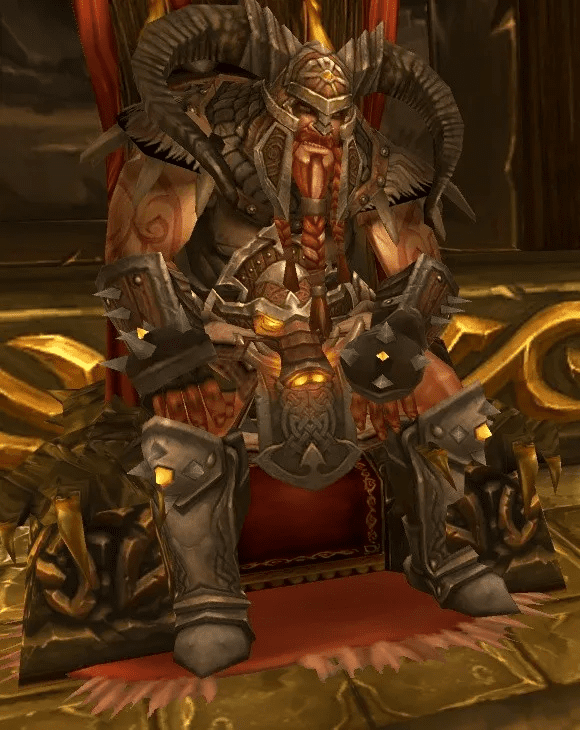
From Giants to Humans
It was under King Ymiron, fifteen millennia ago, that the Curse of Flesh touched the vrykul in a way that would forever change Azeroth. Children born smaller and weaker than their parents were seen as blemishes upon the race. The king, believing the titans had abandoned them and that the curse was divine punishment, decreed that these “aberrations” be destroyed to preserve vrykul purity.
But not all could follow such cruelty. Some parents carried their children far from the frozen north to the Tirisfal Glades, leaving them in the care of the vrykul who had settled there long ago after fleeing Ulduar. They taught these children the ways of their people: warfare, smithing, masonry, and survival. Over generations, these outcast vrykul became the first humans, carrying with them echoes of giant bloodlines, the stories of ancient heroes, and the memory of a warrior culture that had once spanned the frozen north.
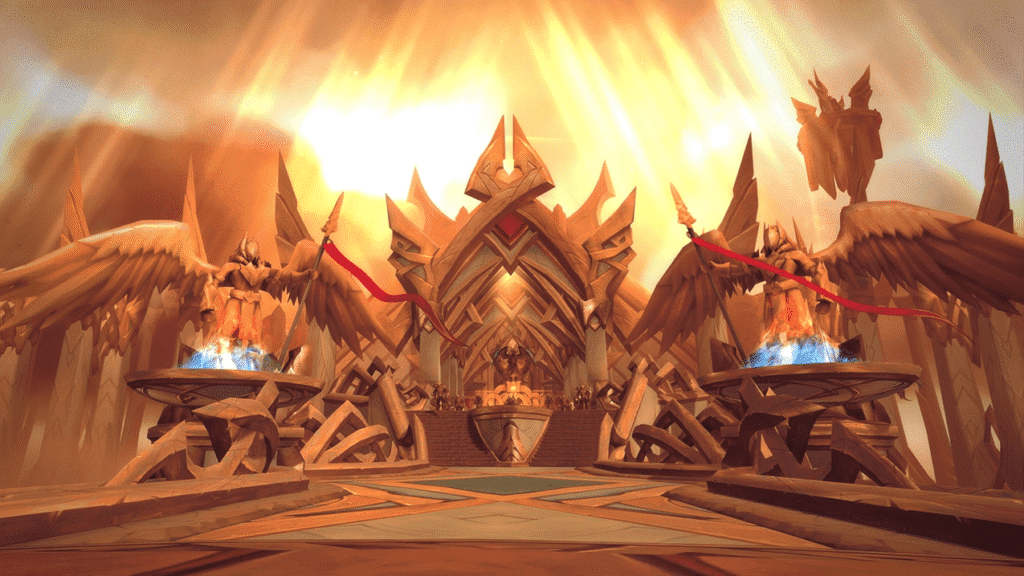
The vrykul who remained in their northern homelands often fell into hibernation, leaving empty halls like Gjalerbron and Utgarde Keep to the passage of time. Only myths and heirlooms remained among humans to remind them of the towering guardians who once watched over their ancestors.
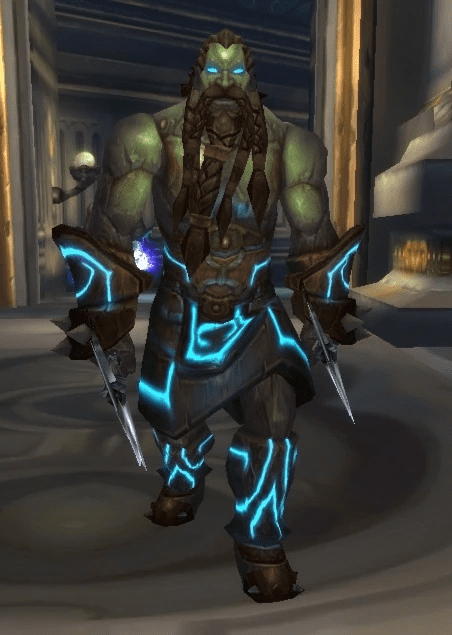
Appearance and Strength
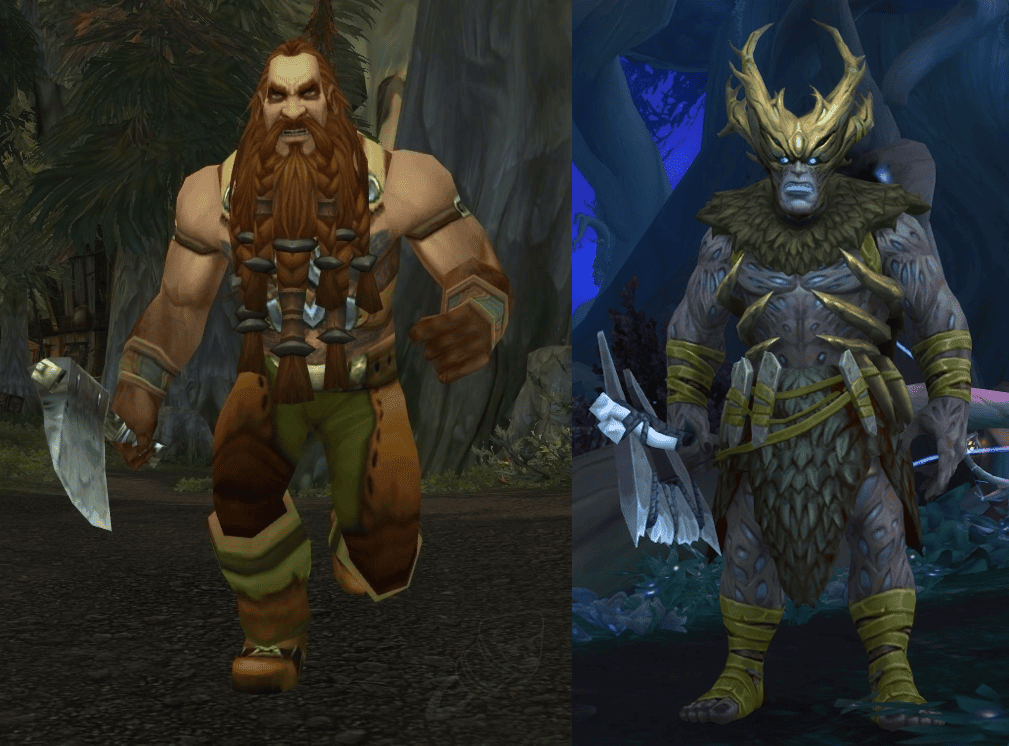
Vrykul are formidable even among their own kind. Towering above humans, their muscular forms and imposing presence mark them as a race born for battle. Both men and women have deep, resonant voices, and many males grow long beards that can remain even after death (this implies that their beards grow not from the skin but from the jaw bone, which is both interesting and metal as hell). Tattoos and markings adorn arms and torsos, commemorating feats of valor, ancestral ties, or social standing. Some vrykul even retain traces of metallic or stone-like skin from their titan-forged origins, a reflection of the ancient power from which they sprang.
Even in infancy, vrykul display unusual strength and resilience. Unlike human children, they can stand and walk almost immediately after birth, ready from the start to endure the harsh world that is Northrend.
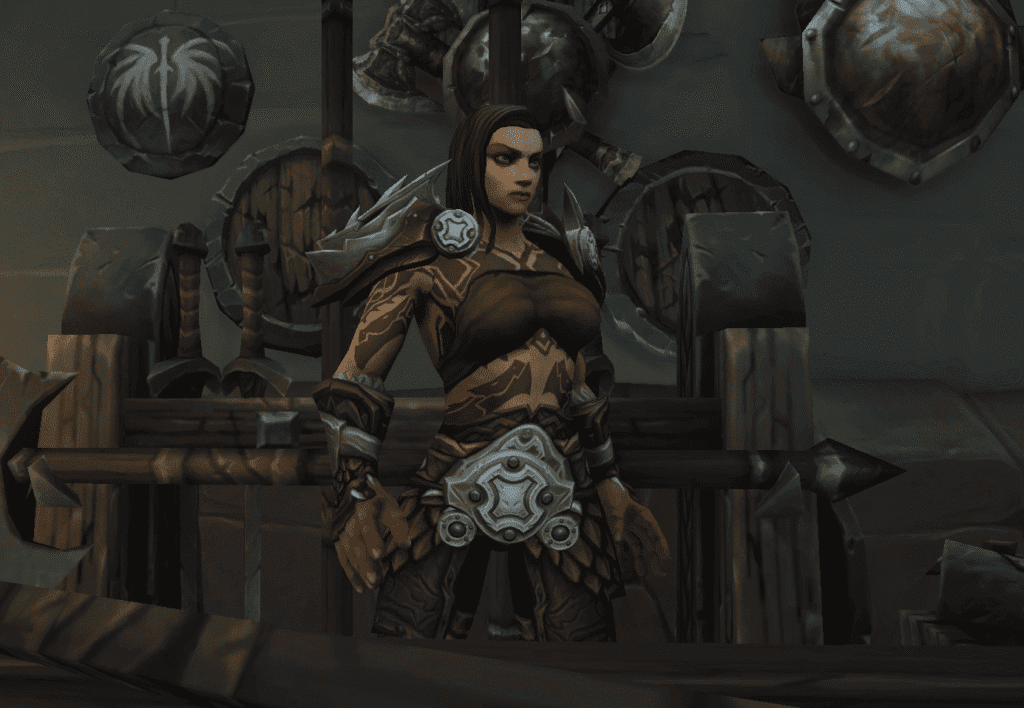
Culture and Society
Vrykul society is built on hierarchy, honor, and strength. Women often hold authority within the household, keeping keys and symbols of status, while men prove themselves through feats of combat and deeds of valor. Nicknames are earned through achievement: to be called “dutiful” is to have performed honorably, while “ruthless” is reserved for those whose acts inspire both fear and respect.
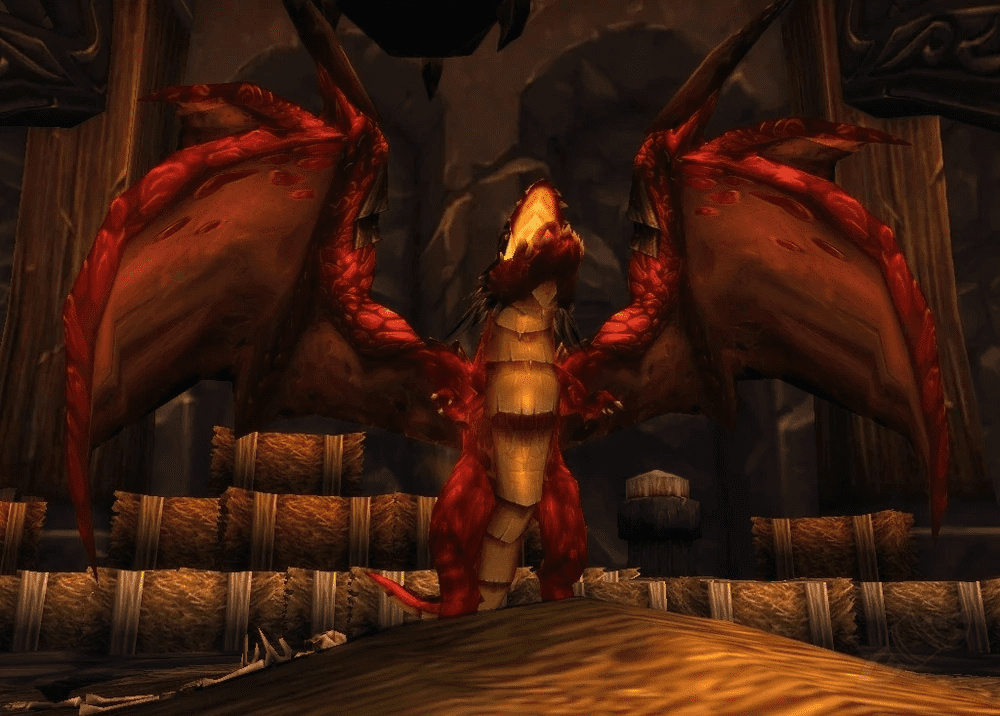
Proto-dragons hold a unique place in their culture as well. Used as mounts and companions, these creatures are captured and tamed in rites of passage that demonstrate both courage and skill. Drinking from ceremonial horns marks prestige, while ordinary cups or bowls suffice for the common vrykul. Manual labor is often left to mindless servants, slaves, or the undead, though blacksmithing and crafting are esteemed pursuits, blending practicality with artistry. Weapons are functional yet symbolic: axes with extended cutting edges, straight knives called scramseax, and implements fashioned from proto-dragon fangs or shoveltusk bones testify to both innovation and the martial focus of their society.
Magic itself is rare among vrykul, but those trained in rune-casting, necromancy, or arcane arts are feared. Tattoos infused with ancient runes empower warriors with spells capable of freezing enemies or amplifying strength. Mystics, inkbinders, and rune-casters occupy a respected niche within their communities, blending art, ritual, and combat into a single expression of power.
Life and Death
In vrykul culture, death is neither feared nor mourned as a tragedy; it is a passage. From a young age, vrykul are raised to embrace mortality as warriors, aiming to die honorably and join the ranks of the Valarjar in the Halls of Valor. The Bonespeakers, mystics tasked with guiding spirits and overseeing burials, ensure that the honored dead are remembered and prepared for judgment. Rituals of wakening allow vrykul to commune with ancestors, offering aromatic incense or prepared feasts to sustain spirits in the afterlife. Burial mounds dot the northern landscapes, silent monuments to centuries of valor and sacrifice.
Vrykul Through Time
Vrykul history is marked by expansion, conflict, and adaptation. The Dragonflayers enslaved proto-dragons and conquered their enemies, while the Winterskorn fell into deep sleep under Ysera and Nozdormu’s protection. Others journeyed across seas, some becoming the Drust of Kul Tiras, and some interacting with Highborne elves in battles for Stormheim.
During the Lich King’s rise, dormant vrykul clans were awakened. Many pledged themselves to him, serving as elite warriors, while others, like the matriarchal Hyldnir, retained loyalty to the titans. Vrykul fought, died, and were reborn as undead or Valarjar, their devotion to martial excellence never faltering.
Even in more recent conflicts, the Burning Legion, the Fourth War, and beyond, vrykul demonstrate the same combination of ferocity, ingenuity, and loyalty that has defined them for millennia. Clans like the Tideskorn continue to seek glory, while others preserve ancient traditions, guarding tombs, sacred halls, and ancestral lands.
Personal Thoughts on Vrykul
The vrykul leave a lasting imprint on Azeroth. Their influence is visible in human ancestry, cultural traditions, and the myths of Northrend. They exemplify a society built on valor, honor, and mastery of warfare, balancing the brutality of battle with artistry, ritual, and spiritual belief, which would again, be very similar to what we have as the nordic vikings. Though many have fallen to the Curse of Flesh, their stories continue on, told in whispers, songs, and the artifacts they left behind. They are giants of history, both feared and revered, whose shadow stretches from the frozen north to the hearts of all who walk in their descendants’ footsteps.
The vrykul are also one of the races people want as playable, just like the Tuskarr, but I for the life of me can’t see how they can be implemented as they don’t really take sides in anything other than their own? They also make a lot of enemies with the way they go about regarding most events in WoW history. Anyways, I won’t be commenting on it much to keep myself from angering people… But I can’t say that they wouldn’t be cool to play too, y’know.