 World of Warcraft

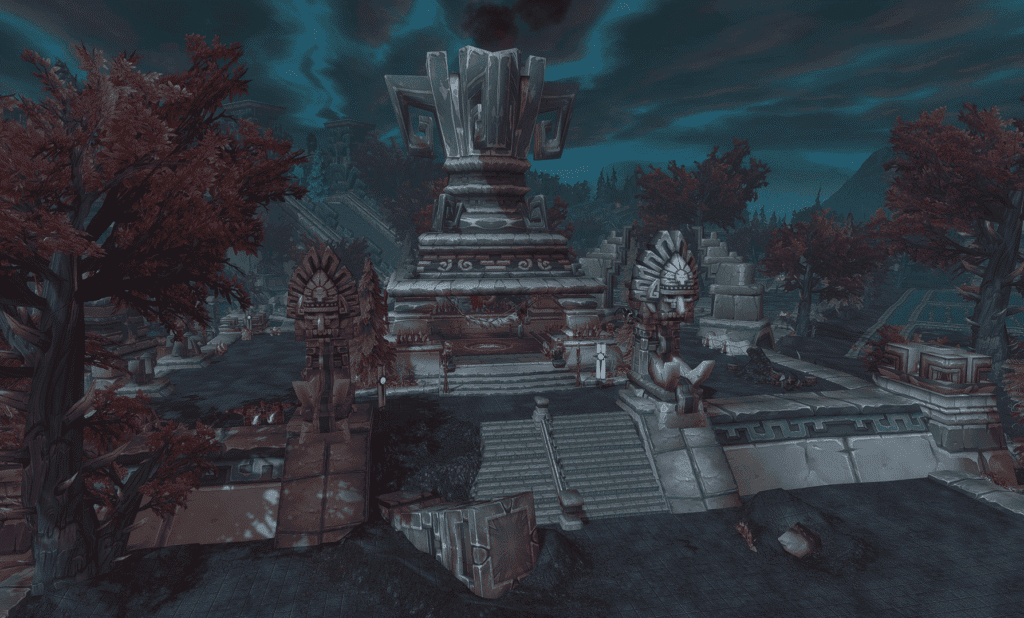
Zul’Drak rises from eastern Northrend as a monument to a civilization in collapse. Once the shining capital of the Drakkari Empire, this vast temple-city now stands fractured, its towering ziggurats and ceremonial plazas overshadowed by death and desecration. Built as a single, immense urban complex, Zul’Drak was designed to glorify the loa worshipped by the ice trolls and to reflect the power of their empire at its height.
In recent years, however, the region has become synonymous with desperation. Pressed by the advance of the Scourge, the Drakkari turned upon their own gods, staining their sacred city with sacrificial rites that left both land and faith irrevocably scarred. As undead forces spread through its tiers and surviving inhabitants scatter, Zul’Drak has become a place where ancient reverence and catastrophic ruin coexist, its stonework still proud, even as its purpose crumbles.
Foundations of a Troll Empire
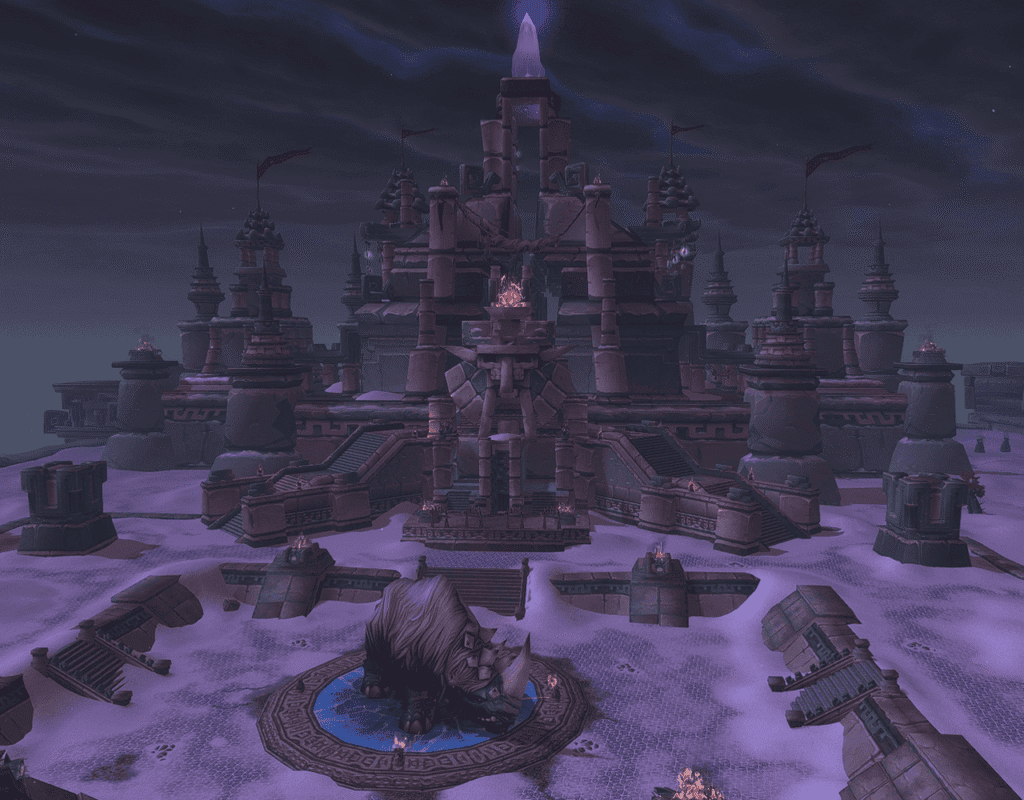
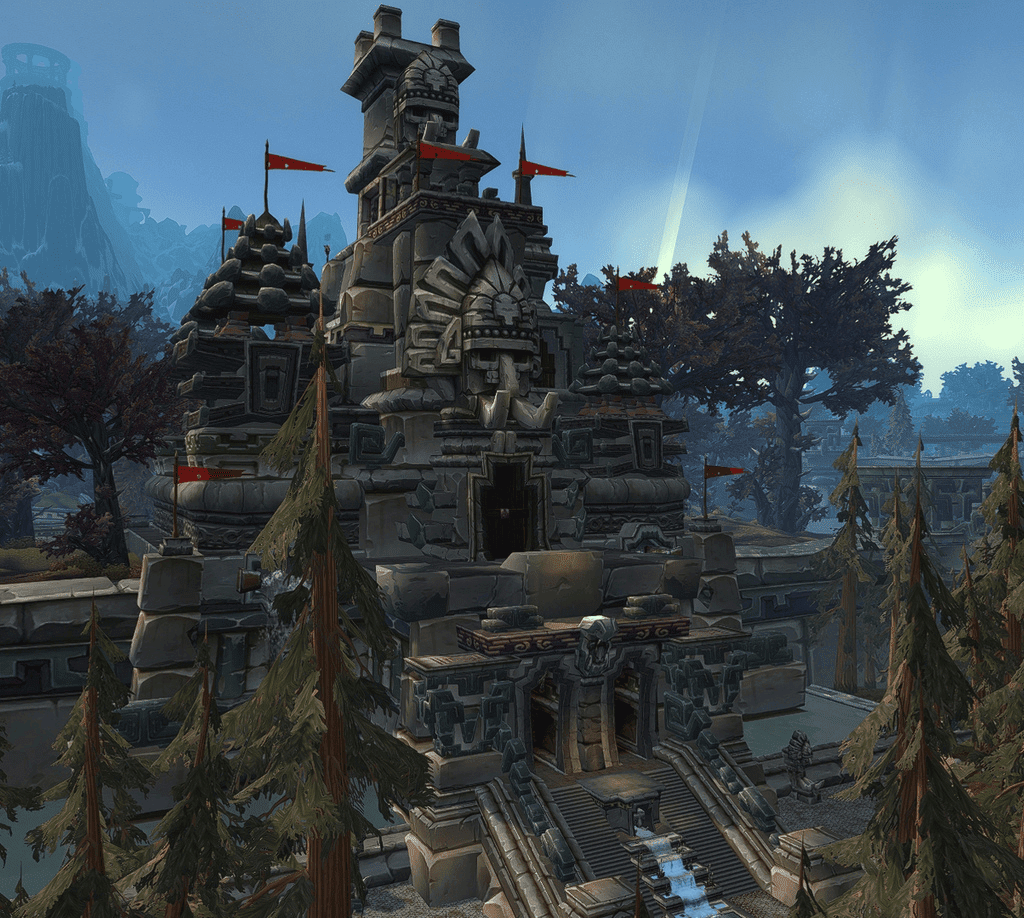
Zul’Drak was conceived not merely as a capital, but as the physical embodiment of Drakkari belief and authority. Constructed atop a colossal stepped foundation, the city rises tier by tier like a monumental ziggurat, its architecture reinforcing the hierarchy between rulers, priests, and gods. Aqueducts, walls, and causeways bind the city together, allowing movement across its vast expanse while emphasizing its unity as a single, living metropolis.
At its height, Zul’Drak served as the ceremonial heart of the Drakkari Empire. Massive altars dotted the upper tiers, each dedicated to a loa revered by the ice trolls. These were not distant or abstract deities, but tangible presences whose influence permeated daily life, governance, and warfare. The city’s scale reflected the belief that divine favor was inseparable from imperial strength, and that the land itself stood as proof of that bond.
Geography and Urban Design
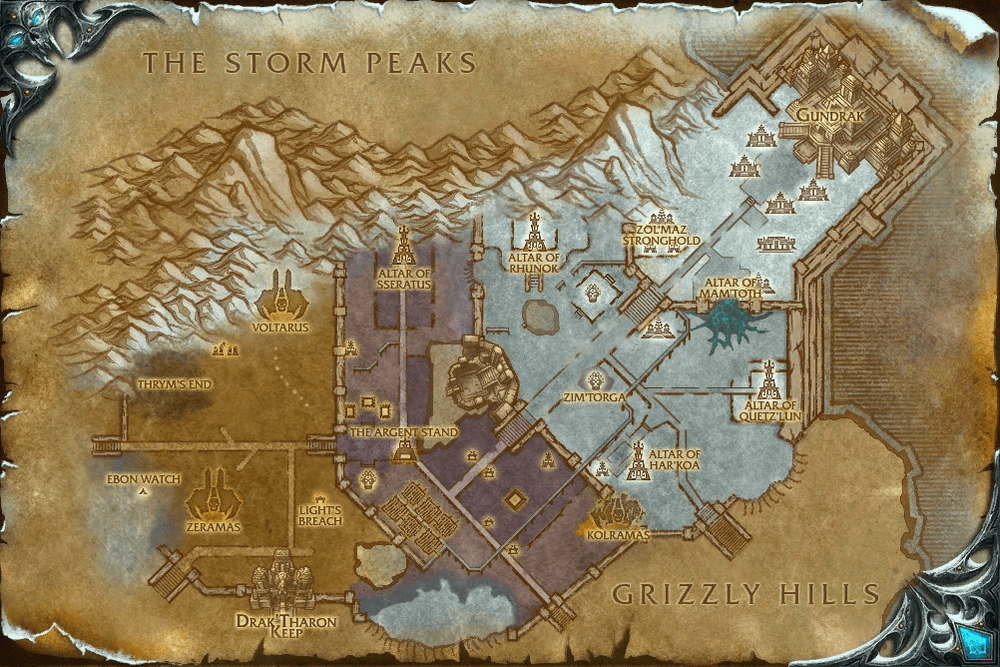
Geographically, Zul’Drak occupies a dominant position in eastern Northrend, bordered by Crystalsong Forest to the west, Dragonblight to the southwest, and Grizzly Hills to the south. Unlike most regions, it is not a patchwork of wilderness and settlements, but a continuous urban landscape stretching from boundary to boundary. Plazas open into temple complexes, which in turn give way to residential tiers and fortified approaches.
Five principal access routes pierce the city’s perimeter, including the passages leading from Dragonblight and Grizzly Hills, as well as the fortress of Drak’Tharon Keep at the southern edge. These entrances were once symbols of strength and control; in later years, they became conduits for invasion. The city’s verticality, its rising tiers and elevated sanctums, offers commanding views, but also funnels conflict inward, ensuring that no assault remains isolated for long.
The Scourge and the Breaking of Zul’Drak
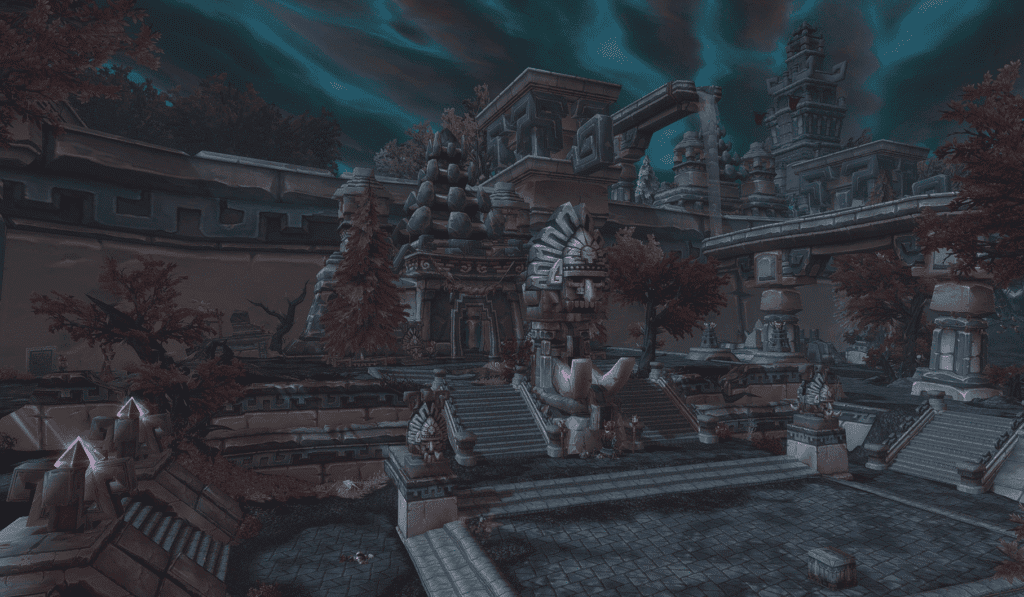
The arrival of the Scourge marked the beginning of Zul’Drak’s unraveling. Undead forces pressed relentlessly from the south and east, establishing blighted footholds near Drak’Tharon Keep and Ebon Watch. Rather than abandoning their capital, the Drakkari attempted to turn its spiritual foundations into weapons. Loa were sacrificed in a bid to harness their power against the undead, flooding the city with corrupted energies.
This act reshaped the region in ways the Scourge alone could not. The altars that once radiated divine protection became sources of lingering anguish, saturating the stone with dark resonance. According to later observations, the oppressive atmosphere that grips the entire zone stems not solely from necromancy, but from the suffering inflicted upon the loa themselves. As undead trolls rose to join the Scourge, entire districts fell silent, leaving only fractured rituals and abandoned sanctuaries behind.
Factions, Ruins, and Lingering Resistance
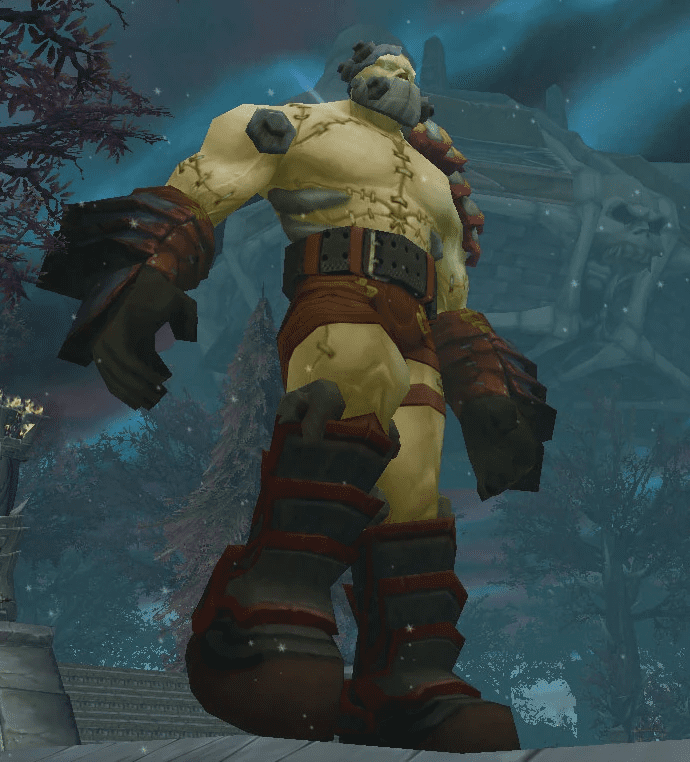
Despite its collapse, Zul’Drak is far from empty. Undead Drakkari roam the city in great numbers, while pockets of living trolls, driven mad by loss and corruption, lash out indiscriminately. Scattered throughout the region are water elementals, remnants of desperate summoning attempts intended to halt the Scourge’s advance. These entities now drift through flooded plazas and broken aqueducts, untethered from their original purpose.
External factions have also carved out precarious footholds. The Argent Crusade maintains a presence at strategic locations such as the Argent Stand, caught between the Scourge and hostile natives. The Zandalari have arrived to preserve what fragments of Drakkari history remain, chronicling artifacts and ruins even as the city continues to deteriorate. Nerubian enclaves and Scourge-controlled zones further fragment the region, turning Zul’Drak into a patchwork of contested spaces rather than a unified whole.
Legacy and Continuing Decline
In the years following the Cataclysm, Zul’Drak’s fate became increasingly clear. Reports confirmed that the region had effectively fallen to the Scourge, its surviving inhabitants scattered or consumed by undeath. Later expeditions described a city slowly succumbing to ruin, not through sudden destruction, but through neglect, erosion, and the steady march of entropy. Ziggurats still stand, altars remain intact, and artifacts lie scattered across the tiers, but the empire that gave them meaning is gone.
The undead presence pouring from Drak’Tharon Keep continues to threaten what remains, suggesting that even in decay, Zul’Drak serves a purpose as a source of forces and corruption. Its downfall stands as a cautionary testament: a civilization so entwined with its gods that, when faith collapsed, the land itself followed.
Personal Thoughts on Zul’Drak
Zul’Drak endures as one of Northrend’s most imposing ruins, a city whose sheer scale prevents it from fading quietly into history. Its stonework still proclaims former greatness, even as its streets echo with the consequences of desperation and betrayal. Unlike regions shattered by sudden cataclysm, Zul’Drak represents a slower, more deliberate collapse, one born of choices made under relentless pressure.
Today, the temple-city exists in a state of suspended decay. The altars remain, the tiers still rise, and the memory of the loa lingers within the walls. What has been lost cannot be restored, but neither can it be erased. As long as Zul’Drak stands, I will still have the hope that one day it will catch the eye of one Blizzard employee, and turned into the grand city it once was, just like how Zuldazar is. But as mentioned, it is far too gone as a city lost to forces of a threat from the past.